Welcome to the realm of data analysis, where the coefficient of variation calculator reigns supreme. This indispensable tool empowers us to unravel the mysteries of data dispersion, providing invaluable insights into the variability of our data sets.
As we embark on this journey, we’ll delve into the depths of CV calculation, explore its myriad applications, and master the art of interpreting its results. Prepare to be enlightened as we uncover the secrets of data dispersion with the coefficient of variation calculator as our guide.
Coefficient of Variation Definition
The coefficient of variation (CV) is a statistical measure that quantifies the dispersion or variability of data relative to its mean. It is expressed as a percentage and is calculated by dividing the standard deviation of a data set by its mean.
The CV provides a standardized measure of dispersion that allows for comparisons between data sets with different means. A higher CV indicates a greater degree of dispersion, while a lower CV indicates a lower degree of dispersion.
Example Data Sets
Consider the following data sets:
- Data Set 1: [10, 12, 14, 16, 18]
- Data Set 2: [5, 10, 15, 20, 25]
Data Set 1 has a mean of 14 and a standard deviation of 2.83, resulting in a CV of 20.21%. Data Set 2 has a mean of 15 and a standard deviation of 7.07, resulting in a CV of 47.13%.
The higher CV of Data Set 2 indicates a greater degree of dispersion in the data compared to Data Set 1.
Formula and Calculation
The formula for calculating the coefficient of variation (CV) is as follows:
CV = (Standard deviation / Mean) x 100%
The standard deviation is a measure of how spread out the data is, while the mean is the average value of the data. By dividing the standard deviation by the mean, we get a relative measure of the spread of the data, which is independent of the units of measurement.
Sample Calculation
For example, let’s say we have the following data set: 10, 12, 14, 16, 18.
The mean of this data set is 14, and the standard deviation is 2.83.
Therefore, the CV is:
CV = (2.83 / 14) x 100% = 20.21%
This means that the data is spread out by 20.21% relative to the mean.
Importance of Unbiased Estimator
It is important to use an unbiased estimator for the standard deviation when calculating the CV. An unbiased estimator is one that does not consistently overestimate or underestimate the true standard deviation.
The most common unbiased estimator for the standard deviation is the sample standard deviation. The sample standard deviation is calculated by dividing the standard deviation by the square root of the sample size minus one.
Using an unbiased estimator for the standard deviation ensures that the CV is an accurate measure of the spread of the data.
Applications of CV
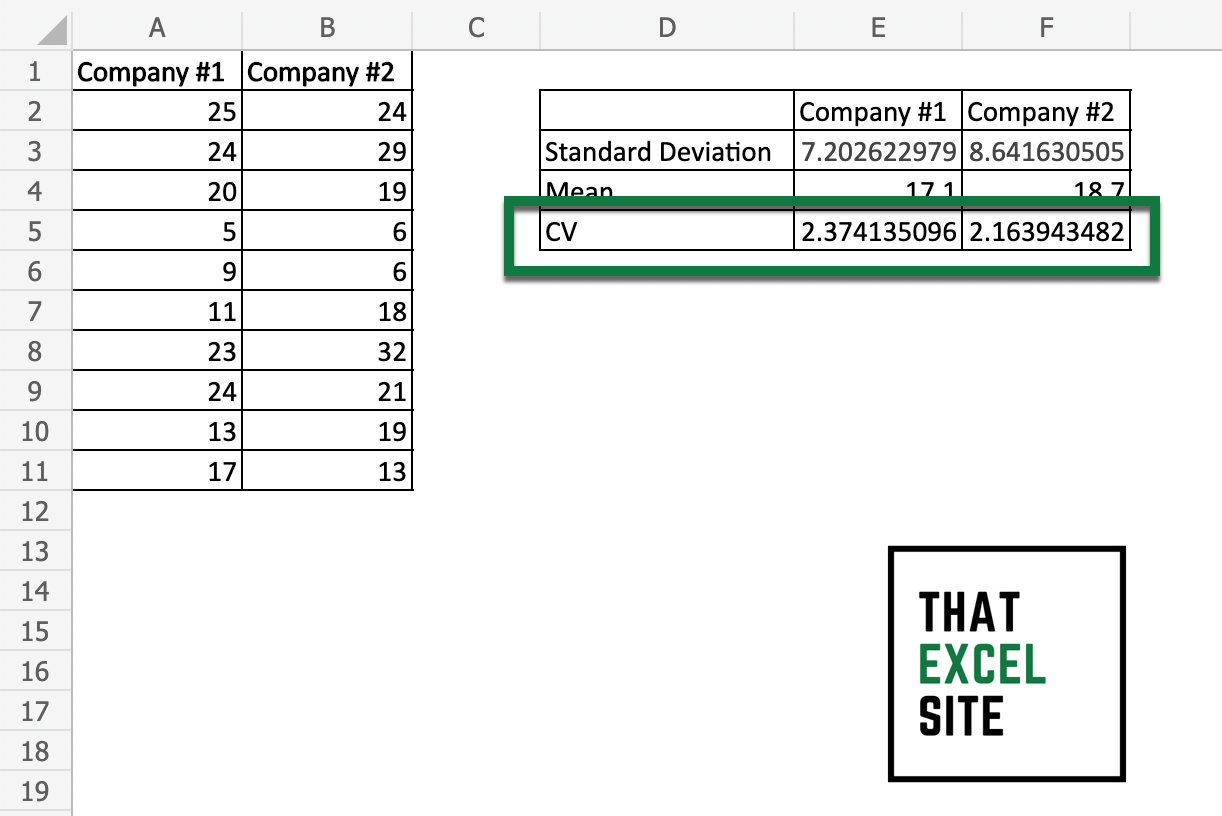
The coefficient of variation (CV) is a versatile statistical measure that finds applications in diverse fields, including finance, statistics, and quality control.
In finance, CV is used to assess the risk associated with an investment. A higher CV indicates greater variability in returns, which can be an indicator of higher risk. Investors may use CV to compare the risk profiles of different investments and make informed decisions.
Statistics, Coefficient of variation calculator
In statistics, CV is used to compare the variability of different data sets. For instance, researchers may use CV to determine which experimental group exhibits greater variability in their results. CV can also be used to identify outliers in a data set, as values that are significantly different from the mean may have a high CV.
Quality Control
In quality control, CV is used to monitor the consistency of a manufacturing process. A low CV indicates that the process is stable and producing consistent results, while a high CV may indicate that the process is out of control and requires attention.
Despite its wide applicability, CV has certain limitations. One limitation is that it is not a measure of absolute variability but rather a relative measure. This means that CV can be affected by the scale of the data, and it may not be appropriate for comparing data sets with different units of measurement.
Additionally, CV can be misleading when the data is skewed or contains outliers. In such cases, other measures of dispersion, such as the standard deviation or interquartile range, may be more appropriate.
Interpreting CV Results: Coefficient Of Variation Calculator
Interpreting the coefficient of variation (CV) involves understanding its relationship with the variability of the data and comparing it with other measures of dispersion. Here’s how to interpret CV values in different contexts:
The CV provides a standardized measure of variability, allowing for easy comparison between data sets with different means. A higher CV indicates greater variability relative to the mean, while a lower CV indicates less variability.
Relationship with Other Measures of Dispersion
CV is related to other measures of dispersion, such as standard deviation and variance. The standard deviation measures the absolute variability of the data, while the variance is the square of the standard deviation. The CV is calculated by dividing the standard deviation by the mean and multiplying by 100. Therefore, CV expresses variability as a percentage of the mean.
Determining CV Values
Determining whether a CV is high, low, or moderate depends on the context and the field of study. In general, a CV below 10% indicates low variability, a CV between 10% and 30% indicates moderate variability, and a CV above 30% indicates high variability.
- Low CV:Indicates that the data is relatively consistent, with values closely grouped around the mean. This suggests a high degree of homogeneity within the data set.
- Moderate CV:Indicates a moderate level of variability, with some values deviating from the mean. This suggests a balance between consistency and variation within the data set.
- High CV:Indicates significant variability, with values widely spread out from the mean. This suggests a high degree of heterogeneity within the data set.
Closure
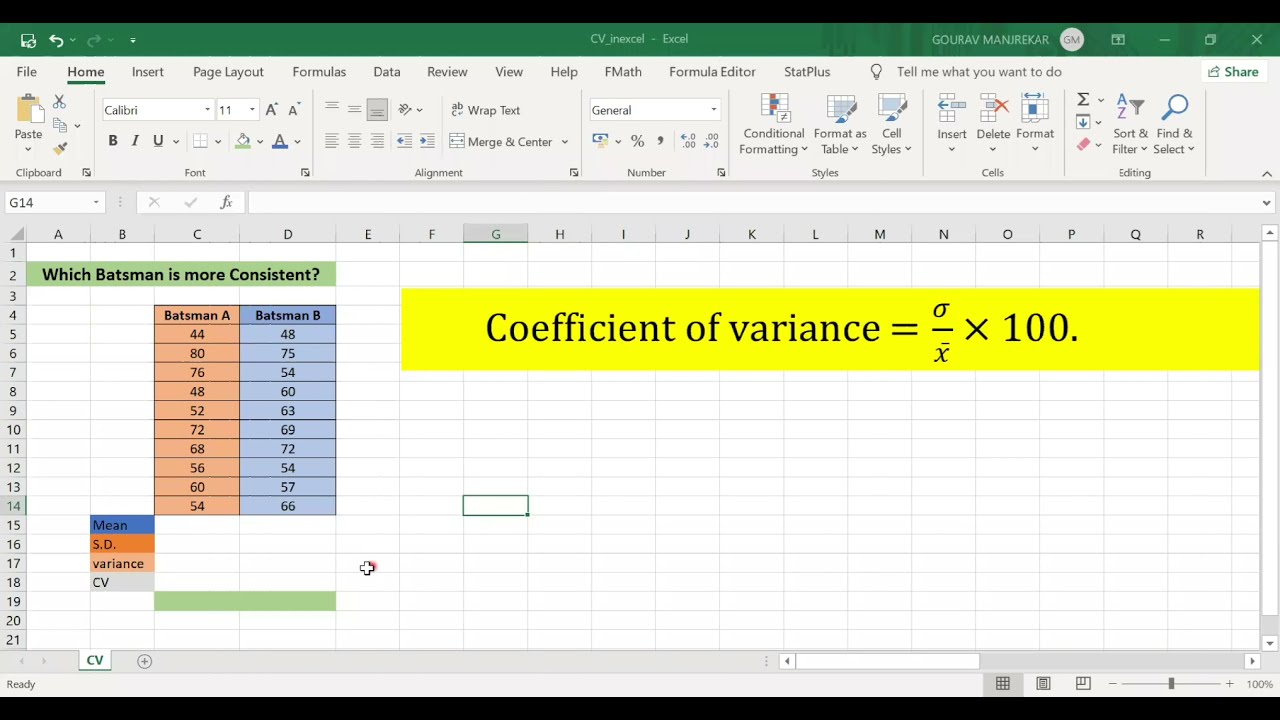
Our exploration of the coefficient of variation calculator concludes with a profound appreciation for its versatility and significance in data analysis. Whether navigating the complexities of finance, unraveling statistical puzzles, or ensuring quality control, CV proves to be an invaluable tool.
Remember, the interpretation of CV results is a nuanced art, requiring careful consideration of context and other measures of dispersion. By embracing these concepts, we elevate our data analysis skills and unlock the full potential of the coefficient of variation calculator.