Introducing the Kepler’s Third Law Calculator, a tool that empowers you to explore the intricate dance of celestial bodies. Delve into the mathematical formula behind Kepler’s groundbreaking discovery and uncover the secrets of orbital periods and semi-major axes.
This calculator is your gateway to understanding the harmony of the cosmos, providing a practical and interactive way to witness the elegance of Kepler’s Third Law in action.
Kepler’s Third Law Overview

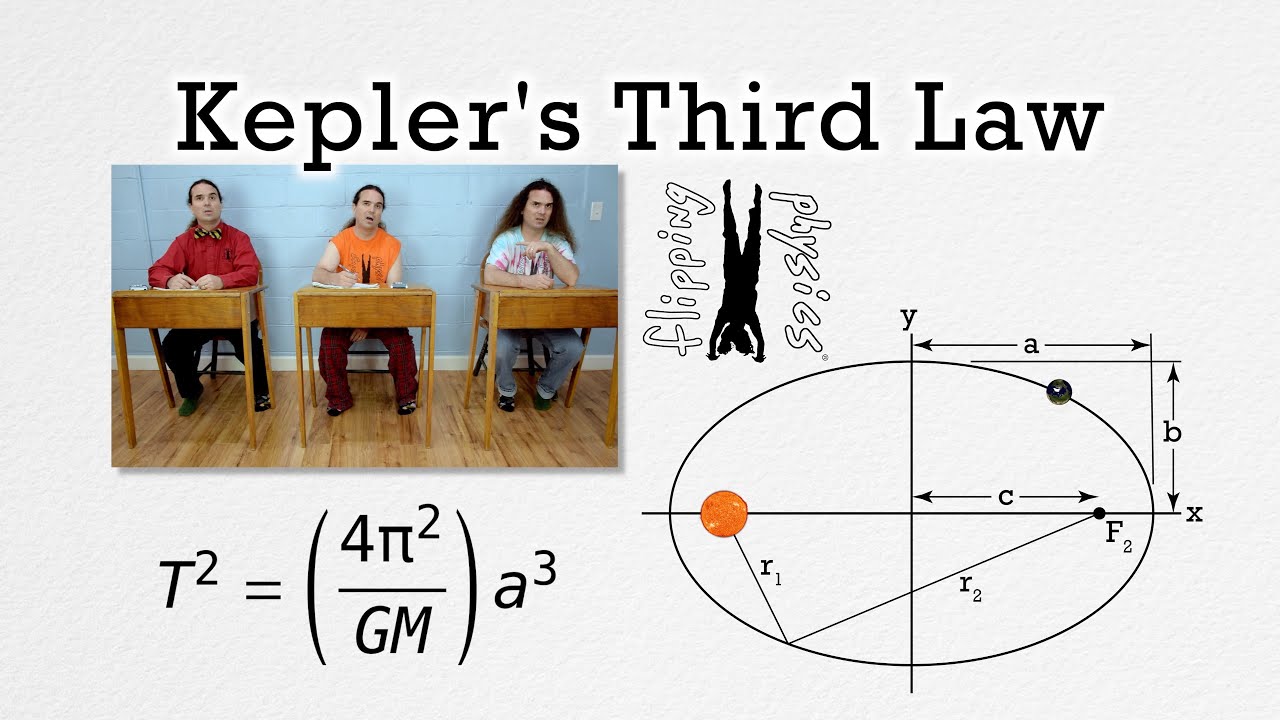
Kepler’s Third Law of Planetary Motion describes the relationship between the orbital period of a planet and its average distance from the Sun. It was formulated by Johannes Kepler in the 17th century based on his observations of the planets in our solar system.
The mathematical formula for Kepler’s Third Law is:
T2= k
a3
where:
- T is the orbital period of the planet in Earth years
- a is the average distance of the planet from the Sun in astronomical units (AU)
- k is a constant that is the same for all planets in our solar system
Examples of Kepler’s Third Law
The following table shows some examples of how Kepler’s Third Law applies to different celestial bodies:
| Celestial Body | Orbital Period (years) | Average Distance from the Sun (AU) |
|---|---|---|
| Mercury | 0.24 | 0.39 |
| Venus | 0.62 | 0.72 |
| Earth | 1.00 | 1.00 |
| Mars | 1.88 | 1.52 |
| Jupiter | 11.86 | 5.20 |
| Saturn | 29.46 | 9.54 |
| Uranus | 84.01 | 19.22 |
| Neptune | 164.88 | 30.11 |
Historical Significance
Kepler’s Third Law was a major breakthrough in astronomy. It provided the first quantitative description of the motion of planets and helped to establish the heliocentric model of the solar system. Kepler’s law also had important implications for the development of physics, as it showed that the laws of motion that govern the motion of planets are the same laws that govern the motion of objects on Earth.
Calculator Applications

Kepler’s Third Law calculator is a tool that can be used to determine the orbital period of a planet or other celestial body, given its semi-major axis. The calculator can also be used to determine the semi-major axis of a planet or other celestial body, given its orbital period.The
calculator is based on Kepler’s Third Law, which states that the square of the orbital period of a planet or other celestial body is proportional to the cube of the semi-major axis of its orbit. This law can be expressed mathematically as follows:
T2= k
a3
where:* T is the orbital period of the planet or other celestial body
- a is the semi-major axis of the planet’s or other celestial body’s orbit
- k is a constant
The constant k is different for different systems of units. In the SI system, k is equal to 1.327 × 10 20m 3/s 2.To use the calculator, simply enter the known value into the appropriate field and click the “Calculate” button.
The calculator will then display the unknown value.
Example, Kepler’s third law calculator
To determine the orbital period of a planet with a semi-major axis of 1 AU, enter 1 into the “Semi-Major Axis” field and click the “Calculate” button. The calculator will display the orbital period of the planet as 1 year.To
determine the semi-major axis of a planet with an orbital period of 1 year, enter 1 into the “Orbital Period” field and click the “Calculate” button. The calculator will display the semi-major axis of the planet as 1 AU.
Limitations and Exceptions
Kepler’s Third Law is an essential tool in celestial mechanics, but it has certain limitations:
The law applies only to two-body systems, where one body is significantly more massive than the other. In systems with multiple bodies, the gravitational interactions become more complex, and Kepler’s Third Law may not accurately predict the orbital periods.
External Factors
External factors, such as the presence of other celestial bodies or the effects of non-gravitational forces, can also affect the orbital period of a body. For example, the gravitational pull of a third body, like a passing star, can perturb the orbit of a planet, causing its orbital period to deviate from what Kepler’s Third Law predicts.
Methods for Accounting for Exceptions
To account for these exceptions, astronomers use various methods:
- Perturbation Theory:This method involves calculating the small deviations in an orbit caused by external factors. By applying perturbation theory, astronomers can adjust the predictions made by Kepler’s Third Law to account for these effects.
- Numerical Simulations:Numerical simulations use computers to model the complex interactions of multiple bodies in a gravitational system. These simulations can provide more accurate predictions of orbital periods, even in systems where Kepler’s Third Law is not directly applicable.
Extensions and Applications
Kepler’s Third Law, initially formulated for circular orbits, has been extended to elliptical orbits, enriching its applications in astronomy. This extension allows for the determination of orbital periods and semi-major axis, even for non-circular paths.
Designing Space Missions
Kepler’s Third Law plays a crucial role in designing space missions, enabling scientists to calculate the orbital periods of satellites, probes, and spacecraft. By understanding the relationship between the orbital period and the semi-major axis, mission planners can optimize trajectories, minimize fuel consumption, and ensure successful rendezvous with celestial bodies.
Predicting Celestial Events
Kepler’s Third Law finds extensive use in predicting celestial events, such as eclipses, transits, and conjunctions. By calculating the orbital periods of celestial bodies, astronomers can forecast the timing and duration of these events, providing valuable information for scientific research and astronomical observations.
Case Studies
- Voyager 2 Mission:The Voyager 2 spacecraft, launched in 1977, utilized Kepler’s Third Law to calculate its trajectory and successfully encounter Jupiter, Saturn, Uranus, and Neptune, providing unprecedented insights into these distant worlds.
- Hubble Space Telescope:The Hubble Space Telescope’s orbit was designed using Kepler’s Third Law, ensuring its stability and longevity in low Earth orbit, enabling groundbreaking astronomical observations for decades.
- Mars Exploration:Kepler’s Third Law is essential for planning and executing missions to Mars, as it helps determine the optimal launch windows and trajectory for spacecraft to reach the Red Planet.
Conclusion: Kepler’s Third Law Calculator

Kepler’s Third Law Calculator serves as a testament to the enduring power of scientific inquiry. By harnessing the insights of this celestial law, we can unlock the mysteries of our solar system and beyond, charting a course for future space exploration and deepening our understanding of the universe.