What is the difference between simple and compound interest? This question lies at the heart of financial planning and investment strategies, shaping the growth of our savings and the returns on our investments. Simple interest, calculated on the principal amount alone, provides a straightforward approach to earning interest. Compound interest, on the other hand, harnesses the exponential power of reinvesting earned interest, leading to a snowball effect that can significantly amplify investment returns over time.
Understanding the nuances between these two interest types is crucial for making informed financial decisions. This exploration will delve into the intricacies of simple and compound interest, comparing their formulas, calculating interest accrual, and examining the impact of compounding frequency and time period on investment growth. By unraveling the mysteries of interest compounding, we empower ourselves to maximize our financial potential and make savvy investment choices.
Define Simple and Compound Interest
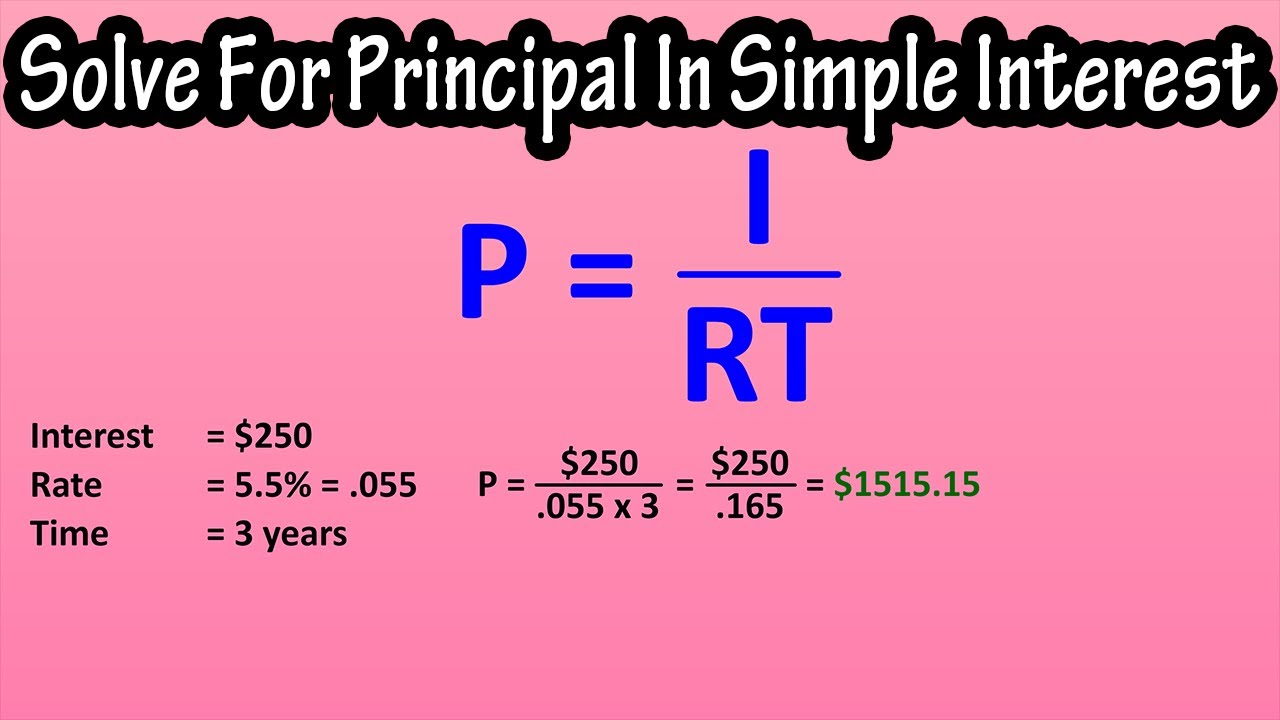
Interest is a fee charged for borrowing money or the reward for saving money. Simple interest is calculated on the initial principal amount only, while compound interest is calculated on the principal amount plus any accrued interest.
Simple Interest
Simple interest is the most basic form of interest calculation. It is calculated using the following formula:
I = P * r * t
where:
- I is the interest
- P is the principal amount
- r is the annual interest rate
- t is the time in years
For example, if you borrow $100 at an annual interest rate of 5% for 2 years, the simple interest would be $10.
Compound Interest, What is the difference between simple and compound interest
Compound interest is calculated on the principal amount plus any accrued interest. This means that the interest earned in each period is added to the principal amount, and the interest in the next period is calculated on the new, larger principal amount.
The formula for compound interest is:
A = P * (1 + r)^t
where:
- A is the final amount
- P is the principal amount
- r is the annual interest rate
- t is the time in years
For example, if you invest $100 at an annual interest rate of 5% compounded annually for 2 years, the final amount would be $110.25.
Calculating Interest Accrual: What Is The Difference Between Simple And Compound Interest
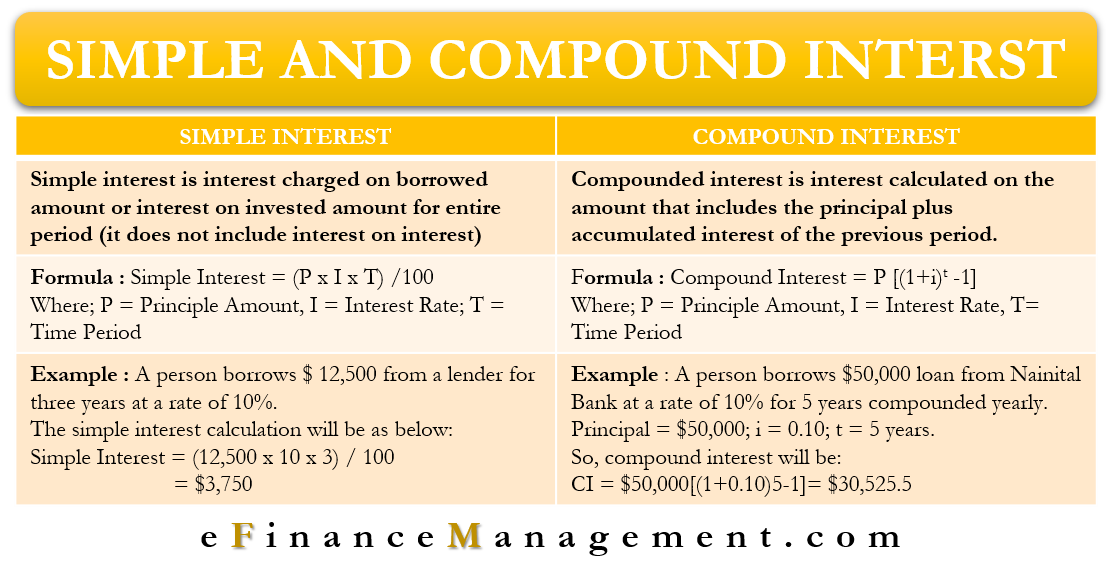
Calculating interest accrual is a crucial aspect of understanding the difference between simple and compound interest. Let’s explore how interest is calculated for each method.
Simple Interest
Simple interest is calculated by multiplying the principal amount (the initial amount borrowed or invested) by the interest rate and the number of periods (usually years) over which the interest is accrued.
Simple Interest Formula: I = P * r * t
Where:
- I = Interest accrued
- P = Principal amount
- r = Annual interest rate (as a decimal)
- t = Number of years
Compound Interest, What is the difference between simple and compound interest
Compound interest is calculated differently from simple interest. It takes into account the interest earned in previous periods and adds it to the principal amount before calculating the interest for the current period.
Obtain a comprehensive document about the application of BMI calculator with muscle mass that is effective.
Compound Interest Formula: A = P * (1 + r)^t
Where:
- A = Final amount (principal + interest)
- P = Principal amount
- r = Annual interest rate (as a decimal)
- t = Number of years
Interest Accrual Comparison
The following table compares the interest accrual for simple and compound interest over time:
| Year | Simple Interest | Compound Interest |
|---|---|---|
| 1 | P * r | P * (1 + r) |
| 2 | P * r * 2 | P * (1 + r)^2 |
| 3 | P * r * 3 | P * (1 + r)^3 |
| … | … | … |
| t | P * r * t | P * (1 + r)^t |
As you can see from the table, compound interest accrues at a faster rate than simple interest, especially over longer periods of time.
Impact of Interest Compounding

Compound interest offers a significant advantage over simple interest due to the repeated earning of interest on previously accumulated interest. This effect is known as the compounding effect, and it plays a crucial role in determining the final interest earned on an investment.
Effect of Compounding Frequency
The frequency of compounding, or the number of times per year that interest is added to the principal, directly impacts the final interest earned. More frequent compounding results in a higher return. For instance, an investment earning 5% interest compounded annually will yield a different amount than the same investment earning 5% interest compounded monthly or daily.
Time Period
The time period over which interest is compounded also affects the growth of interest. The longer the time period, the more time interest has to compound and accumulate. As a result, the final interest earned will be significantly higher for longer time periods, especially when combined with frequent compounding.
Examples
- An investment of $1,000 earning 5% interest compounded annually for 10 years will yield $1,628.89 in interest, while the same investment compounded monthly will yield $1,643.00 in interest.
- An investment of $10,000 earning 7% interest compounded annually for 20 years will yield $26,533.00 in interest, while the same investment compounded quarterly will yield $27,186.67 in interest.
Applications and Implications
Understanding the differences between simple and compound interest is crucial for informed financial decision-making. These concepts find practical applications in various real-world scenarios, impacting financial planning and investment strategies.
Real-World Applications
- Savings Accounts: Simple interest is often used to calculate interest earned on savings accounts, where the interest is credited to the account periodically (e.g., monthly or annually).
- Loans: Compound interest is commonly used to calculate interest charges on loans, where the interest is added to the principal amount, increasing the future interest payments.
- Investments: Compound interest plays a significant role in long-term investments, such as stocks and bonds, where the interest earned is reinvested, leading to exponential growth.
- Inflation: Simple interest can be used to estimate the impact of inflation on purchasing power, assuming a constant rate of inflation.
Implications for Financial Planning
The choice between simple and compound interest has significant implications for financial planning:
- Time Horizon: Simple interest is suitable for short-term investments or loans, while compound interest is more advantageous for long-term financial goals.
- Investment Returns: Compound interest can generate significantly higher returns compared to simple interest over time due to the snowball effect of reinvested interest.
- Loan Costs: Using compound interest for loans results in higher interest payments over time, especially for long-term loans with high interest rates.
Advantages and Disadvantages
| Method | Advantages | Disadvantages |
|---|---|---|
| Simple Interest | – Easy to calculate – Suitable for short-term investments/loans |
– Lower returns over time – Ignores the impact of compounding |
| Compound Interest | – Higher returns over time – Takes into account the snowball effect of reinvested interest |
– More complex to calculate – Can lead to higher interest payments on loans |
Ultimate Conclusion

In the realm of finance, understanding the difference between simple and compound interest is akin to unlocking a secret code that can transform our financial trajectory. Simple interest, with its linear growth pattern, provides a predictable and steady return. Compound interest, however, emerges as a financial superpower, exponentially multiplying our earnings and unlocking the true potential of long-term investments. By embracing the power of compounding, we sow the seeds for financial freedom and reap the rewards of exponential growth.
As we navigate the complexities of financial planning, it is essential to remember that the choice between simple and compound interest is not merely a matter of numbers but a strategic decision that can profoundly impact our financial future. By harnessing the transformative power of compound interest, we set ourselves on a path towards financial prosperity and secure a brighter financial tomorrow.
FAQ Compilation
What is the formula for simple interest?
Simple interest = Principal x Rate x Time
What is the formula for compound interest?
Compound interest = Principal x (1 + Rate)^Time – Principal
Which is better, simple or compound interest?
Compound interest is generally better than simple interest, as it earns interest on both the principal and the accumulated interest.
How does compounding frequency affect interest earnings?
The more frequent the compounding, the greater the interest earnings.
What is the impact of time period on compound interest?
The longer the time period, the greater the impact of compound interest.