Embark on a mathematical journey with our binomial coefficient calculator, a powerful tool that unlocks the secrets of probability and beyond. This comprehensive guide delves into the intricacies of binomial coefficients, exploring their significance and practical applications in various fields.
From calculating probabilities to unraveling genetic mysteries, binomial coefficients play a pivotal role in shaping our understanding of the world around us. Join us as we uncover the fascinating world of binomial coefficients and discover their remarkable versatility.
Binomial Coefficient Calculation
The binomial coefficient is a mathematical expression that calculates the number of ways to select a subset of elements from a larger set. It is commonly used in probability and statistics, particularly in problems involving combinations and permutations.
Binomial Coefficient Formula
The binomial coefficient is calculated using the following formula:
C(n, k) = n! / (k!
(n-k)!)
where:
- C(n, k) represents the binomial coefficient
- n is the total number of elements in the set
- k is the number of elements to be selected
- n! represents the factorial of n, which is the product of all positive integers up to n
- k! and (n-k)! represent the factorials of k and (n-k), respectively
Online Binomial Coefficient Calculators
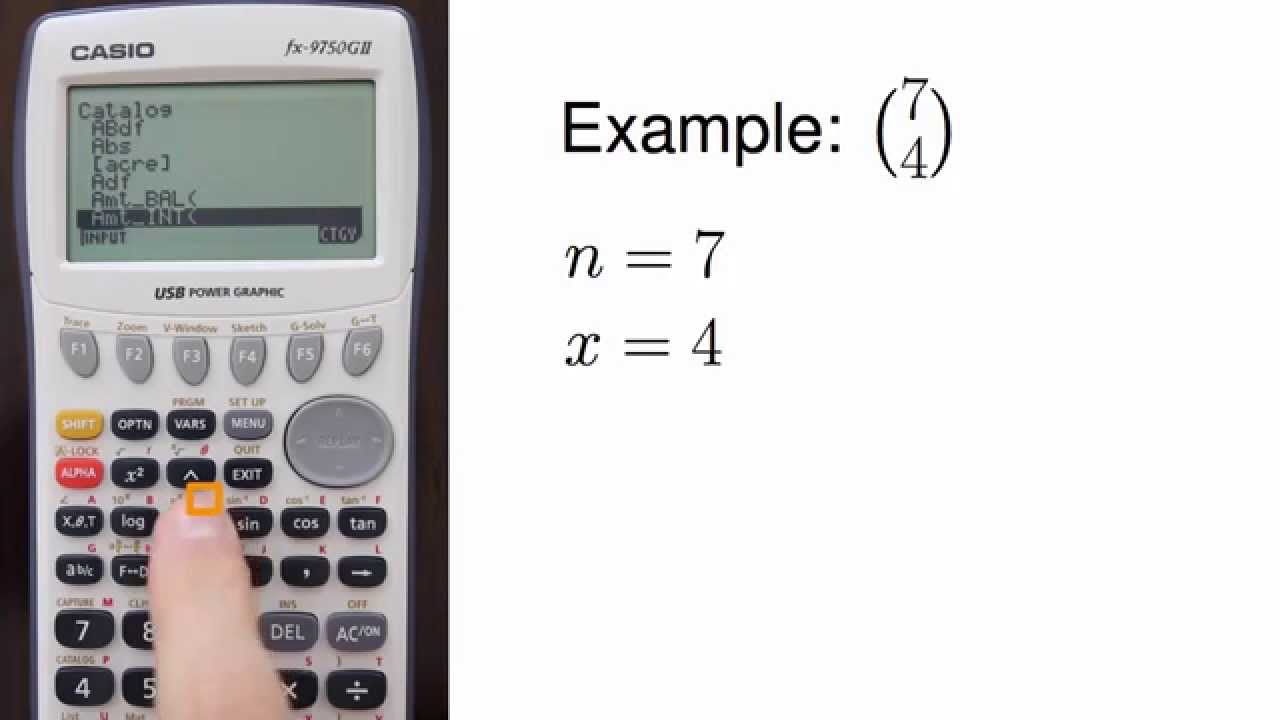
Online binomial coefficient calculators provide a convenient and efficient way to calculate binomial coefficients. These calculators come in various types, each offering different features and functionality. Understanding the types and features of these calculators can help you choose the most suitable option for your specific needs.
Types of Online Binomial Coefficient Calculators
- Basic Calculators:These calculators perform simple binomial coefficient calculations, allowing you to input two values (n and k) and obtain the result.
- Advanced Calculators:Advanced calculators offer additional features such as the ability to calculate combinations and permutations, evaluate complex expressions, and provide step-by-step solutions.
- Graphical Calculators:These calculators provide a visual representation of the binomial coefficient, allowing you to explore the relationship between n, k, and the resulting binomial coefficient.
- Interactive Calculators:Interactive calculators allow you to adjust input values in real-time and observe the corresponding changes in the binomial coefficient.
Applications of Binomial Coefficients
Binomial coefficients find widespread applications across various fields, including probability, statistics, computer science, and genetics. They offer a powerful tool for modeling and analyzing combinatorial problems.
Probability and Statistics
In probability and statistics, binomial coefficients are used to calculate probabilities of events in binomial distributions. A binomial distribution models the number of successes in a sequence of independent experiments, each with a constant probability of success. Binomial coefficients help determine the probability of obtaining a specific number of successes.
For example, consider a coin toss experiment with a fair coin. The probability of getting heads in a single toss is 1/2. The binomial coefficient can be used to calculate the probability of getting exactly k heads in n tosses.
Computer Science, Binomial coefficient calculator
In computer science, binomial coefficients are used in combinatorial optimization problems, such as finding the shortest path in a graph or the optimal solution to a traveling salesman problem. They also play a role in counting algorithms, such as counting the number of possible permutations or combinations of a set of elements.
For instance, binomial coefficients are used in dynamic programming algorithms to solve optimization problems efficiently. They help determine the number of possible states or configurations in a given problem, enabling the algorithm to find the optimal solution.
Genetics
In genetics, binomial coefficients are used to model the inheritance of traits in Mendelian genetics. They help determine the probability of offspring inheriting specific alleles from their parents. Binomial coefficients are also used in population genetics to study the distribution of genetic variations within a population.
For example, consider a genetic cross between two individuals, each carrying two alleles for a particular gene. The binomial coefficient can be used to calculate the probability of their offspring inheriting a specific combination of alleles.
Advanced Topics in Binomial Coefficients
Beyond the basic binomial coefficient, several advanced concepts extend its applications and theoretical foundations. These include multinomial coefficients, negative binomial coefficients, and hypergeometric distributions.
Multinomial Coefficients
Multinomial coefficients generalize binomial coefficients to scenarios involving multiple categories or outcomes. They count the number of ways to distribute n objects into k distinct categories, where the number of objects in each category is specified. Multinomial coefficients find applications in areas such as probability theory, statistics, and genetics.
Negative Binomial Coefficients
Negative binomial coefficients extend binomial coefficients to cases where the number of trials is not fixed but follows a negative binomial distribution. This distribution models situations where the number of successes before a specified number of failures occurs. Negative binomial coefficients have applications in reliability engineering, queueing theory, and biology.
Hypergeometric Distributions
Hypergeometric distributions describe the probability of drawing a specified number of successes from a population with a fixed number of successes and failures, without replacement. They differ from binomial distributions in that the probability of success changes with each draw.
Hypergeometric distributions find applications in sampling, quality control, and epidemiology.
Outcome Summary: Binomial Coefficient Calculator

In conclusion, binomial coefficient calculators have revolutionized the way we approach probability and statistics, making complex calculations accessible to all. Whether you’re a student, researcher, or professional, harnessing the power of these calculators can streamline your work and deepen your understanding of the world around you.
So, embrace the binomial coefficient calculator as your trusted companion on this mathematical adventure. Let it guide you through the complexities of probability and beyond, unlocking new insights and empowering you to make informed decisions.