
Enter the realm of recurrence relation calculators, where the intricate dance of numbers unfolds. These powerful tools illuminate the patterns hidden within mathematical sequences, empowering us to unravel the complexities of computer science, mathematics, and beyond.
From humble beginnings to advanced frontiers, recurrence relations captivate the minds of scholars and practitioners alike. Join us as we delve into their enchanting world, exploring the methods of substitution, generating functions, and characteristic equations that unlock their secrets.
Understanding Recurrence Relations
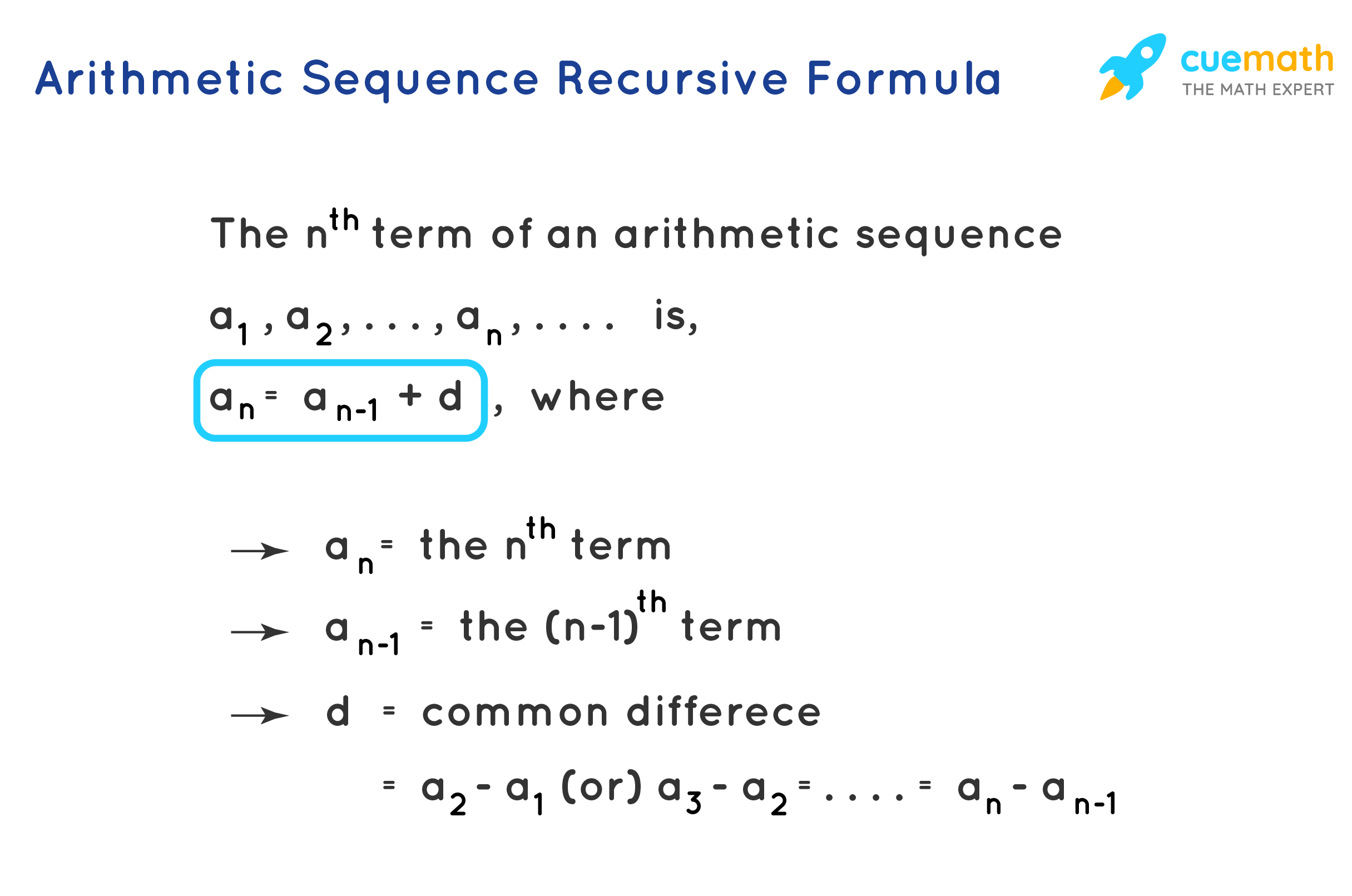
Recurrence relations are mathematical equations that define a sequence or function by relating each term to one or more preceding terms. They are commonly used in computer science, mathematics, and other fields to model real-world phenomena.
A recurrence relation is typically expressed in the form:
$$a_n = f(a_n-1, a_n-2, …, a_n-k)$$
where $a_n$ is the $n$th term of the sequence, $f$ is a function, and $k$ is the order of the recurrence relation.
Order and Degree
The order of a recurrence relation is the number of preceding terms used to define the current term. In the example above, the order is $k$.
The degree of a recurrence relation is the highest power of $n$ that appears in the function $f$.
Initial Conditions
Initial conditions are values that specify the starting values of the sequence. These values are necessary to solve the recurrence relation and determine the specific sequence it defines.
Solving Recurrence Relations
Solving recurrence relations involves finding a closed-form solution for the sequence defined by the recurrence relation. Various methods can be employed to solve recurrence relations, each with its own advantages and applicability.
Method of Substitution
The method of substitution involves repeatedly substituting the recurrence relation into itself until a pattern emerges that can be used to determine the closed-form solution. This method is often straightforward but can become tedious for complex recurrence relations.
Method of Generating Functions
The method of generating functions transforms the recurrence relation into an equation involving generating functions, which are formal power series that encode the sequence. By solving the equation for the generating function and then extracting the coefficients, the closed-form solution can be obtained.
This method is particularly useful for linear recurrence relations with constant coefficients.
Method of Characteristic Equations
The method of characteristic equations involves finding the roots of the characteristic equation associated with the recurrence relation. These roots determine the asymptotic behavior of the sequence and can be used to derive the closed-form solution. This method is applicable to linear recurrence relations with constant coefficients.
Applications of Recurrence Relations

Recurrence relations have diverse applications in computer science, mathematics, and physics. They are particularly useful in modeling real-world phenomena and analyzing the efficiency of algorithms.
In computer science, recurrence relations are used to analyze the time and space complexity of algorithms. For example, the recurrence relation for the Fibonacci sequence, F(n) = F(n-1) + F(n-2), can be used to determine the number of operations required to compute the nth Fibonacci number.
Mathematics
In mathematics, recurrence relations are used to model a wide range of phenomena, including population growth, radioactive decay, and the spread of epidemics. For example, the recurrence relation P(n) = rP(n-1), where ris a constant, can be used to model the growth of a population that increases at a constant rate reach year.
Physics
In physics, recurrence relations are used to model a variety of physical systems, including the motion of a pendulum, the flow of heat through a conductor, and the behavior of electrical circuits. For example, the recurrence relation x(n) =-kx(n-1) , where kis a constant, can be used to model the motion of a pendulum that swings back and forth with decreasing amplitude due to friction.
Advanced Topics in Recurrence Relations

Beyond the fundamental concepts, recurrence relations offer a rich landscape of advanced topics that delve into sophisticated mathematical techniques and applications.
This section explores the frontiers of recurrence relations, including generating functions, asymptotic analysis, number theory applications, and open problems that drive ongoing research.
Generating Functions
Generating functions provide a powerful tool for solving recurrence relations by transforming them into algebraic equations. This technique involves representing a sequence as a power series, allowing for efficient manipulation and analysis.
By constructing the generating function for a sequence, we can leverage algebraic operations to determine the sequence’s properties, such as its asymptotic behavior and closed-form solutions.
Asymptotic Analysis
Asymptotic analysis examines the behavior of recurrence relations as the input or iteration count approaches infinity. This technique allows us to approximate the long-term growth or decay rate of sequences.
Using methods like the master theorem, we can classify recurrence relations based on their asymptotic behavior and determine their asymptotic complexity, providing valuable insights into the efficiency and performance of algorithms.
Number Theory Applications, Recurrence relation calculator
Recurrence relations play a significant role in number theory, particularly in studying the distribution and properties of prime numbers and other number-theoretic functions.
For instance, the famous Collatz conjecture involves a recurrence relation that describes the behavior of a sequence generated by repeatedly applying a specific transformation to numbers. Solving this conjecture would have profound implications for our understanding of number theory.
Open Problems and Research Directions
The field of recurrence relations continues to present challenging open problems and exciting research directions.
- Improving the efficiency of existing algorithms for solving recurrence relations.
- Developing new techniques for analyzing the asymptotic behavior of complex recurrence relations.
- Exploring the connections between recurrence relations and other areas of mathematics, such as combinatorics and algebraic geometry.
These ongoing research efforts contribute to the advancement of our understanding of recurrence relations and their diverse applications.
Closing Notes: Recurrence Relation Calculator
As we bid farewell to the captivating world of recurrence relations, let the knowledge gained serve as a guiding light in your future endeavors. Remember, the journey of discovery is an ongoing one, and the pursuit of mathematical elegance knows no bounds.
