Month over month calculator, a powerful tool for businesses, provides a detailed understanding of growth over time. By calculating the percentage change from one month to the next, it offers valuable insights into trends and performance, enabling businesses to make informed decisions and optimize their strategies.
In this comprehensive guide, we will explore the significance of month over month analysis, delve into the formula and its applications, identify available online tools, and discuss effective reporting and visualization techniques. Join us as we unlock the potential of month over month calculators and empower your business with actionable insights.
Month-over-Month (MoM) Growth Calculation
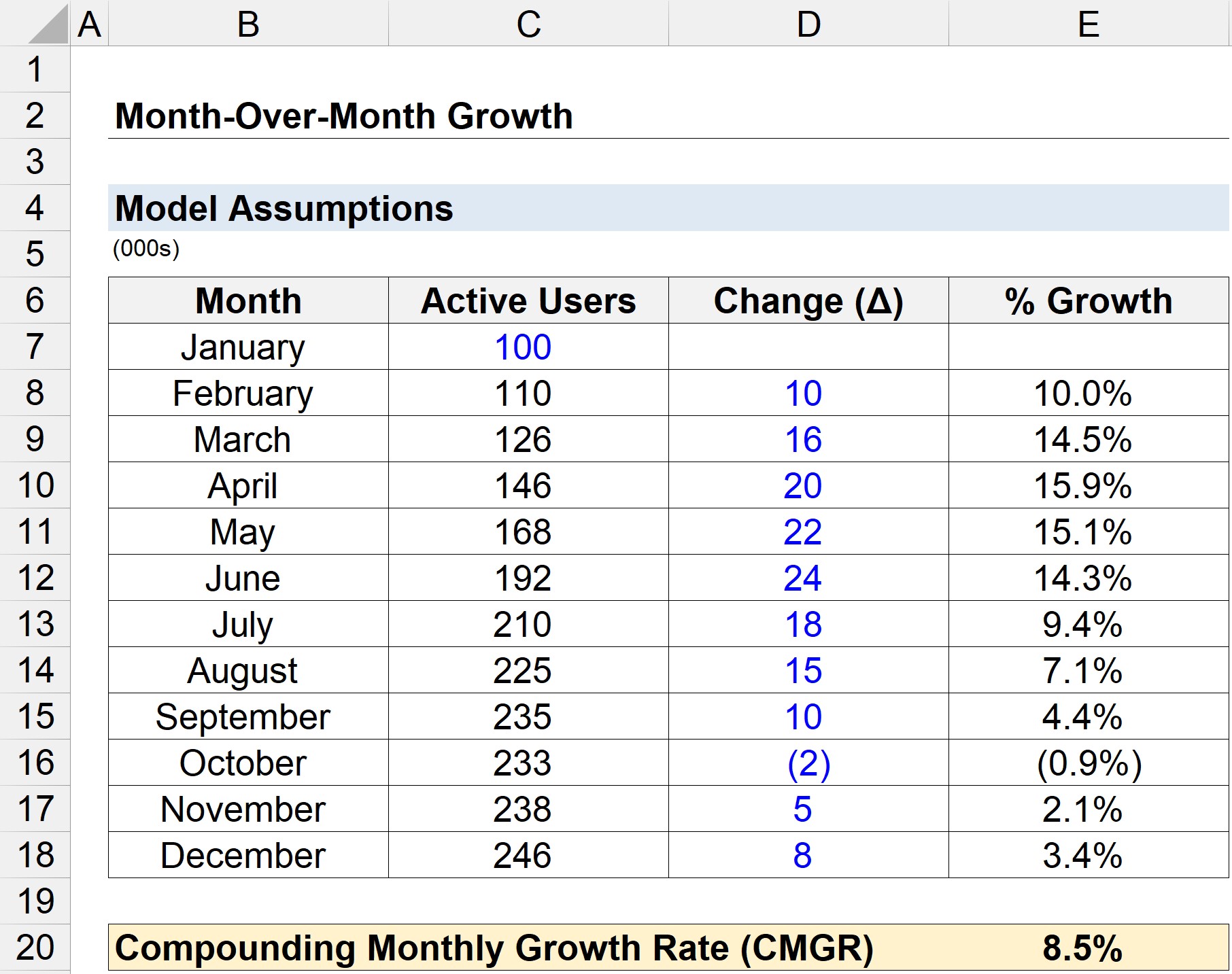
Month-over-Month (MoM) growth is a metric used to measure the percentage change in a value from one month to the next. It is calculated by comparing the current month’s value to the value from the previous month and expressing the difference as a percentage.
The formula for calculating MoM growth is:
MoM Growth = ((Current Month Value
Previous Month Value) / Previous Month Value) x 100
For example, if a company’s revenue in January is $100,000 and its revenue in February is $110,000, the MoM growth for February would be calculated as follows:
MoM Growth = ((110,000
100,000) / 100,000) x 100 = 10%
This means that the company’s revenue grew by 10% from January to February.
Example: Calculating MoM Growth, Month over month calculator
Suppose a company’s website traffic in January is 100,000 visits and in February is 120,000 visits. Calculate the MoM growth for February.
MoM Growth = ((120,000 – 100,000) / 100,000) x 100 = 20%
Therefore, the company’s website traffic grew by 20% from January to February.
MoM Analysis for Business Metrics

Month-over-month (MoM) analysis is a crucial tool for businesses to track and evaluate key performance indicators (KPIs) over time. By comparing current month’s performance to the previous month’s, businesses can identify trends, assess progress, and make informed decisions to optimize their operations.
MoM analysis is particularly valuable for tracking metrics that fluctuate frequently, such as sales, website traffic, customer acquisition costs, and conversion rates. By analyzing these metrics on a month-to-month basis, businesses can quickly identify areas where they are excelling or falling short, enabling them to adjust their strategies accordingly.
Specific Examples of MoM Analysis
Here are a few specific examples of how MoM analysis can be used to benefit businesses:
- Sales growth:By tracking sales revenue on a MoM basis, businesses can identify trends in their sales performance. If sales are consistently increasing, it indicates that the business is growing. Conversely, if sales are declining, it may be a sign of market saturation or competition.
- Website traffic:MoM analysis of website traffic can help businesses understand how their marketing campaigns are performing. An increase in traffic may indicate that a particular campaign is successful, while a decrease may suggest the need for adjustments.
- Customer acquisition costs:Tracking customer acquisition costs on a MoM basis can help businesses optimize their marketing spend. If costs are rising, it may be necessary to re-evaluate the efficiency of marketing channels.
- Conversion rates:MoM analysis of conversion rates can help businesses identify areas where they can improve their website or landing pages. A low conversion rate may indicate a need for design changes or improved copywriting.
MoM Calculator Tools
Calculating MoM growth manually can be tedious and error-prone, especially for large datasets. To simplify the process, various online tools are available that automate the calculations and provide additional features.
Popular MoM Calculator Tools
- Google Sheets MoM Calculator:A free and easy-to-use tool that calculates MoM growth with just a few clicks. It’s ideal for small businesses and individuals who need a quick and simple solution.
- Zoho Analytics MoM Calculator:A comprehensive tool that offers advanced features such as customizable metrics, drill-down capabilities, and integration with other Zoho applications. It’s suitable for businesses of all sizes that need in-depth MoM analysis.
- MoM Calculator by SEOClarity:A specialized tool that focuses on MoM growth for and digital marketing campaigns. It provides insights into website traffic, rankings, and other key metrics.
These tools offer benefits such as:
- Ease of Use:Intuitive interfaces and straightforward calculations make these tools accessible to users of all skill levels.
- Accuracy:Automated calculations eliminate human error, ensuring accurate and reliable results.
- Customization Options:Some tools allow users to customize metrics, time periods, and calculations to suit their specific needs.
MoM Reporting and Visualization: Month Over Month Calculator

Presenting MoM growth data effectively requires clear reporting and visually appealing visualizations. Let’s explore some best practices.
To ensure clarity and consistency, design a standardized report template that includes key metrics, growth rates, and supporting data. This template should facilitate easy comparison of MoM performance across different periods and business units.
Visualizing MoM Data
Visualizing MoM data using charts, graphs, or tables enhances data comprehension and identifies trends. Line charts are commonly used to depict growth over time, allowing for easy identification of fluctuations and patterns. Bar charts are effective for comparing MoM growth rates between different categories or groups.
Tables provide a structured view of MoM data, enabling detailed analysis and comparisons. Consider using color-coding or highlighting to emphasize significant changes or outliers.
Last Word

Month over month calculators have revolutionized business analysis, providing a real-time pulse on growth and performance. By embracing this tool, businesses can stay ahead of the curve, identify opportunities, and make data-driven decisions that drive success. Whether you’re a seasoned professional or just starting out, incorporating month over month analysis into your business practices will undoubtedly yield significant benefits.