How to calculate grades for a year? This question is on the minds of many students and educators alike. Determining student achievement accurately and fairly is crucial for assessing progress and making informed decisions. This guide provides a comprehensive overview of the process, from establishing grading scales to calculating final year grades.
Calculating grades involves multiple steps, including setting grading criteria, collecting student data, calculating term grades, and determining the final year grade. Each step requires careful consideration to ensure consistency, fairness, and transparency in the grading process.
Determine Grading Scale and Weighting
Establishing a clear grading scale and assigning appropriate weights to different assessment types are crucial for ensuring fairness and transparency in grade calculation. A well-defined grading system provides students with a clear understanding of the expectations and the basis on which their performance will be evaluated.
Grading Scale
A grading scale defines the range of grades and their corresponding letter or numerical values. Common grading scales include:
- Percentage-based scale: Grades are expressed as percentages, with 100% representing the highest achievement.
- Letter-based scale: Grades are assigned letters (e.g., A, B, C, D, F), with each letter representing a specific range of percentage scores.
- Hybrid scale: A combination of percentage and letter grades, providing both a numerical and qualitative representation of student performance.
Weighting System
Weighting assigns different values to different assessment types, reflecting their relative importance in the overall grade. Common weighting systems include:
- Equal weighting: All assessment types are given the same weight.
- Percentage weighting: Each assessment type is assigned a specific percentage, with the sum of all weights equaling 100%.
- Point weighting: Each assessment type is assigned a certain number of points, with the total points determining the overall grade.
Communicating the grading scale and weighting system clearly to students is essential. This can be done through course syllabi, handouts, or online platforms, ensuring that students are aware of the expectations and can monitor their progress throughout the semester.
Collect and Track Student Data
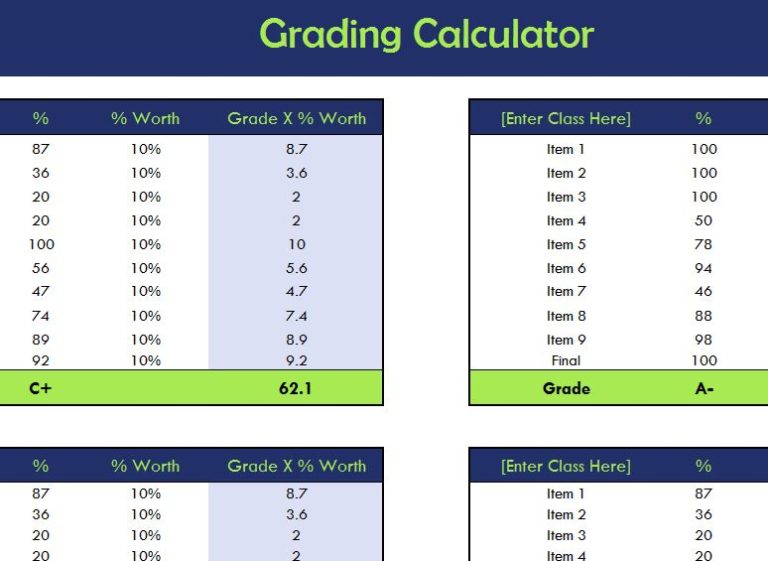
Collecting and tracking student data throughout the year is essential for accurately calculating grades. This data provides a comprehensive record of student performance and helps teachers make informed decisions about grading.
Methods for Collecting Student Data
There are several methods for collecting student data, including:
- Quizzes: Short, focused assessments that test specific learning objectives.
- Assignments: Homework, projects, and other tasks that require students to demonstrate their understanding of the material.
- Projects: Larger, more complex tasks that allow students to apply their learning to real-world scenarios.
- Class Participation: Observations and notes on student engagement, participation, and contributions to class discussions.
Using Grade Books or Other Tools
Grade books or other tools can help teachers organize and track student progress. These tools allow teachers to:
- Record and store student data in one central location.
- Calculate individual assignment grades based on established criteria.
- Track student progress over time and identify areas where additional support may be needed.
Calculating Individual Assignment Grades, How to calculate grades for a year?
Individual assignment grades are typically calculated based on a set of criteria, such as:
- Accuracy: The correctness of the student’s answers.
- Completeness: The extent to which the student has completed the assignment.
- Effort: The amount of time and effort the student has put into the assignment.
Teachers may also consider additional factors, such as the student’s prior knowledge and understanding of the material.
Calculate Term Grades: How To Calculate Grades For A Year?

Term grades combine individual assignment grades based on their assigned weights to provide a comprehensive assessment of student performance over a grading period. Here’s a step-by-step guide:
Step 1: Gather Assignment Grades
Collect all assignment grades for the term, including homework, quizzes, tests, projects, and any other graded activities.
Step 2: Determine Weighting
Refer to the course syllabus or grading policy to determine the weighting assigned to each type of assignment. This will indicate the relative importance of each assignment in calculating the term grade.
Step 3: Calculate Weighted Average
Multiply each assignment grade by its corresponding weight and add the results together. Divide the total by the sum of all weights to calculate the weighted average, which represents the term grade.
Weighted Average = (Assignment Grade 1 * Weight 1 + Assignment Grade 2 * Weight 2 + … + Assignment Grade n * Weight n) / (Weight 1 + Weight 2 + … + Weight n)
Step 4: Utilize Grading Rubrics
To ensure consistency and fairness in grading, consider using grading rubrics. These rubrics provide clear criteria and standards for evaluating student work, reducing subjectivity and promoting transparency.
Finish your research with information from Mortgage payment calculator with escrow.
Determine Final Year Grade

Calculating the final year grade involves combining the term grades based on their assigned weights. This comprehensive guide provides a step-by-step process to determine the final year grade, incorporating relevant formulas and equations.
Calculating Final Year Grade
- Gather all term grades and their corresponding weights.
- Multiply each term grade by its weight.
- Add up the products obtained in step 2.
- Divide the sum from step 3 by the total weight of all terms to get the final year grade.
Formula: Final Year Grade = (Term Grade 1 x Weight 1) + (Term Grade 2 x Weight 2) + … (Term Grade n x Weight n) / Total Weight
Grade Point Averages (GPAs)
GPAs are numerical representations of student achievement, calculated by assigning numerical values to letter grades. They provide a standardized measure for comparing academic performance across institutions and programs.
Last Recap
By following the steps Artikeld in this guide, educators can effectively calculate grades for a year, providing students with a clear understanding of their academic performance. Regular communication with students about grading policies and progress is essential to foster a positive learning environment and support student success.
Clarifying Questions
What is the purpose of a grading scale?
A grading scale provides a standardized framework for assigning numerical or letter grades to student work, allowing for consistent evaluation and comparison of academic performance.
How can I track student progress effectively?
Regularly collecting student data through quizzes, assignments, and projects helps monitor progress and identify areas where additional support may be needed.
What factors should I consider when calculating term grades?
When calculating term grades, consider the weight assigned to each assessment, the student’s performance on individual assignments, and any grading rubrics or criteria used.