
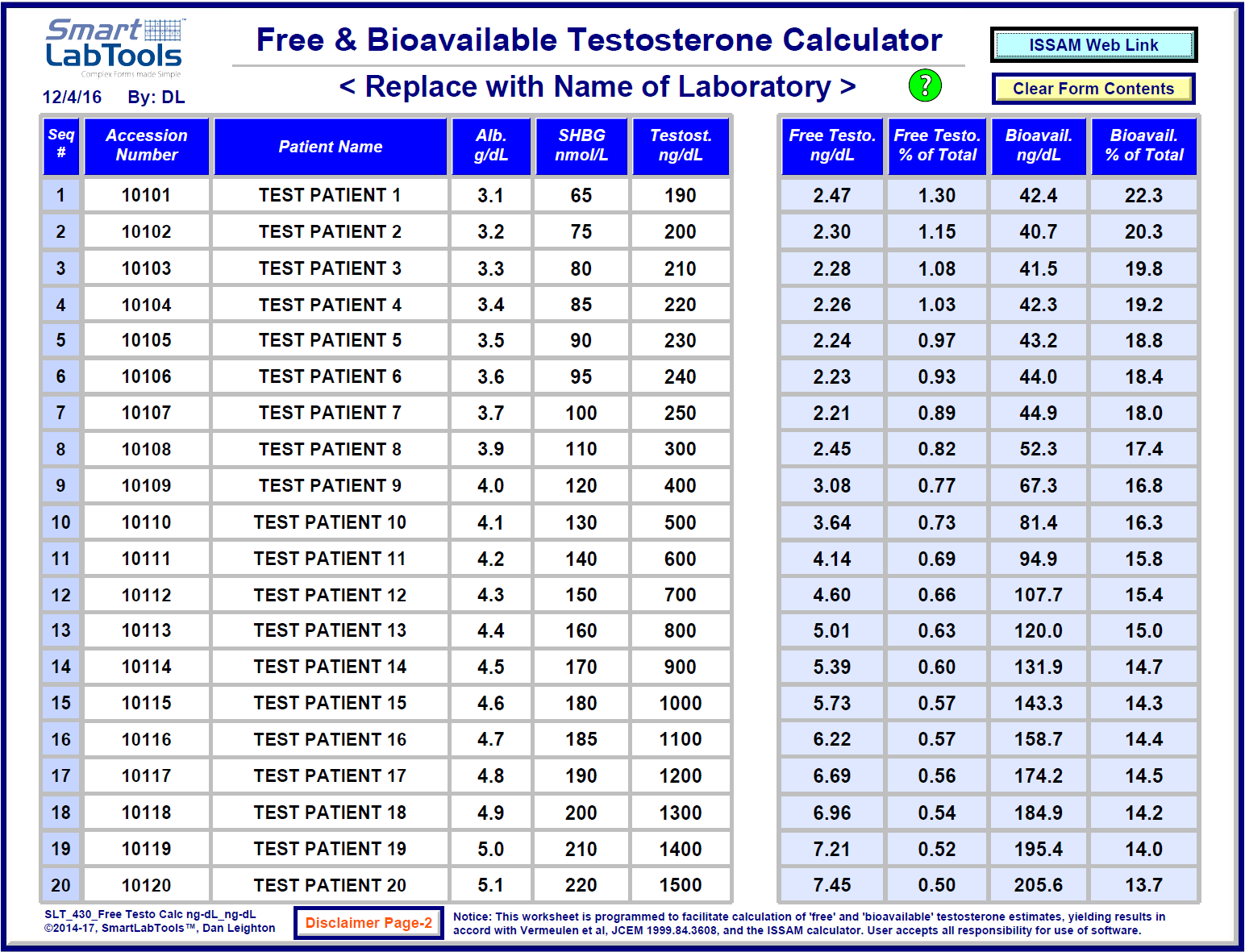
Introducing the Free Testosterone Calculator, your trusted guide to understanding and optimizing your testosterone levels. Testosterone, a crucial hormone for men, plays a vital role in various bodily functions, from muscle mass to sexual health. With our calculator, you can easily calculate your free testosterone levels, empowering you to make informed decisions about your health and well-being.
Dive into the fascinating world of testosterone, explore its different types, and discover the factors that influence its production. Our calculator empowers you with a step-by-step guide to calculating your free testosterone levels, ensuring accuracy and reliability.
Testosterone Basics: Free Testosterone Calculator
Testosterone is a steroid hormone produced primarily in the testicles of men and the ovaries of women, although small amounts are also produced in the adrenal glands. It is responsible for the development of male secondary sexual characteristics, such as increased muscle mass, facial and body hair, and a deeper voice.
Testosterone also plays a role in regulating libido, energy levels, and mood.
Types of Testosterone
There are three main types of testosterone: free testosterone, bound testosterone, and total testosterone. Free testosterone is the active form of the hormone and is responsible for its effects on the body. Bound testosterone is attached to proteins in the blood and is not available to be used by the body.
Total testosterone is the sum of free and bound testosterone.
Factors Affecting Testosterone Levels
Testosterone levels are affected by a number of factors, including age, genetics, diet, and exercise. Testosterone levels typically peak in early adulthood and then decline gradually with age. Genetics also play a role in testosterone levels, with some men having naturally higher levels than others.
Diet and exercise can also affect testosterone levels, with a healthy diet and regular exercise being associated with higher levels.
Calculating Free Testosterone
Calculating free testosterone involves determining the amount of testosterone that is not bound to proteins in the blood. Free testosterone is the biologically active form of testosterone that is responsible for its effects on the body.
There are two main methods used to calculate free testosterone: the equilibrium dialysis method and the immunoassay method.
Equilibrium Dialysis Method
The equilibrium dialysis method is considered the gold standard for measuring free testosterone. This method involves separating the free and bound testosterone in a blood sample using a semipermeable membrane. The free testosterone will pass through the membrane, while the bound testosterone will not.
The concentration of free testosterone in the dialysate can then be measured using a variety of methods, such as mass spectrometry or radioimmunoassay.
The equilibrium dialysis method is a relatively accurate method for measuring free testosterone, but it is also time-consuming and expensive. As a result, it is not commonly used in clinical practice.
Immunoassay Method
The immunoassay method is a more convenient and less expensive method for measuring free testosterone. This method uses antibodies to bind to free testosterone in a blood sample. The amount of free testosterone bound to the antibodies can then be measured using a variety of methods, such as colorimetry or fluorometry.
The immunoassay method is not as accurate as the equilibrium dialysis method, but it is more convenient and less expensive. As a result, it is the most commonly used method for measuring free testosterone in clinical practice.
Limitations of Free Testosterone Measurement
It is important to note that both the equilibrium dialysis method and the immunoassay method have limitations. These limitations include:
- The equilibrium dialysis method can be affected by the temperature and pH of the blood sample.
- The immunoassay method can be affected by the presence of other steroids in the blood sample.
As a result, it is important to interpret the results of free testosterone measurements with caution.
Interpreting Testosterone Results
Once you have calculated your free testosterone level, it’s important to interpret the results correctly. The normal range for free testosterone varies depending on age, sex, and other factors, so it’s important to consult with a healthcare professional to determine what is normal for you.
In general, a free testosterone level that is too low can indicate a problem with the testes, pituitary gland, or hypothalamus. A free testosterone level that is too high can indicate a problem with the adrenal glands or ovaries.
Factors that can affect testosterone levels
There are a number of factors that can affect testosterone levels, including:
- Age
- Sex
- Body fat percentage
- Exercise
- Diet
- Stress
- Sleep
- Medications
- Medical conditions
Testosterone Replacement Therapy
Testosterone replacement therapy (TRT) is a treatment option for men with low testosterone levels. TRT can help to improve symptoms of low testosterone, such as low energy, decreased sex drive, and erectile dysfunction. TRT can also help to improve muscle mass and strength, and may reduce the risk of osteoporosis.
Benefits of Testosterone Replacement Therapy, Free testosterone calculator
- Improved energy levels
- Increased sex drive
- Improved erectile function
- Increased muscle mass and strength
- Reduced risk of osteoporosis
Risks of Testosterone Replacement Therapy
- Increased risk of heart disease
- Increased risk of stroke
- Increased risk of prostate cancer
- Acne
- Hair loss
Types of Testosterone Replacement Therapy
There are several different types of TRT, including:
- Injections
- Gels
- Patches
- Pellets
How to Determine if Testosterone Replacement Therapy is Right for You
If you are experiencing symptoms of low testosterone, you should talk to your doctor about whether TRT is right for you. Your doctor will perform a physical exam and blood test to measure your testosterone levels. Your doctor will also ask you about your symptoms and medical history.
If your testosterone levels are low and you are experiencing symptoms of low testosterone, your doctor may recommend TRT.
Wrap-Up

Unlock the potential of your testosterone levels with our Free Testosterone Calculator. Whether you’re seeking optimal health, enhanced performance, or simply a better understanding of your body, our calculator provides the insights you need. Join the revolution and take control of your testosterone levels today!
