Embark on a scientific journey with the Enthalpy Change Calculator, an indispensable tool for deciphering the energetic transformations that govern chemical reactions. Delve into the fascinating realm of thermodynamics, where enthalpy change unveils the spontaneity, equilibrium, and countless industrial applications of chemical processes.
From unraveling the intricacies of Hess’s law to harnessing the power of calorimetry, this comprehensive guide empowers you to master the art of enthalpy change calculations. Prepare to unravel the secrets of chemical reactions and unlock a deeper understanding of the molecular world.
Enthalpy Change Calculations
Enthalpy change is a crucial thermodynamic property that measures the heat transferred during a chemical reaction. Understanding how to calculate enthalpy change is essential for predicting the spontaneity and feasibility of reactions.
Calculating Enthalpy Change Using Standard Enthalpy of Formation
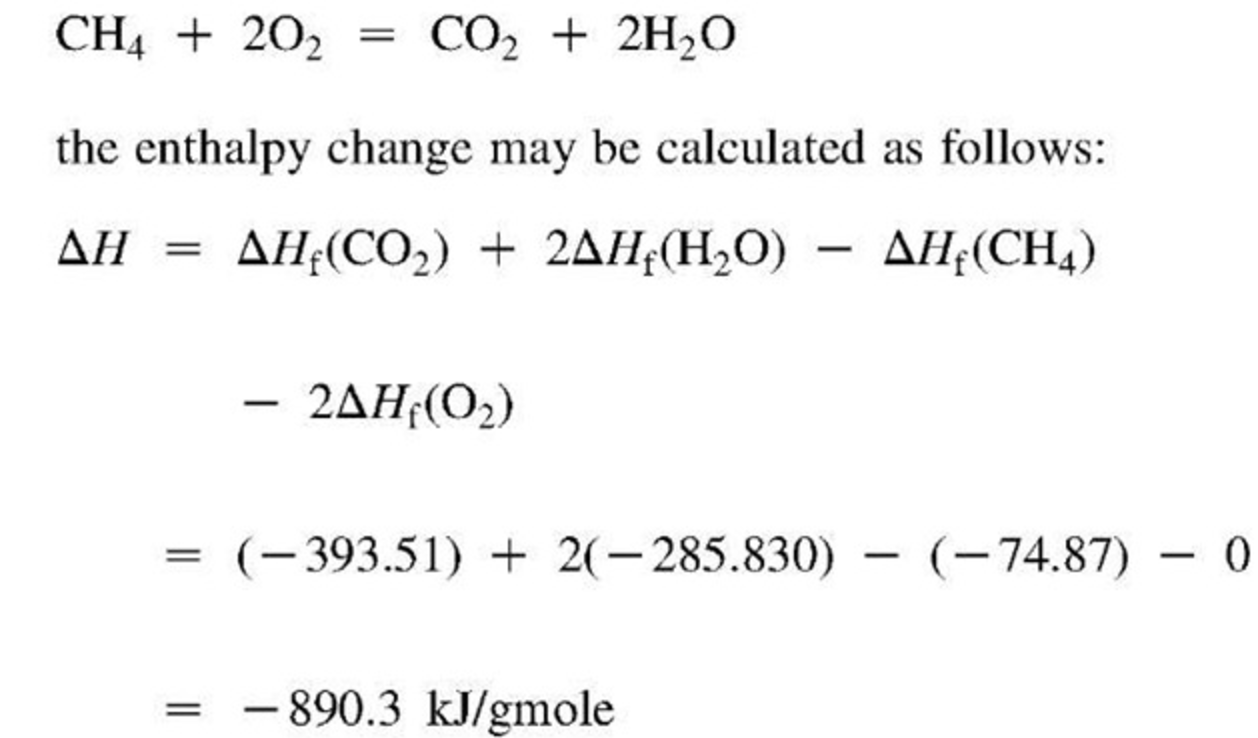
The standard enthalpy of formation is the enthalpy change associated with the formation of one mole of a compound from its constituent elements in their standard states. Using these values, we can calculate the enthalpy change of a reaction as follows:
- Identify the balanced chemical equation for the reaction.
- Look up the standard enthalpy of formation values for the reactants and products.
- Multiply the standard enthalpy of formation of each reactant by its stoichiometric coefficient.
- Subtract the sum of the enthalpy of formation values of the reactants from the sum of the enthalpy of formation values of the products.
- The result is the enthalpy change for the reaction.
For example, consider the reaction: 2H 2+ O 2→ 2H 2O.
Using the standard enthalpy of formation values:
- ΔH fo(H 2) = 0 kJ/mol
- ΔH fo(O 2) = 0 kJ/mol
- ΔH fo(H 2O) = -286 kJ/mol
ΔH = [2 × ΔH fo(H 2O)] – [2 × ΔH fo(H 2) + ΔH fo(O 2)]
ΔH = [2 × (-286 kJ/mol)] – [2 × 0 kJ/mol + 0 kJ/mol]
ΔH = -572 kJ/mol
Applying Hess’s Law to Complex Reactions
Hess’s law states that the enthalpy change for a reaction is independent of the pathway taken. This means we can calculate the enthalpy change for complex reactions by breaking them down into a series of simpler steps, using the enthalpy changes of the individual steps.
For example, consider the reaction: C(s) + O 2(g) → CO 2(g)
We can break this reaction down into the following steps:
- C(s) + 1/2O 2(g) → CO(g) ΔH = -110 kJ/mol
- CO(g) + 1/2O 2(g) → CO 2(g) ΔH = -283 kJ/mol
The overall enthalpy change for the reaction is the sum of the enthalpy changes for the individual steps:
ΔH = ΔH 1+ ΔH 2
ΔH = -110 kJ/mol + (-283 kJ/mol)
ΔH = -393 kJ/mol
Limitations of Enthalpy Change Calculations
While enthalpy change calculations are a valuable tool, they have certain limitations:
- They assume constant temperature and pressure.
- They do not account for kinetic factors that may affect the reaction rate.
- They do not provide information about the mechanism of the reaction.
It is important to consider these limitations when interpreting enthalpy change calculations.
Applications of Enthalpy Change

Enthalpy change, a measure of the energy exchanged between a system and its surroundings, plays a crucial role in various fields. It serves as a valuable tool for predicting the spontaneity of reactions, determining equilibrium constants, and optimizing industrial processes.
Predicting Reaction Spontaneity
The sign of enthalpy change indicates the spontaneity of a reaction. An exothermic reaction (ΔH < 0) releases heat to the surroundings, making it spontaneous. Conversely, an endothermic reaction (ΔH > 0) absorbs heat from the surroundings, requiring an input of energy to occur.
Determining Equilibrium Constant
Enthalpy change is related to the equilibrium constant (K) of a reaction through the Gibbs free energy equation: ΔG = ΔH – TΔS. At constant temperature, a more negative ΔH corresponds to a larger equilibrium constant, indicating a greater tendency for the reaction to proceed in the forward direction.
Industrial Applications
Enthalpy change finds numerous applications in industrial processes:
- Combustion:The enthalpy change of combustion reactions determines the amount of heat released during fuel combustion, influencing engine efficiency and fuel economy.
- Energy Storage:Thermal energy storage systems rely on materials with high enthalpy changes to absorb and release heat, providing efficient energy storage solutions.
Experimental Determination of Enthalpy Change

Experimental determination of enthalpy change involves measuring the heat released or absorbed during a reaction using calorimetry. Calorimetry is a technique that measures the change in temperature of a system as a reaction occurs.
Design an Experiment to Measure Enthalpy Change Using Calorimetry
To design an experiment to measure enthalpy change using calorimetry, follow these steps:
- Identify the reaction of interest.
- Choose an appropriate calorimeter for the reaction.
- Calibrate the calorimeter by measuring the heat capacity of the system.
- Carry out the reaction in the calorimeter and measure the change in temperature.
- Calculate the enthalpy change using the equation ΔH =
q/n, where ΔH is the enthalpy change, q is the heat released or absorbed, and n is the number of moles of reactants.
Analysis of Calorimetry Data to Calculate Enthalpy Change
To analyze calorimetry data to calculate enthalpy change, follow these steps:
- Plot a graph of temperature change versus time.
- Calculate the slope of the graph, which represents the rate of heat flow.
- Multiply the slope by the heat capacity of the system to obtain the heat released or absorbed.
- Divide the heat released or absorbed by the number of moles of reactants to obtain the enthalpy change.
Sources of Error in Experimental Enthalpy Change Measurements, Enthalpy change calculator
There are several sources of error in experimental enthalpy change measurements, including:
- Heat loss to the surroundings
- Incomplete reaction
- Calibration errors
- Measurement errors
To minimize these errors, it is important to use a well-calibrated calorimeter, carry out the reaction in a controlled environment, and take multiple measurements.
Advanced Topics in Enthalpy Change: Enthalpy Change Calculator
Enthalpy change is a versatile concept that extends beyond simple chemical reactions. In this section, we will explore advanced topics in enthalpy change, including its relationship with entropy, the concept of activation energy, and its role in computational chemistry and molecular simulations.
Relationship Between Enthalpy Change and Entropy Change
Enthalpy change is related to entropy change through the Gibbs free energy change (ΔG), which is given by the equation ΔG = ΔH – TΔS. This equation shows that enthalpy change (ΔH) and entropy change (ΔS) are opposing factors in determining the spontaneity of a reaction.
In general, reactions with a negative ΔG are spontaneous, while reactions with a positive ΔG are nonspontaneous.
Enthalpy of Activation
The enthalpy of activation (ΔH ‡) is the minimum amount of energy that must be supplied to a system for a reaction to occur. It represents the energy barrier that must be overcome for the reactants to reach the transition state, which is the highest energy point along the reaction pathway.
The magnitude of ΔH ‡affects the reaction rate, with higher activation energies leading to slower reaction rates.
Enthalpy Change in Computational Chemistry and Molecular Simulations
Enthalpy change plays a crucial role in computational chemistry and molecular simulations. These techniques use computer models to predict the properties and behavior of molecules and materials. Enthalpy change calculations are used to determine the stability of molecules, predict reaction pathways, and design new materials with desired properties.
Final Review

As we conclude our exploration of enthalpy change, remember that this remarkable concept holds the key to predicting reaction spontaneity, determining equilibrium constants, and optimizing industrial processes. Embrace the Enthalpy Change Calculator as your trusted companion, guiding you through the complexities of thermodynamics and empowering you to unravel the mysteries of chemical transformations.