
Electric field calculators are indispensable tools for engineers, physicists, and students working in the realm of electromagnetism. They provide a convenient and efficient way to calculate electric fields in various geometries, enabling the design and analysis of electrical devices, circuits, and systems.
This comprehensive guide delves into the intricacies of electric field calculators, exploring their applications, advanced features, and best practices. We’ll equip you with the knowledge and skills to harness the power of these calculators and unlock the mysteries of electric fields.
Electric Field Calculations for Various Geometries
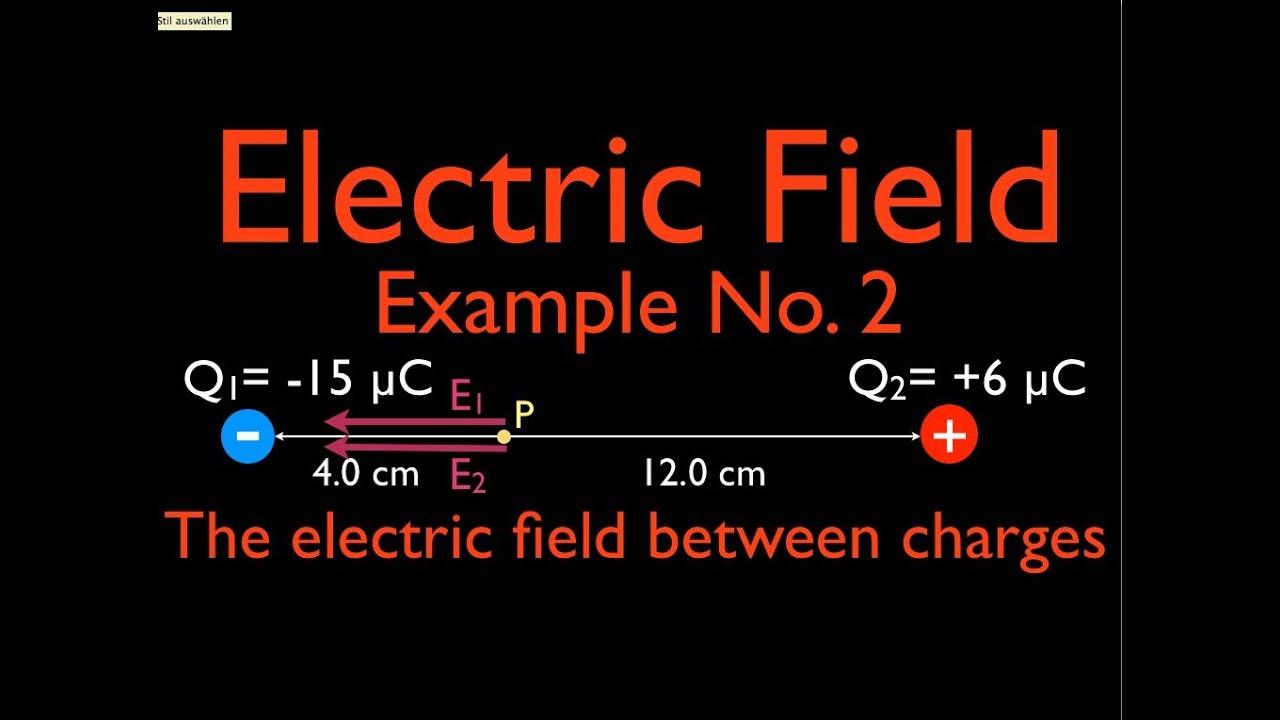
The electric field, denoted by E, is a vector quantity that describes the strength and direction of the electric force experienced by a charged particle. It is a fundamental concept in electromagnetism and plays a crucial role in understanding the behavior of charged particles and the interactions between them.
The electric field can be calculated for various geometries using specific equations and formulas. These formulas depend on the distribution of charges and the geometry of the system under consideration.
Point Charges
For a point charge q located at the origin, the electric field at a distance r from the charge is given by:
E = k
q / r2
where k is the Coulomb constant (k = 8.98755 × 10 9N m 2/C 2).
Dipoles
A dipole consists of two equal and opposite charges separated by a small distance. The electric field of a dipole at a point P, which is at a distance r from the center of the dipole and on the perpendicular bisector of the dipole axis, is given by:
E = (1 / 4πε0)
(2p / r3)
where p is the dipole moment (p = qd, where q is the magnitude of each charge and d is the separation between the charges) and ε 0is the permittivity of free space (ε 0= 8.85 × 10 -12C 2/Nm 2).
Infinite Planes
The electric field due to an infinite plane with a uniform surface charge density σ is given by:
E = σ / 2ε0
where ε 0is the permittivity of free space.
Superposition
The principle of superposition states that the electric field at a point due to multiple charges is the vector sum of the electric fields due to each individual charge. This principle is essential for calculating the electric field in complex systems with multiple charges.
Interactive tools and visual representations can be created to allow users to select a geometry and input parameters to calculate the electric field. These tools can provide a user-friendly and interactive way to explore the electric field for different geometries.
Applications of Electric Field Calculators
Electric field calculators are valuable tools in various scientific and engineering disciplines. They provide insights into the distribution and strength of electric fields, which are essential for understanding and designing electrical devices, circuits, and systems.
In electrostatics, electric field calculators help analyze the distribution of electric charges and the resulting electric fields. This knowledge is crucial for designing capacitors, insulators, and other electrostatic devices.
Electronics, Electric field calculator
In electronics, electric field calculators aid in the design and analysis of electronic circuits. They help determine the electric fields within transistors, integrated circuits (ICs), and other electronic components. This information is essential for optimizing circuit performance, preventing electromagnetic interference (EMI), and ensuring device reliability.
Electromagnetism
Electric field calculators are also used in electromagnetism to study the interaction between electric and magnetic fields. They help analyze the propagation of electromagnetic waves, design antennas, and investigate electromagnetic compatibility (EMC) issues.
Limitations and Assumptions
While electric field calculators are powerful tools, they have certain limitations and assumptions. These include:
- Linearity:Calculators typically assume a linear relationship between electric charge and electric field. This assumption may not hold in all situations, such as in the presence of strong electric fields or nonlinear materials.
- Material Properties:Calculators rely on accurate material properties, such as permittivity and conductivity. Inaccurate material data can lead to errors in the calculated electric field.
- Computational Accuracy:The accuracy of electric field calculators depends on the numerical methods and algorithms used. Different calculators may yield slightly different results, especially for complex geometries.
Advanced Features of Electric Field Calculators

Electric field calculators are powerful tools that can be used to solve a wide variety of problems. Advanced features enhance their capabilities, enabling them to tackle even more complex problems.
One advanced feature is the ability to specify boundary conditions and material properties. This allows users to model real-world scenarios more accurately. For example, a user could specify the boundary conditions of a capacitor or the material properties of a conductor.
Finite Element Analysis
Another advanced feature is finite element analysis (FEA). FEA is a numerical technique that can be used to solve complex problems by dividing them into smaller, more manageable pieces. This allows users to solve problems that would be impossible to solve analytically.
Time-Varying Fields
Finally, some electric field calculators can also handle time-varying fields. This allows users to model problems where the electric field changes over time. For example, a user could model the electric field around an antenna.
These are just a few of the advanced features that are available in electric field calculators. By using these features, users can solve a wide variety of complex problems.
Best Practices for Using Electric Field Calculators

Electric field calculators are powerful tools for analyzing and visualizing electric fields in various geometries and applications. To ensure accurate and effective use, it is essential to follow best practices and avoid common pitfalls.
Before selecting an electric field calculator, it is crucial to understand the specific requirements of your application. Consider the geometry of the system, the types of charges involved, and the desired level of accuracy. Choosing the appropriate calculator will help minimize errors and ensure reliable results.
Checklist for Accurate Results
- Verify Input Data:Double-check the values of charges, distances, and other parameters entered into the calculator.
- Understand Assumptions:Be aware of the assumptions and limitations of the calculator. Some calculators may assume point charges or ignore fringe effects.
- Validate Results:Compare the results with analytical solutions or experimental measurements, if available, to assess their validity.
- Consider Boundary Conditions:Ensure that the calculator can handle the boundary conditions of your system, such as grounded surfaces or dielectric interfaces.
- Use Appropriate Units:Pay attention to the units used in the calculator and ensure consistency with your input and output values.
Summary
Electric field calculators have revolutionized the way we analyze and design electrical systems. Their versatility and accuracy make them invaluable tools for researchers, engineers, and anyone seeking to understand the behavior of electric fields. As the field of electromagnetism continues to advance, we can expect even more sophisticated and powerful electric field calculators to emerge, further empowering us to explore the intricacies of the electrical world.
