The cell dilution calculator is an essential tool for researchers and scientists working with cells. It helps determine the appropriate dilution factor to achieve the desired cell concentration, ensuring accurate cell counting and reliable experimental results.
This versatile tool finds applications in various scientific disciplines, including cell biology, microbiology, and immunology. By providing precise cell counts, it aids in cell viability determination, cell culture experiments, and experimental protocol design.
Cell Dilution Calculator

A cell dilution calculator is a tool that helps scientists calculate the appropriate dilution factor for a cell suspension to achieve a desired cell concentration.
There are different types of cell dilution calculators available, each with its own features and capabilities. Some calculators are simple and only allow users to enter the initial cell concentration, the desired cell concentration, and the volume of the cell suspension.
Other calculators are more complex and allow users to enter additional information, such as the volume of the diluent, the type of diluent, and the temperature of the cell suspension.
Examples of How Cell Dilution Calculators Are Used in Scientific Research
- Preparing cell suspensions for cell culture experiments
- Counting cells using a hemocytometer
- Performing cell viability assays
- Preparing cell suspensions for flow cytometry
Factors to Consider When Using a Cell Dilution Calculator
Using a cell dilution calculator can streamline your cell culture workflow, but it’s crucial to consider several factors to ensure accurate and reliable results.
Importance of Accurate Cell Counting
Accurate cell counting is essential for determining the appropriate dilution factor and avoiding over- or under-dilution. Over-dilution can lead to insufficient cell numbers for downstream applications, while under-dilution can result in overcrowded cultures and reduced cell viability.
Determining the Appropriate Dilution Factor
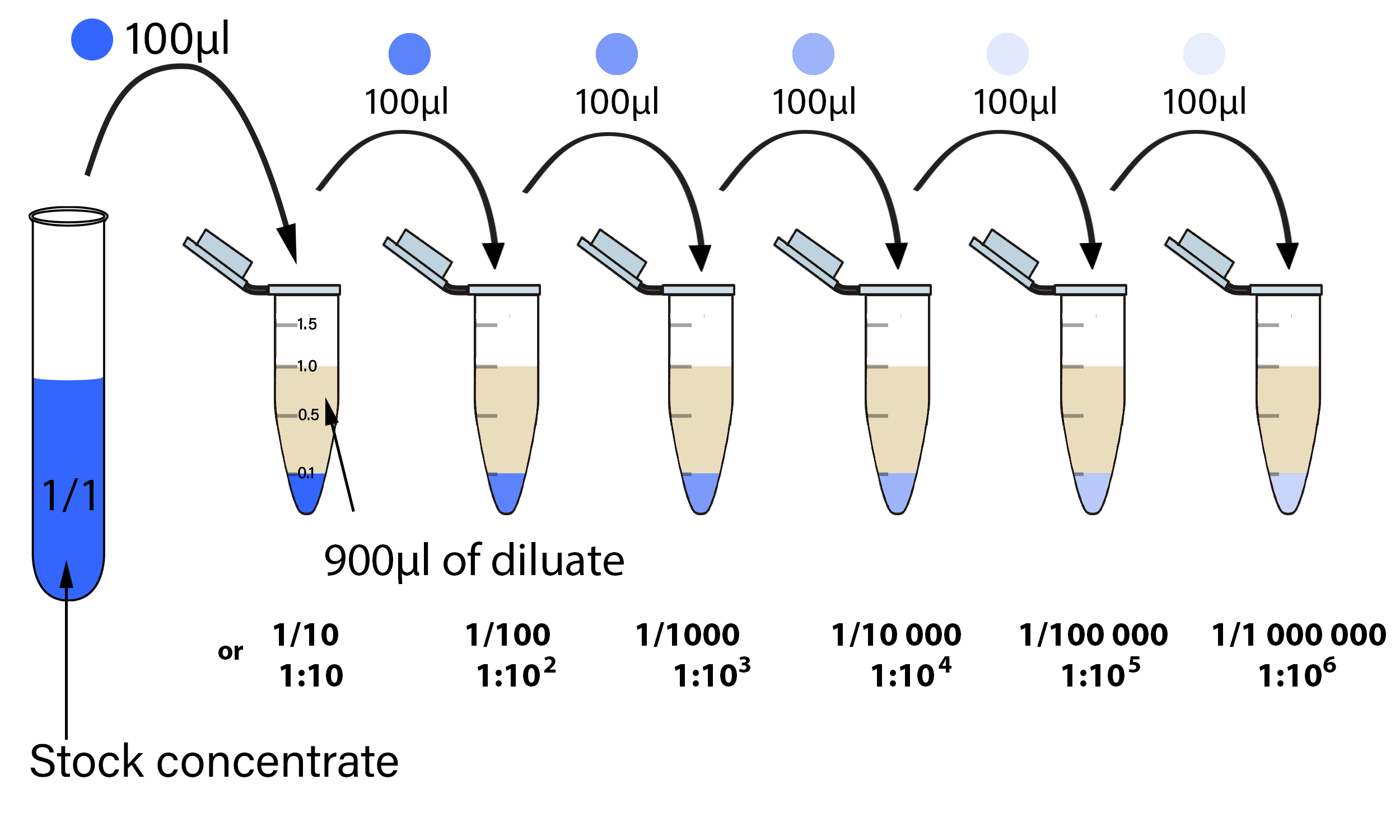
The appropriate dilution factor depends on the desired cell concentration and the starting cell density. The calculator uses the formula:
Dilution Factor = Desired Cell Concentration / Starting Cell Density
For example, if you want to achieve a cell concentration of 100,000 cells/mL and your starting cell density is 1,000,000 cells/mL, the dilution factor would be 10.
Potential Sources of Error in Cell Dilution Calculations
- Inaccurate cell counting:Using a reliable cell counting method is crucial to avoid errors in dilution calculations.
- Pipetting errors:Accurate pipetting techniques are essential to ensure the correct volume of cells and diluent are used.
- Incomplete mixing:Thoroughly mixing the cell suspension after dilution is important to ensure a homogeneous distribution of cells.
- Evaporation:Evaporation can occur during the dilution process, leading to changes in cell concentration.
Applications of Cell Dilution Calculators

Cell dilution calculators are versatile tools with a wide range of applications in scientific research and laboratory settings. These calculators are particularly useful for experiments involving cells, where precise cell concentrations and viability are crucial.
Determining Cell Viability, Cell dilution calculator
Cell viability is a critical parameter in cell culture and other biological assays. Cell dilution calculators can assist in determining cell viability by providing accurate dilutions that ensure a suitable cell concentration for analysis. By diluting the cell suspension to an appropriate concentration, researchers can accurately count viable cells using methods such as trypan blue staining or flow cytometry.
Cell Culture Experiments
Cell dilution calculators are indispensable in cell culture experiments, where precise cell seeding densities are essential for optimal cell growth and differentiation. These calculators help researchers determine the volume of cell suspension required to achieve a desired cell concentration in the culture medium.
By maintaining the correct cell density, researchers can optimize cell proliferation, differentiation, and metabolic activity.
Flow Cytometry Analysis
Cell dilution calculators play a crucial role in flow cytometry analysis, a technique used to characterize cell populations based on their size, granularity, and specific markers. Accurate cell dilution is necessary to ensure that the cell suspension is at an optimal concentration for analysis.
By using cell dilution calculators, researchers can adjust the cell concentration to a level that allows for clear discrimination between different cell populations and accurate data acquisition.
Microscopy Imaging
Cell dilution calculators are also useful in microscopy imaging, where cell density can affect image quality and data interpretation. By diluting the cell suspension to an appropriate concentration, researchers can ensure that cells are well-spaced and visible for microscopy analysis.
This allows for accurate cell counting, morphological assessment, and image-based assays.
Advanced Features of Cell Dilution Calculators
Cell dilution calculators are powerful tools that can be used to calculate cell concentrations, design experimental protocols, and perform a variety of other tasks. In this section, we will discuss some of the advanced features of cell dilution calculators, including how to use them to calculate cell concentrations and design experimental protocols.
Calculating Cell Concentrations
One of the most basic functions of a cell dilution calculator is to calculate cell concentrations. This is done by dividing the number of cells in a sample by the total volume of the sample. The result is expressed as cells per milliliter (cells/mL).
To calculate cell concentration using a cell dilution calculator, you will need to know the following information:
- The number of cells in the sample
- The total volume of the sample
Once you have this information, you can enter it into the cell dilution calculator and it will calculate the cell concentration for you.
Designing Experimental Protocols
Cell dilution calculators can also be used to design experimental protocols. This is done by calculating the amount of dilution that is needed to achieve a desired cell concentration. To design an experimental protocol using a cell dilution calculator, you will need to know the following information:
- The desired cell concentration
- The starting cell concentration
Once you have this information, you can enter it into the cell dilution calculator and it will calculate the amount of dilution that is needed to achieve the desired cell concentration.
Last Word
In summary, the cell dilution calculator is an indispensable tool for accurate cell counting and experimental design. Its advanced features and ease of use make it a valuable asset for researchers across multiple scientific fields.