Introducing the cation and anion calculator, your indispensable tool for understanding the fundamentals of ionic compounds. Dive into the fascinating world of cations and anions, where we’ll explore their charges, formation, and practical applications.
From calculating the charge of ions to naming ionic compounds, this comprehensive guide will equip you with the knowledge to navigate the realm of ionic chemistry with confidence.
Cation and Anion Charge Calculation
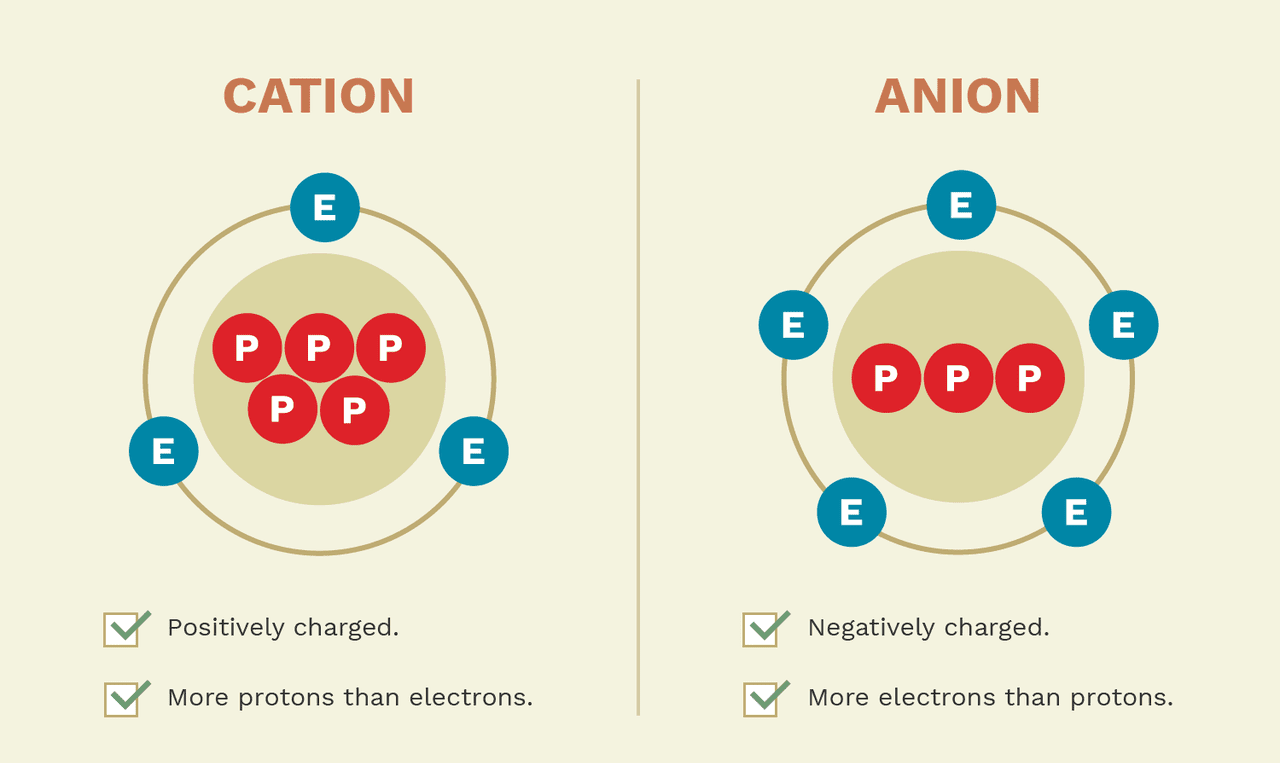
In chemistry, ions are charged particles that form when atoms or molecules lose or gain electrons. Cations are positively charged ions, while anions are negatively charged ions. The charge of an ion is determined by the number of electrons it has lost or gained.
To calculate the charge of a cation, we need to know the number of electrons it has lost. For example, sodium (Na) has one valence electron. When sodium loses this electron, it becomes a cation with a charge of +1. This is because the sodium ion now has one more proton than electron, resulting in a net positive charge.
To calculate the charge of an anion, we need to know the number of electrons it has gained. For example, chlorine (Cl) has seven valence electrons. When chlorine gains one electron, it becomes an anion with a charge of -1. This is because the chlorine ion now has one more electron than proton, resulting in a net negative charge.
Examples of Cation and Anion Charge Calculations
- Sodium (Na): Sodium has one valence electron. When sodium loses this electron, it becomes a cation with a charge of +1.
- Calcium (Ca): Calcium has two valence electrons. When calcium loses these two electrons, it becomes a cation with a charge of +2.
- Chloride (Cl): Chloride has seven valence electrons. When chlorine gains one electron, it becomes an anion with a charge of -1.
- Oxygen (O): Oxygen has six valence electrons. When oxygen gains two electrons, it becomes an anion with a charge of -2.
Ionic Compound Formation and Nomenclature
Ionic compounds are formed when cations and anions combine in a specific ratio to achieve electrical neutrality. The formation of ionic compounds involves the transfer of electrons between atoms, resulting in the creation of charged species.
To name ionic compounds, we use the following steps:
Naming Cations
- For cations of metals with only one common oxidation state, the name of the cation is simply the name of the metal followed by the suffix “-ion”. For example, Na+ is sodium ion.
- For cations of metals with multiple common oxidation states, the name of the cation includes the name of the metal followed by a Roman numeral in parentheses indicating the oxidation state. For example, Fe2+ is iron(II) ion and Fe3+ is iron(III) ion.
Naming Anions
- For monatomic anions, the name of the anion is the name of the element followed by the suffix “-ide”. For example, Cl- is chloride ion.
- For polyatomic anions, the name of the anion includes the root name of the element followed by the suffix “-ate” or “-ite”. The suffix “-ate” is used for the anion with the higher oxidation state, and the suffix “-ite” is used for the anion with the lower oxidation state.
For example, SO42- is sulfate ion and SO32- is sulfite ion.
Combining Cation and Anion Names
- To name an ionic compound, we combine the name of the cation and the name of the anion. The name of the cation is written first, followed by the name of the anion.
- The charges of the cation and anion must balance each other out to form a neutral compound. This means that the number of positive charges on the cation must be equal to the number of negative charges on the anion.
Examples of Ionic Compound Formation and Nomenclature
- Sodium and chlorine form the ionic compound sodium chloride (NaCl). Sodium has a +1 charge and chlorine has a -1 charge, so the charges balance out.
- Iron(III) and sulfate form the ionic compound iron(III) sulfate (Fe2(SO4)3). Iron(III) has a +3 charge and sulfate has a -2 charge, so the charges balance out by using a ratio of 2:3.
- Ammonium and nitrate form the ionic compound ammonium nitrate (NH4NO3). Ammonium has a +1 charge and nitrate has a -1 charge, so the charges balance out.
Applications of Cation and Anion Calculator

Cation and anion calculators are valuable tools with diverse applications across various fields, particularly in chemistry, biochemistry, and environmental science.
In Analytical Chemistry
These calculators assist in determining the charge of cations and anions present in a solution, which is crucial for:
- Identifying unknown ions through qualitative analysis.
- Quantifying ion concentrations using techniques like ion chromatography.
- Predicting the solubility and behavior of ions in different solvents.
In Biochemistry
Cation and anion calculators are essential for understanding:
- The charge distribution of proteins, which influences their structure and function.
- The transport of ions across cell membranes, which is vital for cellular processes.
- The acid-base balance in biological systems, which affects enzyme activity and overall cell function.
In Environmental Science, Cation and anion calculator
These calculators aid in assessing:
- The ionic composition of water samples, which helps determine water quality.
- The mobility and fate of ions in soil and groundwater, which is important for understanding pollutant transport.
- The impact of ion exchange reactions on soil fertility and plant growth.
Overall, cation and anion calculators simplify complex calculations, saving time and reducing errors. However, it’s important to note that these calculators have limitations, such as not accounting for ion pairing or complexation effects. Therefore, their results should be interpreted with caution and in conjunction with other experimental data.
Advanced Features and Considerations

Cation and anion calculators often offer advanced features to enhance their functionality and accuracy. These may include:
Advanced Functionalities
- Multivalent Ion Handling:Calculators can handle ions with multiple charges, ensuring precise calculations for complex compounds.
- Error Checking and Validation:They check for incorrect or invalid inputs, alerting users to potential errors and preventing incorrect results.
- Customizable Parameters:Users can adjust settings like precision levels and calculation methods to tailor the calculator to their specific needs.
Choosing the Right Calculator
When selecting a cation and anion calculator, consider the following factors:
- Purpose:Determine the specific tasks you need the calculator for, such as ionic compound formation, charge calculation, or formula identification.
- Features:Assess the available features and ensure they align with your requirements. Consider advanced functionalities like multivalent ion handling if needed.
- Accuracy:Verify the calculator’s accuracy by comparing its results with known values or using multiple calculators for cross-checking.
Interpreting Results
Interpreting the results obtained from cation and anion calculators is crucial. Consider the following:
- Charge Calculation:The calculator provides the total charge of the ion, which is essential for understanding its chemical properties.
- Ionic Compound Formation:The calculator can predict the formula and name of the ionic compound formed between two ions, helping you understand chemical bonding.
- Balancing Equations:The charge information can be used to balance chemical equations, ensuring the conservation of charge.
Outcome Summary

The cation and anion calculator is an invaluable resource for students, educators, and professionals alike. Whether you’re tackling complex chemical equations or simply expanding your knowledge of ionic compounds, this tool will empower you to unlock the secrets of ionic chemistry.