
The twos complement calculator, a powerful tool in the realm of digital systems, empowers us to delve into the intricate world of signed integer representation. With its ability to convert binary numbers into their two’s complement counterparts, this calculator simplifies arithmetic operations and unlocks the potential of digital systems.
Discover the inner workings of two’s complement, unravel its applications in computer hardware, and explore the advantages and disadvantages of using this ingenious representation method.
Concept of Two’s Complement
Two’s complement is a method for representing signed integers in binary form. It is the most common method used in computers today.
In two’s complement, the most significant bit (MSB) of a binary number represents the sign of the number. A 0 in the MSB indicates a positive number, while a 1 indicates a negative number.
Positive Integers
Positive integers are represented in two’s complement by simply using the binary representation of the number. For example, the decimal number 5 is represented in two’s complement as 0101.
Negative Integers
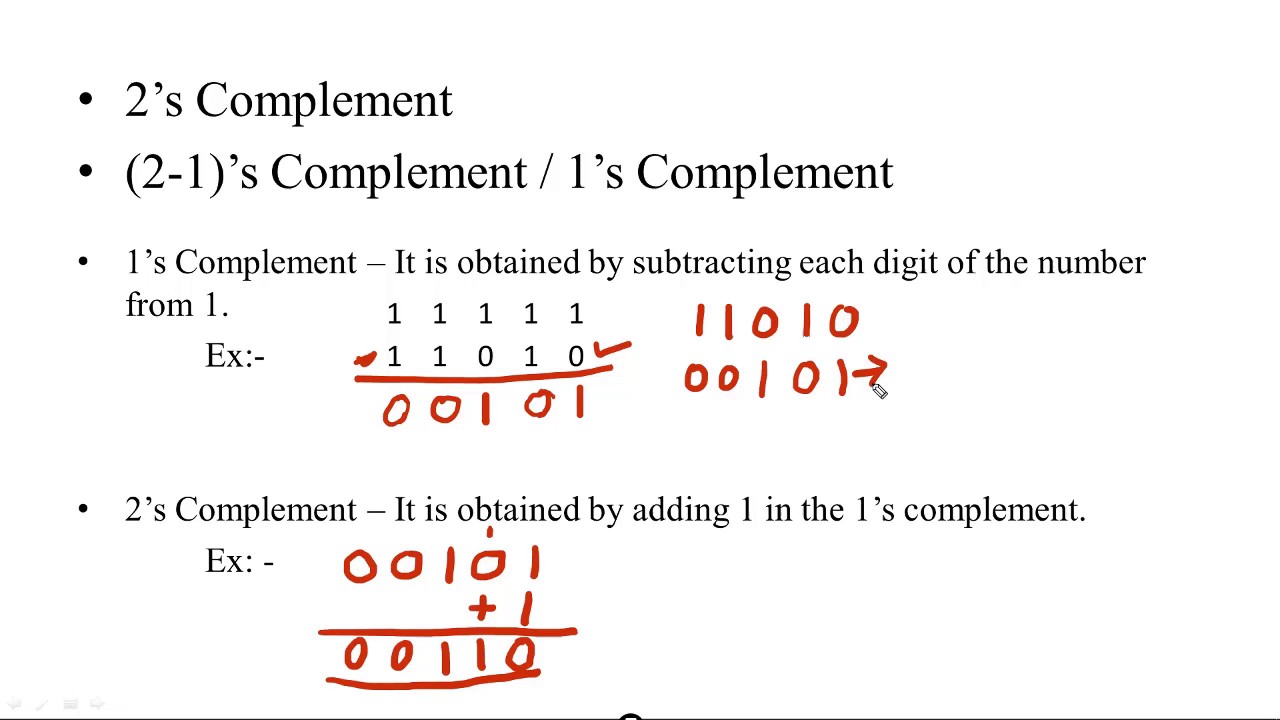
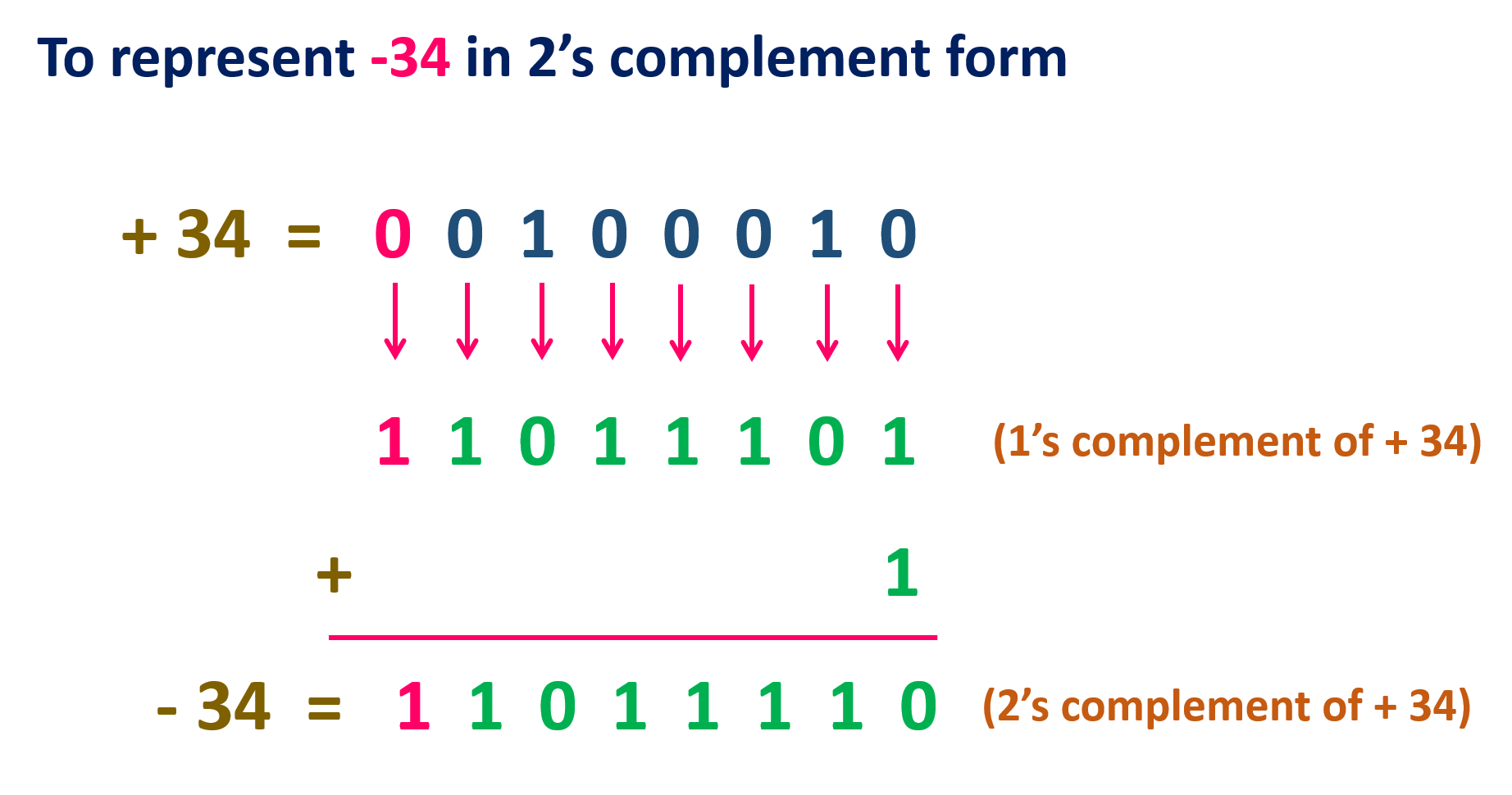
Negative integers are represented in two’s complement by taking the two’s complement of the positive representation of the number. The two’s complement of a number is found by inverting all the bits in the number and then adding 1.
For example, the decimal number -5 is represented in two’s complement as 1011. This is found by inverting all the bits in the positive representation of 5 (0101) and then adding 1.
Range of Values
The range of values that can be represented in a given number of bits using two’s complement is determined by the number of bits used. For example, an 8-bit two’s complement number can represent values from -128 to 127.
The following table shows the range of values that can be represented in a given number of bits using two’s complement:
| Number of Bits | Range of Values |
|---|---|
| 8 | -128 to 127 |
| 16 | -32,768 to 32,767 |
| 32 | -2,147,483,648 to 2,147,483,647 |
Conversion between Binary and Two’s Complement
Converting between binary and two’s complement representations is crucial for understanding and manipulating signed integers in computer systems. Let’s explore the processes involved.
Converting Binary to Two’s Complement
To convert a binary number to its two’s complement representation, follow these steps:
1. Invert the bits
Flip all the 0s to 1s and vice versa.
2. Add 1
Perform binary addition with 1, carrying over as usual.
Converting Two’s Complement to Binary
To convert a two’s complement number back to binary, follow these steps:
1. Invert the bits
Flip all the 0s to 1s and vice versa.
2. Add 1
Perform binary addition with 1, carrying over as usual.
Examples
Positive Integer:Binary: 01101011Two’s Complement: 01101011 (no change) Negative Integer:Binary: 10111001Two’s Complement: 10111001
> 01000110 (after inversion and addition)
Arithmetic Operations using Two’s Complement: Twos Complement Calculator
In two’s complement representation, arithmetic operations like addition and subtraction can be performed efficiently. The rules for these operations are as follows:
Addition
To add two numbers in two’s complement, simply add their binary representations as if they were unsigned numbers. If the result overflows the number of bits available (e.g., for 8-bit numbers, the result is greater than 11111111), discard the carry-out bit and keep the remaining bits.
This gives the correct two’s complement representation of the sum.
For example, to add 10 (00001010) and 5 (00000101) in 8-bit two’s complement:
“`
00001010
+00000101
- ——
- 10001111
“`
Since the result has 9 bits, we discard the carry-out bit (1) to get the 8-bit two’s complement representation of 15, which is 00001111.
Subtraction
To subtract one number from another in two’s complement, first take the two’s complement of the subtrahend (the number being subtracted) and then add it to the minuend (the number being subtracted from). The result is the difference in two’s complement representation.
For example, to subtract 5 (00000101) from 10 (00001010) in 8-bit two’s complement:
“`
- 00001010
- 00000101 (two’s complement of 5)
- ——
- 00000101
“`
The result, 00000101, is the two’s complement representation of 5, which is the correct difference.
Overflow and Underflow, Twos complement calculator
In two’s complement arithmetic, overflow occurs when the result of an addition exceeds the maximum positive value that can be represented in the given number of bits. Underflow occurs when the result of a subtraction is less than the minimum negative value that can be represented.
When overflow or underflow occurs, the result is incorrect and must be handled appropriately.
To detect overflow, check if the carry-out bit is different from the most significant bit of the result. If they are different, overflow has occurred. To detect underflow, check if the borrow-in bit (the bit that is carried into the subtraction from the previous column) is different from the most significant bit of the result.
If they are different, underflow has occurred.
When overflow or underflow occurs, the result can be handled in various ways, such as saturating the result to the maximum or minimum value, wrapping the result around to the other end of the number range, or generating an error.
Applications of Two’s Complement
Two’s complement finds widespread applications in computer hardware and digital systems due to its efficient representation of signed integers and simplified arithmetic operations.
In CPUs, two’s complement is commonly used for integer arithmetic, allowing for efficient addition, subtraction, and other operations. It simplifies the implementation of arithmetic logic units (ALUs) and reduces the complexity of hardware design.
Memory Management
In computer memory, two’s complement is employed for address calculations and memory management. It enables efficient handling of both positive and negative memory addresses, simplifying address calculations and memory access operations.
Arithmetic Operations
Two’s complement streamlines arithmetic operations in digital systems. Addition and subtraction can be performed using the same circuitry, eliminating the need for separate hardware for each operation. This reduces the complexity and cost of implementing arithmetic units.
Advantages and Disadvantages
Advantages:
- Efficient representation of signed integers
- Simplified arithmetic operations
- Widely supported by hardware and software
Disadvantages:
- Can lead to overflow errors if the result exceeds the representable range
- Requires careful handling of negative numbers
Epilogue

In conclusion, the twos complement calculator stands as a testament to the ingenuity of digital engineering. Its ability to represent signed integers, simplify arithmetic operations, and streamline digital systems makes it an indispensable tool in the world of computing. As we continue to push the boundaries of technology, the twos complement calculator will undoubtedly remain a cornerstone of digital innovation.
