The tan -1 calculator emerges as an indispensable tool in the realm of mathematics, inviting you on an intriguing journey to explore the captivating world of inverse tangents. Delve into its depths and uncover the secrets of this mathematical marvel, unlocking a treasure trove of knowledge that will empower you to navigate the complexities of trigonometry and beyond.
Our exploration will unravel the intricacies of the inverse tangent function, unraveling its mathematical essence and revealing its practical applications in a myriad of real-world scenarios. Prepare to be enlightened as we embark on this adventure, unraveling the mysteries of the tan -1 calculator.
Inverse Tangent Calculator Fundamentals
The inverse tangent function, denoted as tan^-1, is the mathematical operation that undoes the tangent function. It determines the angle whose tangent is a given value. In other words, if tan(x) = y, then tan^-1(y) = x.
The inverse tangent function has numerous applications in various fields, including trigonometry, calculus, engineering, and physics. For instance, it is used to calculate angles in triangles, solve equations involving trigonometric functions, and determine the slope of lines.
Domain and Range
The domain of the inverse tangent function is the set of all real numbers, while its range is the interval (-π/2, π/2).
Evaluating Inverse Tangent Values
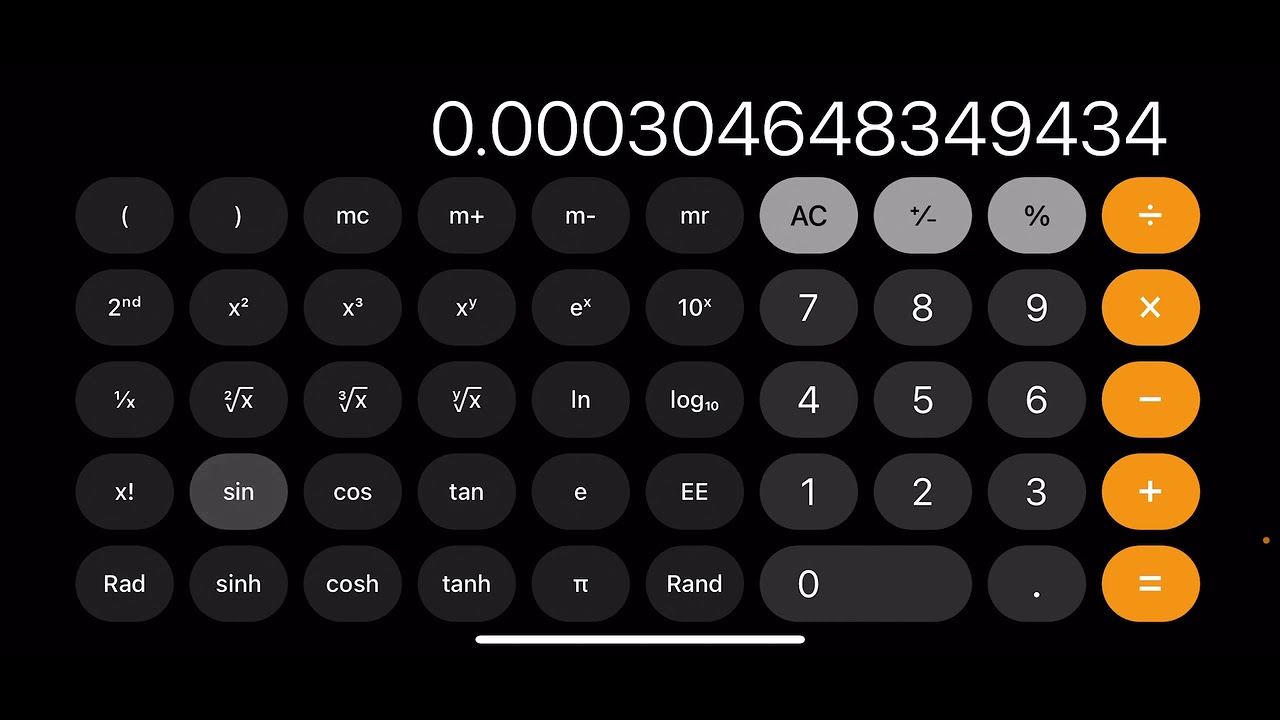
Calculating the inverse tangent of an angle or value is a fundamental operation in trigonometry. This operation, denoted as tan^-1, allows us to determine the angle whose tangent is equal to the given value.
Utilizing a calculator to evaluate tan^-1 values is straightforward. Most scientific calculators have a dedicated “tan^-1” button that can be used to directly calculate the inverse tangent of a number. Simply enter the value whose inverse tangent you wish to find, and press the “tan^-1” button to obtain the result.
Using the Inverse Tangent Function to Solve Equations
Beyond direct evaluation, the inverse tangent function also plays a crucial role in solving trigonometric equations. By isolating the tan^-1 function on one side of the equation, we can effectively determine the angle that satisfies the given equation.
Consider the equation tan(x) = 0. 5. To solve for x, we can apply the inverse tangent function to both sides of the equation:
tan^-1(tan(x)) = tan^-1(0.5)
Simplifying the left side yields:
x = tan^-1(0.5)
Using a calculator, we can evaluate tan^-1(0.5) to find the approximate value of x:
x ≈ 26.57°
Therefore, the solution to the equation tan(x) = 0.5 is approximately 26.57 degrees.
Examples of Finding tan^-1 Values
Here are a few examples of finding tan^-1 values for different angles and values:
- tan^-1(1) = 45°
- tan^-1(0.5) ≈ 26.57°
- tan^-1(-1) = -45°
- tan^-1(√3) ≈ 60°
These examples demonstrate the versatility of the inverse tangent function in determining the angles associated with specific tangent values.
Applications of the Inverse Tangent Function: Tan -1 Calculator
The inverse tangent function, often denoted as tan^-1 or arctan, finds widespread applications in various fields, including trigonometry, calculus, physics, and engineering. Its primary role is to determine the angle whose tangent is a given value.
Trigonometry
In trigonometry, tan^-1 is instrumental in solving right-angled triangles. It helps determine the unknown angles when the lengths of two sides or the tangent of one angle is known. For instance, if we have a right-angled triangle with sides a and b, and the tangent of angle A is given as t, we can find angle A using tan^-1(t).
Calculus
In calculus, tan^-1 is crucial for integration and differentiation. It is the antiderivative of 1/(1+x^2), and its derivative is 1/(1+x^2). These properties make it essential for solving integrals and derivatives involving trigonometric functions.
Other Applications
Beyond trigonometry and calculus, tan^-1 finds applications in physics and engineering. In physics, it is used to calculate the angle of incidence or reflection of light or sound waves. In engineering, it is employed in designing antennas, electrical circuits, and other systems where angular measurements are critical.
Advanced Concepts Related to Inverse Tangent
The inverse tangent function (tan^-1) exhibits intricate relationships with other trigonometric functions and plays a significant role in complex number analysis and solving higher-order equations.
Relationship with Other Trigonometric Functions, Tan -1 calculator
The inverse tangent is closely tied to the tangent function, as it represents its inverse operation. This means that if y = tan(x), then x = tan^-1(y). Additionally, tan^-1(x) can be expressed in terms of other trigonometric functions using identities like:
- tan^-1(x) = arctan(x)
- tan^-1(x) = cot^-1(1/x), for x ≠ 0
- tan^-1(x) = π/2- cot^-1(x), for x ≠ 0
Role in Complex Number Analysis
In complex number analysis, tan^-1(z) is defined for complex numbers z as the angle between the positive real axis and the line connecting the origin to z in the complex plane. This angle is known as the argument of z and is denoted as arg(z).
The inverse tangent function is crucial for determining the argument of complex numbers and understanding their geometric representation.
Applications in Solving Higher-Order Equations
The inverse tangent function finds applications in solving higher-order equations, particularly those involving trigonometric functions. By isolating the tangent function on one side of the equation and applying the inverse tangent to both sides, it becomes possible to solve for the unknown variable.
This technique is commonly used in solving equations like:
- tan(x) = a
- tan(ax + b) = c
Final Review
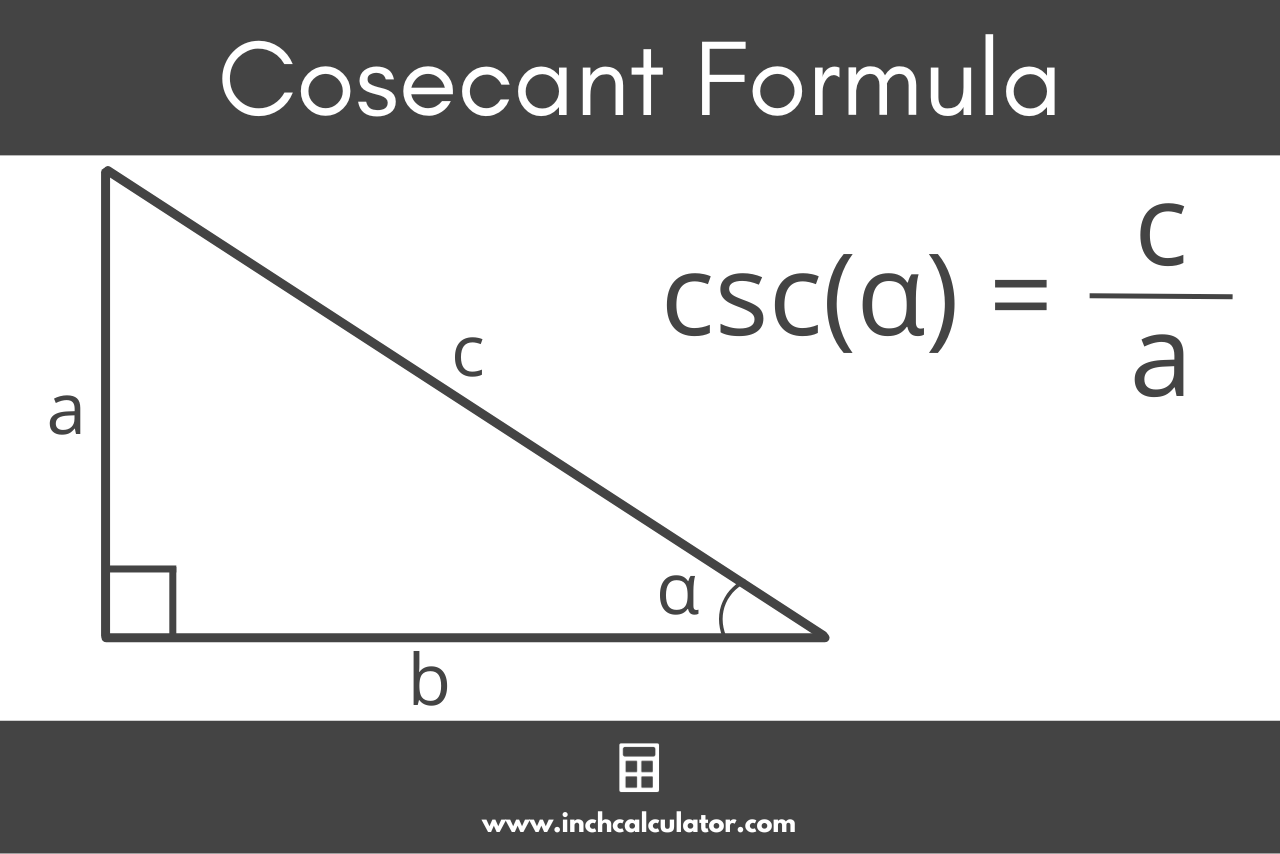
As we bid farewell to our discourse on the tan -1 calculator, let us cherish the newfound insights we have gained. This enigmatic function has unveiled its secrets, empowering us with the knowledge to conquer trigonometric challenges and unravel the complexities of higher-order equations.
May the tan -1 calculator forever serve as a beacon of mathematical illumination, guiding us through the labyrinthine world of inverse tangents.