The stroke volume calculator is a valuable tool for clinicians to assess cardiac function and guide clinical decision-making. It provides insights into the volume of blood ejected from the heart with each beat, helping healthcare professionals understand the heart’s pumping ability and overall cardiovascular health.
This calculator utilizes a formula that incorporates heart rate, preload, afterload, and contractility to determine stroke volume. These factors, when considered together, provide a comprehensive assessment of the heart’s performance.
Stroke Volume Calculator Basics

A stroke volume calculator is a tool used to estimate the volume of blood ejected from the heart per beat. This measurement is crucial in assessing cardiac function and can aid in diagnosing and managing various cardiovascular conditions.
The formula used in calculating stroke volume is:
Stroke Volume (SV) = End-diastolic Volume (EDV)- End-systolic Volume (ESV)
where:
- EDV is the volume of blood in the ventricle at the end of diastole (when the heart is fully relaxed).
- ESV is the volume of blood remaining in the ventricle at the end of systole (when the heart is fully contracted).
Stroke volume calculators are commonly used in clinical settings to:
- Estimate cardiac output, which is the volume of blood pumped by the heart per minute.
- Assess left ventricular function, as reduced stroke volume can indicate impaired heart function.
- Monitor the effects of medications or interventions aimed at improving cardiac function.
Factors Affecting Stroke Volume: Stroke Volume Calculator

Stroke volume is primarily determined by four key physiological factors: heart rate, preload, afterload, and contractility. These factors interact in a complex manner to regulate the amount of blood ejected from the heart with each beat.
Understanding the influence of these factors is crucial for comprehending cardiac function and its implications for cardiovascular health.
Heart Rate
Heart rate refers to the number of times the heart beats per minute. It directly affects stroke volume. As heart rate increases, the time available for ventricular filling decreases, leading to a reduction in stroke volume. Conversely, a slower heart rate allows for more time for ventricular filling, resulting in an increased stroke volume.
Preload
Preload refers to the degree of ventricular stretch at the end of diastole, which is the period of ventricular relaxation. Increased preload, such as in conditions of increased blood volume or elevated venous return, stretches the ventricular muscle fibers, enhancing their contractile force.
This results in an increased stroke volume.
Afterload
Afterload refers to the resistance against which the heart must pump blood into the aorta. Increased afterload, such as in conditions of hypertension or aortic stenosis, makes it more difficult for the heart to eject blood. This leads to a decreased stroke volume.
Contractility, Stroke volume calculator
Contractility refers to the inherent ability of the heart muscle to contract. It is influenced by factors such as the integrity of the myocardium, the availability of calcium ions, and the activity of neurotransmitters. Increased contractility leads to a more forceful contraction, resulting in an increased stroke volume.
| Factor | Effect on Stroke Volume |
|---|---|
| Heart Rate | Increased heart rate: Decreased stroke volumeDecreased heart rate: Increased stroke volume |
| Preload | Increased preload: Increased stroke volume |
| Afterload | Increased afterload: Decreased stroke volume |
| Contractility | Increased contractility: Increased stroke volume |
Clinical Applications of Stroke Volume Measurement
Stroke volume measurement plays a crucial role in assessing cardiac function and monitoring patients with cardiovascular conditions. It provides valuable insights into the heart’s pumping ability, helping clinicians make informed decisions about patient management.
Monitoring Cardiac Function
Stroke volume is a key indicator of cardiac output, which is the volume of blood pumped by the heart per minute. By measuring stroke volume, clinicians can assess the overall efficiency of the heart’s pumping action and identify any abnormalities that may indicate underlying cardiac dysfunction.
Monitoring Patients with Heart Failure and Shock
Stroke volume monitoring is particularly important in patients with heart failure or shock. In heart failure, reduced stroke volume can lead to inadequate tissue perfusion and organ dysfunction. Monitoring stroke volume helps guide therapy to optimize cardiac output and improve patient outcomes.
In shock, stroke volume may be decreased due to reduced cardiac contractility or increased systemic vascular resistance. Measuring stroke volume helps clinicians assess the severity of shock and monitor the effectiveness of treatment interventions.
Guiding Clinical Decision-Making
Stroke volume monitoring can also guide clinical decision-making in various situations, such as:
- Adjusting medication dosages for heart failure patients
- Determining the need for mechanical circulatory support in patients with shock
- Evaluating the effectiveness of cardiac interventions, such as pacemaker implantation or valve replacement
Limitations and Considerations
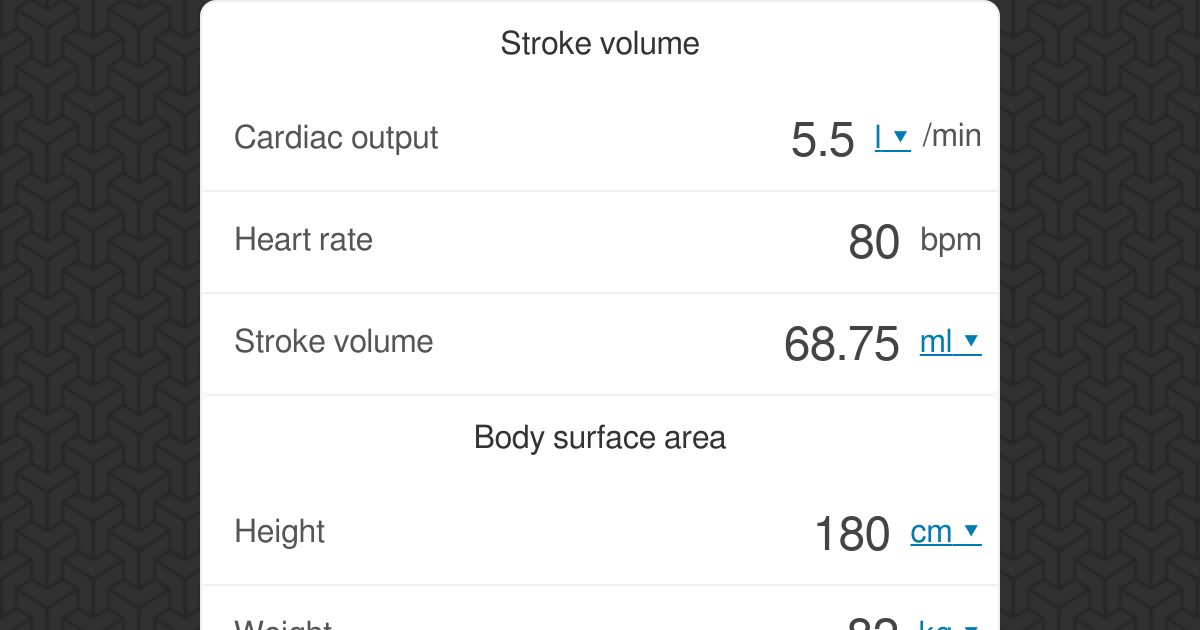
Stroke volume calculators provide a valuable tool for estimating stroke volume, but it is important to be aware of their limitations and potential sources of error.One limitation is that these calculators rely on assumptions about the patient’s cardiovascular physiology. These assumptions may not be accurate in all cases, leading to errors in the calculated stroke volume.
For example, the formula used in the calculator may not account for variations in heart rate, contractility, or vascular resistance.Another limitation is that stroke volume calculators are typically based on measurements taken at rest. However, stroke volume can vary significantly with activity level.
This means that the calculated stroke volume may not accurately reflect the patient’s stroke volume during exercise or other activities.
Interpreting Stroke Volume Measurements
It is important to interpret stroke volume measurements in the context of the patient’s overall clinical presentation. A low stroke volume may be a sign of heart failure, hypovolemia, or other cardiovascular conditions. However, a low stroke volume may also be normal in some patients, such as those with a small body size or those who are taking certain medications.
Guidelines for Using Stroke Volume Calculators
To use stroke volume calculators effectively in clinical practice, it is important to:
- Understand the limitations of the calculators and the potential sources of error.
- Interpret stroke volume measurements in the context of the patient’s overall clinical presentation.
- Use the calculators in conjunction with other clinical findings to make a diagnosis.
Final Wrap-Up
In conclusion, the stroke volume calculator is an essential tool for clinicians to evaluate cardiac function. By understanding the factors that influence stroke volume and its clinical implications, healthcare professionals can effectively monitor and manage patients with cardiovascular conditions, ensuring optimal patient outcomes.