
Welcome to the world of standard deviation percentile calculators, where data takes on new meaning. Dive into this comprehensive guide to unravel the concepts, explore functionalities, and discover the power of these indispensable tools.
As we embark on this journey, we’ll demystify the intricacies of standard deviation and percentiles, illuminating their significance in statistical analysis. We’ll then delve into the practicalities of using a standard deviation percentile calculator, empowering you to harness its capabilities effortlessly.
Standard Deviation and Percentile Concepts
In statistics, standard deviation and percentiles are two essential measures used to describe and analyze data distributions.
Standard deviation quantifies the spread or variability of data around its mean. A higher standard deviation indicates a wider spread, while a lower standard deviation suggests data is clustered closer to the mean.
Percentiles
Percentiles divide a data set into 100 equal parts. The nth percentile represents the value below which n% of the data falls. For example, the 25th percentile (Q1) is the value below which 25% of the data lies.
Standard deviation and percentiles are closely related. The mean and standard deviation can be used to calculate percentiles, and conversely, percentiles can be used to estimate the mean and standard deviation.
Calculator Functionality and Usage
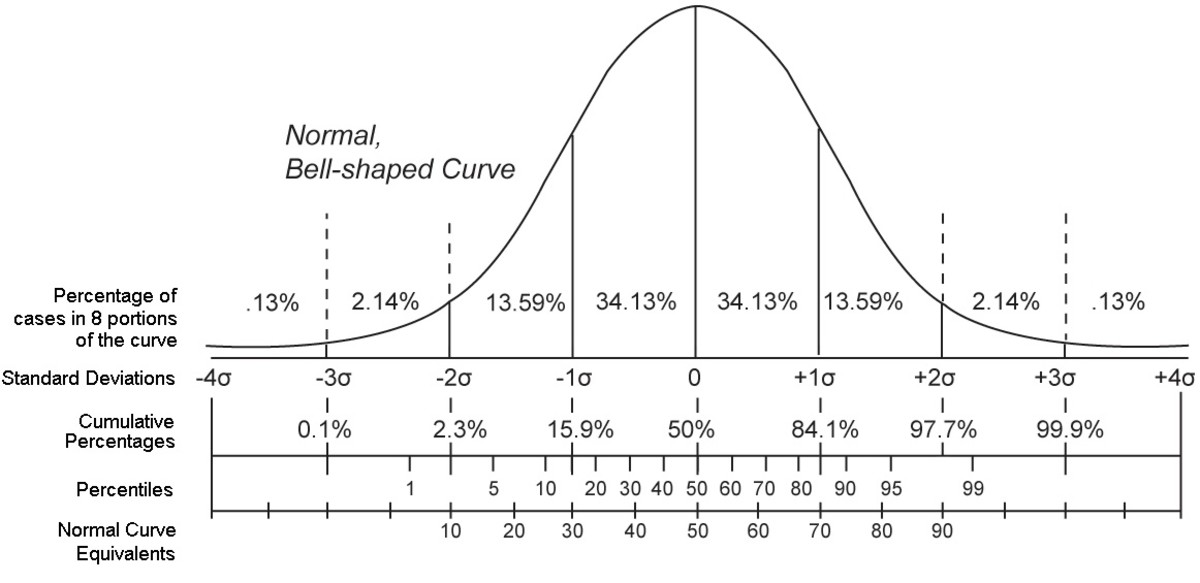
A standard deviation percentile calculator is an online tool designed to calculate the percentile rank of a given data point in a distribution with a known standard deviation.
To use the calculator, enter the following parameters:
- Data point: The value you want to find the percentile rank for.
- Mean: The average value of the distribution.
- Standard deviation: The measure of the spread of the distribution.
The calculator will then output the percentile rank of the data point, which represents the percentage of data points that fall below it in the distribution.
Interpreting Output
The percentile rank of a data point can be used to determine its relative position within a distribution.
- A percentile rank of 50% indicates that the data point is at the median of the distribution.
- A percentile rank of 90% indicates that the data point is higher than 90% of the other data points in the distribution.
- A percentile rank of 1% indicates that the data point is lower than 99% of the other data points in the distribution.
Applications in Real-World Scenarios
Standard deviation percentile calculators are powerful tools that find applications in a wide range of fields, including education, finance, and research.
Education
- Grading:Educators use standard deviation percentile calculators to determine students’ grades based on their performance relative to the class average and standard deviation.
- Student Assessment:These calculators help teachers identify students who may need additional support or enrichment by pinpointing those who fall below or above certain percentiles.
- Curriculum Development:Percentile calculators assist in analyzing student data to identify areas where the curriculum needs adjustment to meet the needs of the majority of students.
Finance
- Risk Assessment:In the finance industry, standard deviation percentile calculators are used to evaluate the risk associated with investments by measuring the volatility of returns.
- Portfolio Optimization:These calculators aid in constructing diversified portfolios by identifying assets with different risk-return profiles and calculating the optimal allocation based on desired risk tolerance.
- Credit Scoring:Lenders utilize standard deviation percentile calculators to assess the creditworthiness of borrowers by analyzing their credit history and calculating their percentile rank.
Research
- Data Analysis:Researchers use standard deviation percentile calculators to summarize and interpret large datasets by identifying patterns and outliers.
- Hypothesis Testing:These calculators assist in determining whether observed differences between groups are statistically significant by calculating the probability of obtaining the results under the null hypothesis.
- Experimental Design:Standard deviation percentile calculators help researchers determine the appropriate sample size and experimental conditions to achieve desired statistical power.
While standard deviation percentile calculators offer numerous benefits, it’s important to note their limitations. These calculators assume a normal distribution of data, which may not always be the case in real-world scenarios. Additionally, they do not consider other factors that may influence the data, such as outliers or skewness.
Advanced Features and Considerations
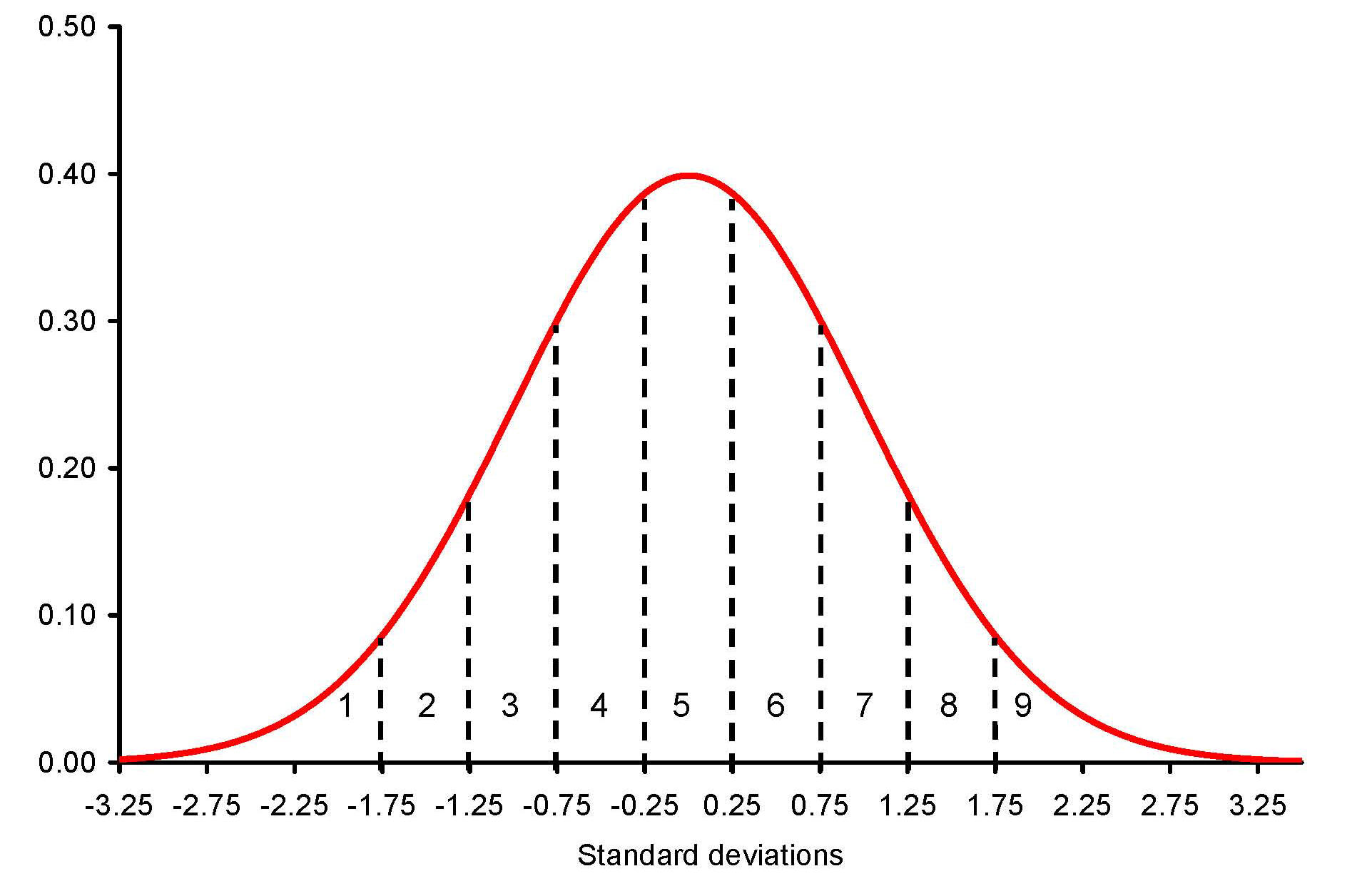
Some calculators offer advanced features that enhance their functionality and provide additional insights into the data.
Confidence Intervals
Confidence intervals allow you to estimate the range within which the true population parameter (e.g., mean, standard deviation) is likely to fall. By specifying a confidence level (e.g., 95%), the calculator calculates the upper and lower bounds of the interval, providing a range of values within which you can be reasonably confident that the true parameter lies.
Hypothesis Testing
Hypothesis testing involves comparing a sample statistic to a hypothesized population parameter to determine if there is sufficient evidence to reject the hypothesis. The calculator can perform hypothesis tests for different statistical distributions, such as the t-test for means and the chi-square test for proportions.
Sample Size and Distribution Type, Standard deviation percentile calculator
When using a standard deviation percentile calculator, it’s important to consider the sample size and the distribution type of the data. The calculator’s accuracy depends on the assumption that the data follows a normal distribution and that the sample size is sufficiently large.
If these assumptions are not met, the results may not be reliable.
Final Summary: Standard Deviation Percentile Calculator
Through real-world examples and in-depth discussions, we’ll showcase the versatility of standard deviation percentile calculators across diverse fields. Whether you’re an educator, a financial analyst, or a researcher, you’ll gain invaluable insights into the applications and limitations of these tools.
We’ll conclude by exploring advanced features and considerations, ensuring you have a well-rounded understanding of the nuances involved in using standard deviation percentile calculators. By the end of this guide, you’ll be equipped to confidently interpret data, make informed decisions, and unlock the full potential of statistical analysis.
