The snow load calculator is an indispensable tool for architects, engineers, and homeowners alike, providing accurate and reliable calculations to ensure structural integrity in snow-prone regions. By factoring in geographical location, roof pitch, and building exposure, this tool empowers users to make informed decisions about snow load mitigation strategies.
In this comprehensive guide, we delve into the intricacies of snow load calculations, exploring the ASCE 7-16 standard and providing practical examples. We also discuss alternative methods for estimating snow load, such as historical data and computer simulations, empowering you with a comprehensive understanding of this critical aspect of structural design.
Understanding Snow Load Calculations

Snow load calculations are crucial in structural design, ensuring buildings can withstand the weight of snow accumulation. These calculations consider various factors that influence snow load, including geographical location, roof pitch, and building exposure.
Geographical Location
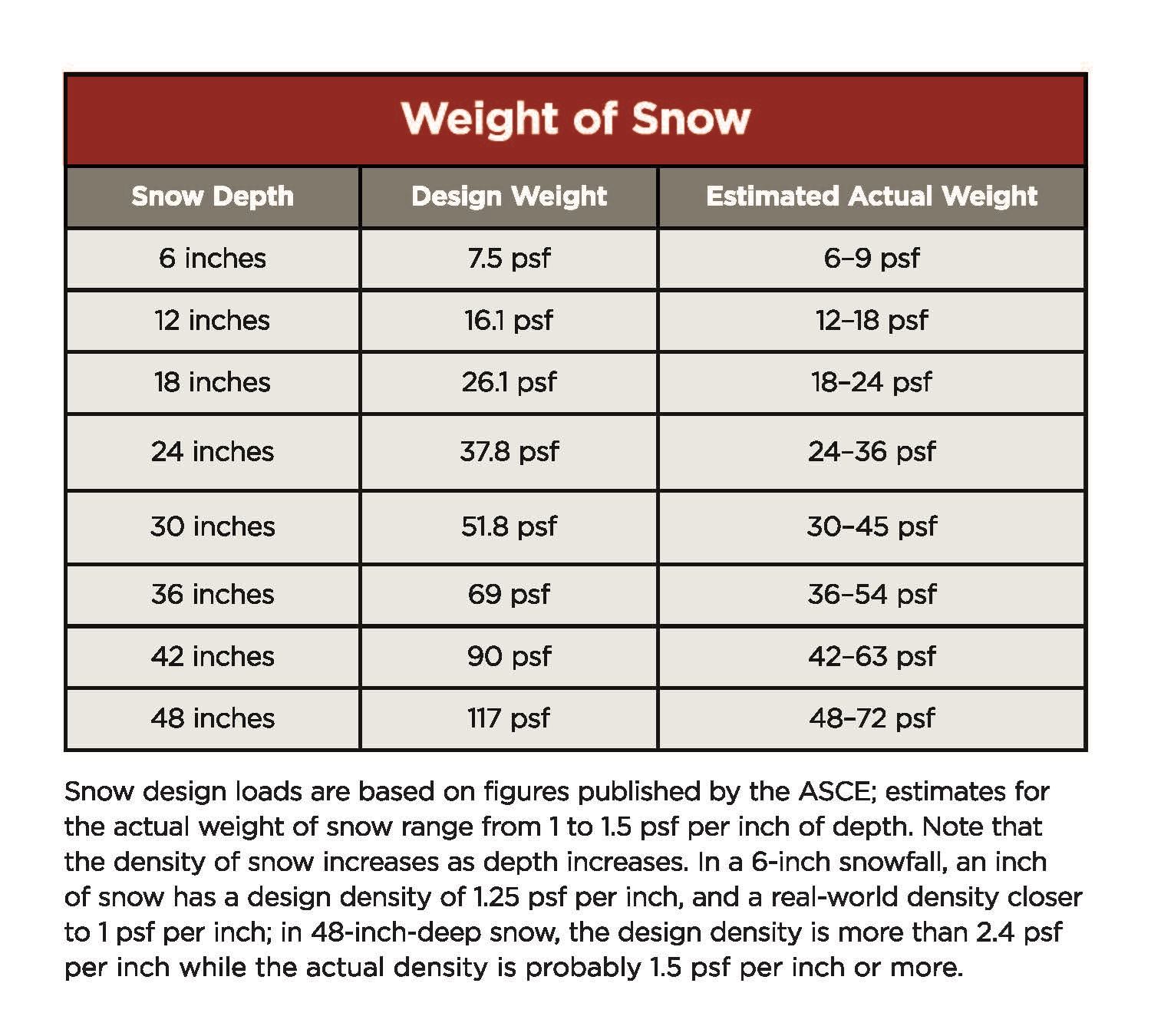
The geographical location plays a significant role in snow load calculations. Regions with higher snowfall require structures designed to bear heavier snow loads. Factors like average annual snowfall, snow density, and ground snow load are considered in these calculations.
Methods for Calculating Snow Load

Calculating snow load is essential for designing structures that can withstand the weight of snow accumulation. Various methods are available, each with its advantages and limitations. In this section, we will explore the ASCE 7-16 standard and other alternative methods for estimating snow load.
ASCE 7-16 Standard
The American Society of Civil Engineers (ASCE) 7-16 standard provides a comprehensive approach to calculating snow load. It considers factors such as ground snow load, exposure factors, thermal factors, and roof geometry. The snow load equation in ASCE 7-16 is given by:
Pf= 0.7C eC tI sP g
- P fis the design snow load (psf)
- C eis the exposure factor
- C tis the thermal factor
- I sis the importance factor
- P gis the ground snow load (psf)
Using this equation, engineers can determine the snow load for a specific location and structure. The ASCE 7-16 standard provides detailed guidance on determining each factor, ensuring accurate and reliable snow load calculations.
Alternative Methods
In addition to the ASCE 7-16 standard, alternative methods for estimating snow load exist. These include:
- Historical data:Using historical snow load data from weather stations can provide insights into the expected snow load for a particular location.
- Computer simulations:Advanced computer simulations can model snow accumulation and drift patterns, providing detailed estimates of snow load on complex structures.
The choice of method depends on factors such as the availability of data, the complexity of the structure, and the desired level of accuracy.
Designing for Snow Load: Snow Load Calculator
Incorporating snow load calculations into structural design is crucial to ensure the safety and integrity of buildings in snowy regions. This involves considering various factors, including roof shape, materials, and support systems.
Roof Shape, Snow load calculator
The shape of the roof significantly influences snow accumulation. Roofs with steep slopes shed snow more easily than flat or gently sloping roofs. Gable roofs, for instance, are effective in shedding snow due to their angled surfaces.
Materials
The choice of roofing materials also plays a role in snow load resistance. Metal roofs, for example, are lightweight and have a low coefficient of friction, allowing snow to slide off easily. Asphalt shingles, on the other hand, provide some resistance to snow accumulation.
Support Systems
The structural support system must be designed to withstand the weight of snow. Trusses, beams, and columns should be properly sized and spaced to distribute the load effectively. Additional support elements, such as snow guards or snow fences, can help prevent snow accumulation and reduce the risk of collapse.
Innovative Mitigation Techniques
Innovative snow load mitigation techniques include:
- Heated roofs: Electric or hydronic systems melt snow and ice, preventing accumulation.
- Snow retention systems: Devices installed on roofs to hold snow in place, preventing avalanches.
- Roof avalanches: Controlled releases of snow from roofs, reducing the risk of sudden collapse.
Applications of Snow Load Calculators

Snow load calculators have revolutionized the design process by simplifying and streamlining calculations. They offer numerous benefits, including:
1. Time-saving: Calculators automate complex calculations, reducing the time spent on manual computations.
2. Accuracy: They provide precise results based on established engineering principles and industry standards.
3. Consistency: Calculators ensure consistent application of design criteria, minimizing errors and variations.
4. Code compliance: They help designers adhere to building codes and regulations, ensuring structural safety.
Available Snow Load Calculators
Various snow load calculators are available, each with unique features:
- ASCE 7 Snow Load Calculator:Developed by the American Society of Civil Engineers, this calculator is widely used in the United States.
- NRCC Snow Load Calculator:Designed by the National Research Council of Canada, this calculator is commonly used in Canada.
- SnowEx Snow Load Calculator:A comprehensive tool that provides detailed calculations and graphical representations.
- StruCalc Snow Load Calculator:A user-friendly calculator that offers customizable options and supports various design codes.
Limitations and Accuracy
While snow load calculators are valuable tools, they have certain limitations:
- Input accuracy:The accuracy of the results depends on the accuracy of the input data, such as ground snow load and building geometry.
- Site-specific conditions:Calculators may not account for local factors such as drifting, wind exposure, or shading, which can affect snow loads.
- Simplified assumptions:Calculators use simplified assumptions to represent complex phenomena, which may lead to slight variations in results.
To use snow load calculators effectively, consider the following:
- Verify input data:Ensure that the input parameters are accurate and representative of the site conditions.
- Understand limitations:Be aware of the limitations of calculators and consider using additional methods for complex or unusual cases.
- Use multiple calculators:Comparing results from different calculators can provide a more comprehensive understanding of snow loads.
Wrap-Up
With its user-friendly interface and accurate calculations, the snow load calculator simplifies the design process, saving you time and ensuring the safety and integrity of your structures. Embrace the power of this essential tool and navigate snow load calculations with confidence.