Embark on a journey into the realm of skin depth calculators, where we unravel the captivating world of electrical engineering. Skin depth, a crucial parameter in various applications, plays a pivotal role in shaping the behavior of electromagnetic waves interacting with matter.
In this comprehensive guide, we delve into the concept of skin depth, exploring its impact on industries such as telecommunications, electronics, and healthcare. Discover how skin depth influences antenna design, transmission lines, and medical devices, and gain insights into its advantages and limitations.
Understanding Skin Depth
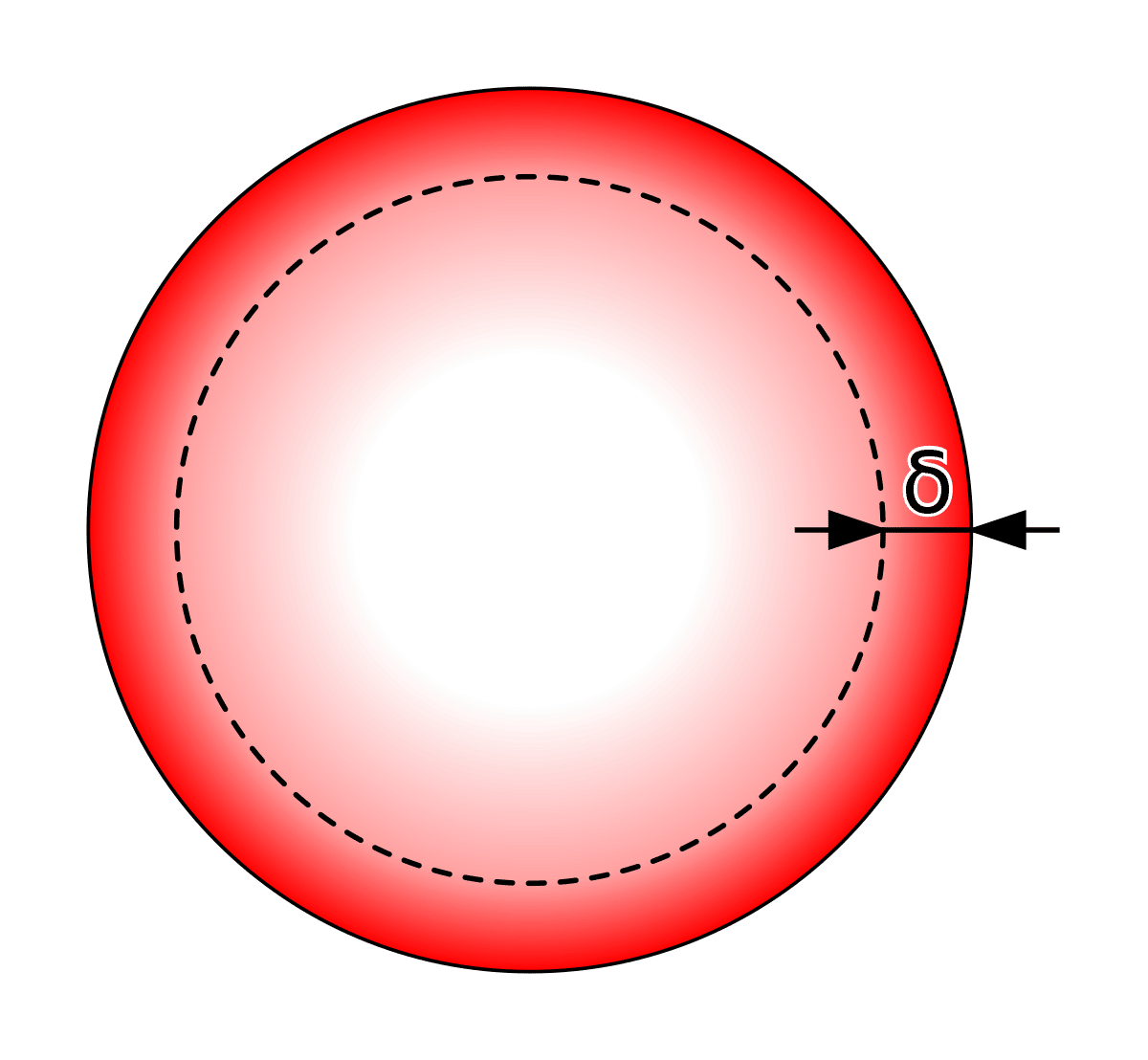
Skin depth, a fundamental concept in electrical engineering, plays a crucial role in determining the behavior of electromagnetic waves interacting with conductive materials. It represents the depth at which the amplitude of an electromagnetic wave has decayed to approximately 37% of its original value.
Skin depth finds applications in various fields, including RF communication, medical imaging, and material characterization. In RF communication, skin depth determines the penetration depth of electromagnetic waves into the human body, influencing the design of antennas and communication systems. In medical imaging, skin depth affects the resolution and contrast of MRI and other imaging techniques.
Factors Influencing Skin Depth
The skin depth of an electromagnetic wave is influenced by several factors:
- Frequency:Skin depth is inversely proportional to the square root of frequency. Higher frequencies result in shallower skin depths.
- Material Properties:The conductivity and permeability of the material determine its skin depth. Higher conductivity leads to shallower skin depths.
- Temperature:Skin depth can vary with temperature due to changes in material conductivity and permeability.
Calculating Skin Depth
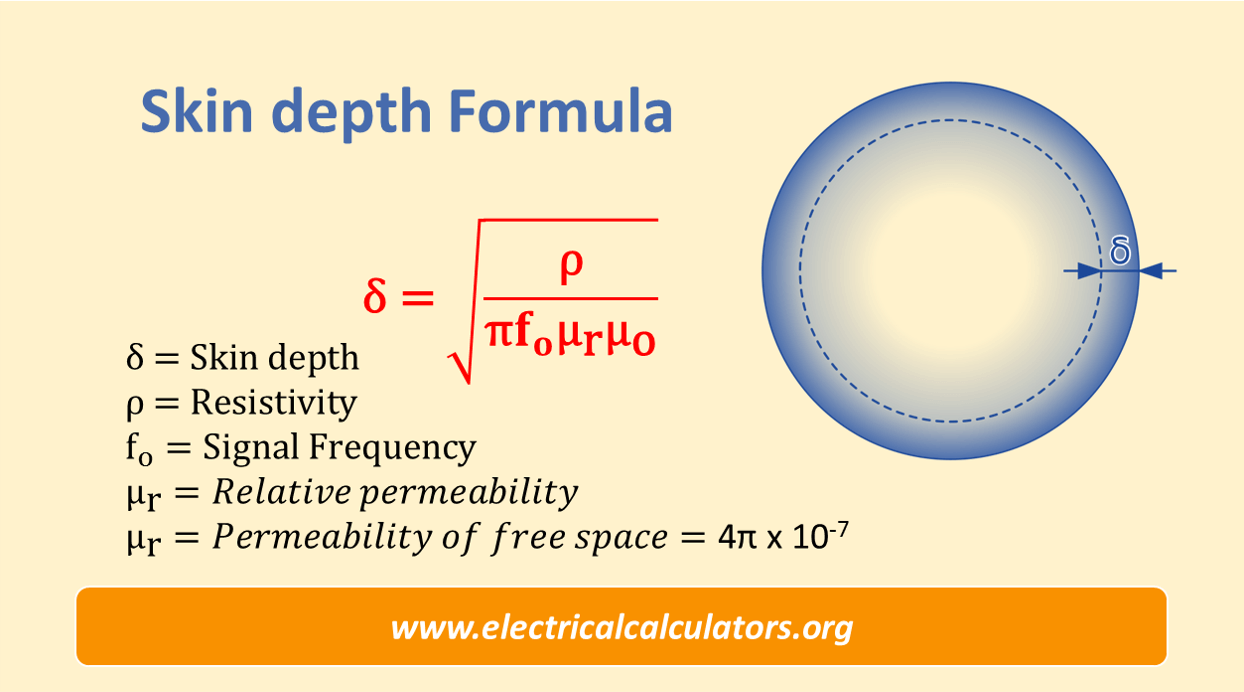
Determining the skin depth is crucial for understanding the interaction of electromagnetic waves with materials. Here, we delve into the formulas and step-by-step calculations for various materials and frequencies.
Formula and Equation, Skin depth calculator
The skin depth (δ) is given by the formula:
δ = √(2ρ / (μω))
where:
- ρ is the resistivity of the material (Ω-m)
- μ is the magnetic permeability (H/m)
- ω is the angular frequency (rad/s)
Step-by-Step Calculations
To calculate the skin depth for a specific material and frequency, follow these steps:
- Determine the resistivity (ρ) of the material from a material properties table or experimental measurements.
- Find the magnetic permeability (μ) of the material, which is typically μ0for non-magnetic materials (4π × 10 -7H/m).
- Convert the frequency (f) to angular frequency (ω) using the formula ω = 2πf.
- Substitute the values of ρ, μ, and ω into the skin depth formula to calculate δ.
Limitations and Assumptions
It’s important to note the limitations and assumptions associated with the skin depth formula:
- The formula assumes a uniform, homogeneous material with constant resistivity and permeability.
- It applies to frequencies where the skin depth is much smaller than the wavelength of the electromagnetic wave.
- The formula does not account for surface roughness or other factors that can affect the penetration depth of electromagnetic waves.
Applications of Skin Depth
Skin depth finds extensive applications in various industries, including telecommunications, electronics, and healthcare. It plays a crucial role in designing antennas, transmission lines, and medical devices, among other applications.
Telecommunications
- In designing antennas, skin depth determines the penetration of electromagnetic waves into the antenna material. This knowledge helps engineers optimize antenna performance by ensuring efficient radiation and minimizing losses.
- Transmission lines, such as coaxial cables, utilize skin depth to calculate the thickness of the conductor required to minimize signal loss due to skin effect.
Electronics
- Skin depth is critical in the design of printed circuit boards (PCBs) and integrated circuits (ICs). It helps determine the optimal thickness of copper traces and vias to minimize signal attenuation and ensure reliable circuit operation.
- In high-frequency applications, skin depth limits the penetration of electromagnetic fields into electronic components, influencing their performance and reliability.
Healthcare
- Skin depth plays a vital role in medical imaging techniques like ultrasound and magnetic resonance imaging (MRI). By understanding the skin depth of tissues at different frequencies, medical professionals can optimize image quality and penetration depth.
- Skin depth is also used in designing medical devices, such as pacemakers and implantable sensors, to ensure proper signal transmission and minimize tissue damage.
Advantages of using skin depth as a design parameter include its ability to predict signal attenuation, optimize antenna performance, and ensure efficient operation of electronic devices. However, it is important to consider the limitations of skin depth, such as its frequency dependence and the assumption of uniform current distribution, which may not always be applicable in real-world scenarios.
Visualizing Skin Depth: Skin Depth Calculator
Visualizing skin depth can provide valuable insights into its behavior and help optimize its effects. Here are two ways to visualize skin depth:
Comparative Table
A comparative table can be used to compare skin depth values for different materials and frequencies. This table can help identify materials that exhibit high or low skin depth at specific frequencies, making them suitable for different applications.
| Material | Frequency (MHz) | Skin Depth (mm) |
|---|---|---|
| Copper | 1 | 6.6 |
| Aluminum | 10 | 2.1 |
| Steel | 100 | 0.5 |
Graph or Chart
A graph or chart can be used to illustrate the relationship between skin depth and frequency. This visualization can show how skin depth changes as frequency increases, allowing for a better understanding of its behavior.
For example, a graph showing the relationship between skin depth and frequency for copper would exhibit an exponential decay, indicating that skin depth decreases rapidly as frequency increases.
Applications of Visualizations
Visualizations of skin depth can be used to:
- Identify materials suitable for specific applications based on their skin depth at the desired frequency.
- Optimize the design of electromagnetic devices by controlling skin depth to achieve desired effects.
- Understand the behavior of electromagnetic waves in different materials and environments.
Closure

As we conclude our exploration of skin depth calculators, we recognize the significance of this parameter in shaping the behavior of electromagnetic waves. By understanding and utilizing skin depth, engineers can optimize designs, enhance performance, and push the boundaries of innovation in various fields.