
Delving into the realm of critical care, the shock index calculator emerges as an indispensable tool for healthcare professionals seeking to assess the severity of shock and guide appropriate interventions. This comprehensive guide unravels the intricacies of shock index calculation, its clinical significance, and its multifaceted applications in various clinical settings.
As a harbinger of shock severity, the shock index serves as a valuable indicator, empowering clinicians to make informed decisions and optimize patient outcomes. Join us as we delve into the depths of this essential parameter, exploring its prognostic value, role in fluid resuscitation, and potential limitations.
Shock Index Calculation
Shock index (SI) is a simple and rapid method for assessing the severity of shock. It is calculated using the following formula:
SI = Heart rate (HR) / Systolic blood pressure (SBP)
SI values are typically interpreted as follows:
- SI< 0.9: No shock
- SI 0.9-1.0: Compensated shock
- SI 1.1-1.4: Uncompensated shock
- SI > 1.4: Severe shock
SI is a useful screening tool for shock, but it has limitations. It is not specific for any particular type of shock, and it can be affected by factors such as age, gender, and underlying medical conditions.
Limitations of Shock Index
SI has several limitations, including:
- It is not specific for any particular type of shock.
- It can be affected by factors such as age, gender, and underlying medical conditions.
- It is not as accurate as other measures of shock severity, such as lactate levels or central venous pressure.
Despite these limitations, SI remains a useful screening tool for shock. It is simple to calculate and can be used in a variety of settings.
Shock Index in Different Clinical Settings

Shock index is a valuable tool in various clinical settings, particularly in emergency medicine, critical care units, and trauma management. Its simplicity and ease of calculation make it a useful indicator of shock, especially when immediate assessment is crucial.
Emergency Medicine
In emergency departments, shock index helps triage patients with suspected hypovolemia or shock. A high shock index may prompt further evaluation and prompt fluid resuscitation. It also aids in identifying patients who require urgent intervention and monitoring.
Critical Care Units
Shock index is used in critical care units to monitor hemodynamic status and guide fluid management. It assists in detecting early signs of hypovolemia and assessing response to fluid resuscitation. By monitoring shock index over time, clinicians can make informed decisions regarding fluid administration and adjust treatment accordingly.
Trauma Management
In trauma management, shock index is an essential parameter for assessing the severity of injuries and guiding initial resuscitation. A high shock index indicates significant blood loss or other fluid loss, necessitating immediate fluid resuscitation and further evaluation. It helps prioritize patients for surgery or other interventions based on the urgency of their condition.
Shock Index as a Prognostic Tool: Shock Index Calculator

Shock index is a valuable predictor of mortality risk in various clinical settings. It has been demonstrated to provide prognostic information beyond heart rate and systolic blood pressure alone.
Mortality Risk Stratification
Studies have consistently shown that higher shock index values are associated with increased mortality rates. The following table summarizes the relationship between shock index values and mortality rates:| Shock Index | Mortality Rate ||—|—|| < 0.9 | < 10% | | 0.9-1.2 | 10-20% | | 1.2-1.5 | 20-30% | | > 1.5 | > 30% |
Evidence-Based Research
Numerous studies have supported the prognostic significance of shock index. For instance, a study by Vincent et al. (2006) found that shock index was an independent predictor of mortality in critically ill patients, with an area under the receiver operating characteristic curve (AUC) of 0.81. Another study by Blanco et al.
(2012) showed that shock index was superior to heart rate and systolic blood pressure in predicting mortality in patients with sepsis.These findings highlight the importance of shock index as a prognostic tool in clinical practice. It can aid in risk stratification, guiding treatment decisions and resource allocation.
Shock Index and Fluid Resuscitation
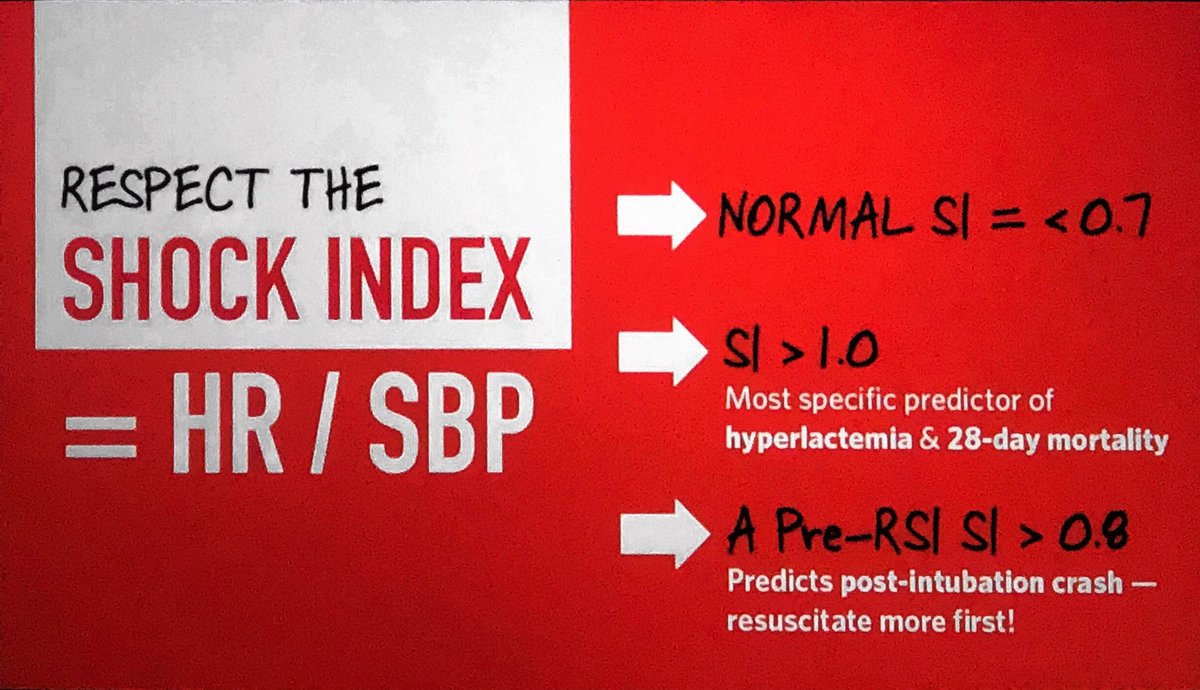
Shock index (SI) is a valuable tool for guiding fluid resuscitation in various clinical settings. By evaluating the ratio of heart rate to systolic blood pressure, SI provides insights into the adequacy of tissue perfusion and the need for fluid administration.
Recommended Fluid Resuscitation Strategies Based on Shock Index Values
| Shock Index | Recommended Fluid Resuscitation Strategy |
|---|---|
| <1 | Conservative fluid administration, monitor closely |
| 1-1.5 | Moderate fluid administration, monitor response |
| >1.5 | Aggressive fluid resuscitation, monitor hemodynamics |
The rationale for using SI to guide fluid therapy is that it reflects the relationship between cardiac output and peripheral vascular resistance. In shock states, decreased cardiac output and increased peripheral vascular resistance lead to an elevated SI. Fluid resuscitation aims to restore adequate tissue perfusion by increasing cardiac output and reducing peripheral vascular resistance.
Potential Complications Associated with Excessive or Inadequate Fluid Resuscitation, Shock index calculator
- Excessive fluid resuscitation:Pulmonary edema, electrolyte imbalances, and impaired cardiac function
- Inadequate fluid resuscitation:Tissue hypoperfusion, organ damage, and death
Closing Notes
In conclusion, the shock index calculator stands as a cornerstone in the assessment and management of shock. Its simplicity, accessibility, and clinical utility make it an invaluable tool for healthcare professionals across diverse settings. By harnessing the power of this metric, clinicians can enhance their ability to identify, triage, and treat shock effectively, ultimately improving patient outcomes and saving lives.
