
Dive into the fascinating world of economics with our Price Elasticity of Supply Calculator, a tool that empowers you to quantify the responsiveness of producers to market price fluctuations. Discover how supply elasticity shapes market dynamics and influences decision-making at the heart of businesses and economies.
Unravel the intricate web of factors that determine supply elasticity, including production costs, resource availability, and technological advancements. Witness how these variables mold the supply curve, shaping the landscape of supply and demand.
Price Elasticity of Supply
Price elasticity of supply measures the responsiveness of producers to changes in market prices. It indicates how much producers are willing to supply a good or service at different price levels. This concept is crucial in economic analysis as it helps policymakers and businesses understand how supply will react to price changes, enabling them to make informed decisions.
Factors Affecting Price Elasticity of Supply
- Time Horizon:Short-run supply is typically less elastic than long-run supply, as producers need time to adjust production capacity.
- Availability of Inputs:If inputs are scarce or expensive, producers may be less willing to increase supply.
- Technology:Technological advancements can reduce production costs, making supply more elastic.
- Market Structure:In competitive markets, producers are more likely to respond to price changes than in monopolies.
- Perishability:Perishable goods have a low elasticity of supply as they cannot be stored for long.
Determinants of Price Elasticity of Supply
The elasticity of supply is not static and can vary depending on several factors. Understanding these determinants is crucial for businesses and policymakers alike.
Production Costs
Production costs significantly impact supply elasticity. Higher production costs can make it more challenging for suppliers to increase output, leading to lower elasticity. Conversely, lower production costs allow suppliers to expand production more readily, resulting in higher elasticity.
Availability of Resources
The availability of resources, such as raw materials, labor, and capital, influences supply elasticity. When resources are scarce or difficult to obtain, it becomes more challenging to increase supply, leading to lower elasticity. Conversely, abundant resources enable suppliers to respond more quickly to price changes, resulting in higher elasticity.
Technological Advancements
Technological advancements can dramatically alter supply elasticity. Innovations that reduce production costs or improve efficiency can increase elasticity by making it easier for suppliers to expand output. Conversely, technological constraints can limit the ability to increase supply, leading to lower elasticity.
Calculation of Price Elasticity of Supply: Price Elasticity Of Supply Calculator
The price elasticity of supply (PES) is a measure of how responsive the quantity supplied of a good or service is to changes in its price. It is calculated using the following formula:
PES = (% Change in Quantity Supplied) / (% Change in Price)
To compute PES using historical data or market observations, follow these steps:
Data Collection
- Gather data on the price and quantity supplied of the good or service over a period of time.
- Calculate the percentage change in price and quantity supplied for each observation.
Calculation, Price elasticity of supply calculator
- Divide the percentage change in quantity supplied by the percentage change in price for each observation.
- Take the average of the calculated values to obtain the price elasticity of supply.
Applications of Price Elasticity of Supply

Price elasticity of supply finds practical applications in various economic contexts, aiding in decision-making, policy analysis, and market forecasting.
One key application is in market forecasting. By understanding the price elasticity of supply for a particular good or service, businesses can predict how the quantity supplied will respond to price changes. This information is crucial for planning production levels and pricing strategies.
Government Policy Analysis
Government policymakers utilize price elasticity of supply to assess the impact of proposed policies on market outcomes. For instance, a policy that raises the minimum wage may affect the supply of labor, and understanding the elasticity of supply helps policymakers predict the potential consequences.
Business Decision-Making
Businesses leverage price elasticity of supply to optimize their pricing and production decisions. By determining the elasticity of supply for their inputs, firms can make informed decisions about sourcing and inventory management. This knowledge enables them to minimize costs and maximize profits.
Closure
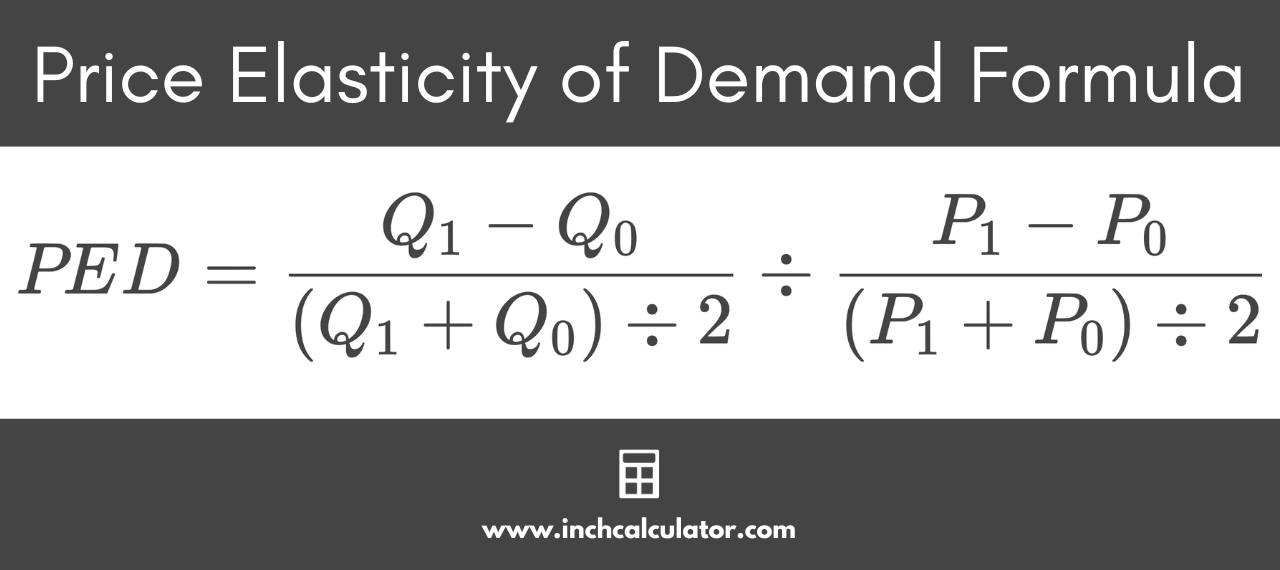
Harnessing the power of the Price Elasticity of Supply Calculator, economists and business leaders gain invaluable insights into market behavior. This knowledge serves as a compass, guiding strategic decision-making and enabling proactive responses to evolving market conditions. As the foundation for informed economic policies and prudent business practices, understanding supply elasticity is paramount in navigating the ever-changing tides of the global marketplace.
