The pressure drop calculator is an invaluable tool for engineers and designers involved in fluid systems. It enables accurate calculation of pressure loss in pipes, valves, fittings, and heat exchangers, ensuring optimal system performance and efficiency.
Understanding pressure drop is crucial for designing efficient piping systems, selecting appropriate components, and troubleshooting pressure-related issues. This comprehensive guide delves into the factors influencing pressure drop, calculation methods, and considerations for various system components.
Pressure Drop in Pipes

Pressure drop in pipes is a critical factor to consider when designing and operating piping systems. It refers to the loss of pressure as fluid flows through a pipe due to friction and other factors. Understanding the causes and how to calculate pressure drop is essential to ensure efficient and safe operation of piping systems.
Factors Affecting Pressure Drop
The pressure drop in pipes is influenced by several factors, including:
- Fluid properties:Density, viscosity, and flow rate of the fluid.
- Pipe diameter:Smaller diameters result in higher pressure drop.
- Pipe length:Longer pipes lead to greater pressure loss.
- Pipe material:Roughness and material properties affect friction.
- Flow regime:Laminar or turbulent flow can impact pressure drop.
Calculating Pressure Drop
Various methods can be used to calculate pressure drop in pipes, including:
- Darcy-Weisbach equation:A general equation that considers friction and elevation changes.
- Hagen-Poiseuille equation:Used for laminar flow in circular pipes.
- Moody diagram:A graphical representation of the Darcy-Weisbach equation.
Importance of Considering Pressure Drop
Considering pressure drop is crucial for several reasons:
- System performance:Pressure drop affects flow rates and equipment operation.
- Energy efficiency:High pressure drop can lead to increased energy consumption.
- Safety:Excessive pressure drop can compromise system integrity.
Pressure Drop in Valves
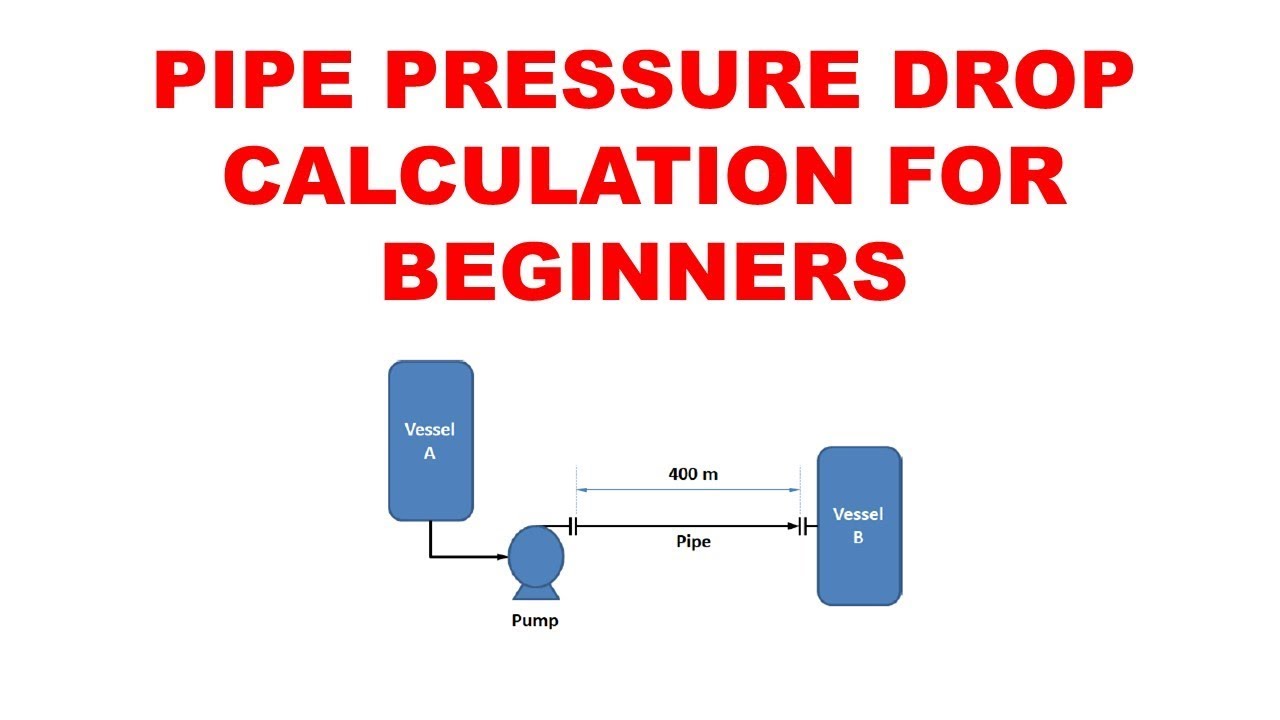
Valves are essential components in piping systems, used to control the flow of fluids. They introduce pressure drop due to the obstruction they create in the flow path. Understanding the pressure drop characteristics of different valve types is crucial for designing efficient piping systems.
Types of Valves and Their Effect on Pressure Drop
Valves come in various types, each with unique design features that influence pressure drop. Here are the most common types:
- Gate valves:Have a wedge-shaped disc that slides perpendicular to the flow, causing minimal pressure drop when fully open.
- Globe valves:Have a spherical or conical plug that moves parallel to the flow, creating a higher pressure drop than gate valves.
- Ball valves:Have a spherical ball with a hole through it that rotates to control flow, resulting in low pressure drop.
- Butterfly valves:Have a disc that rotates on a shaft perpendicular to the flow, offering low pressure drop when fully open but higher when partially open.
- Check valves:Allow flow in only one direction, preventing backflow. They have a spring-loaded disc or flap that opens when the pressure differential is sufficient, causing pressure drop due to the obstruction.
Table Comparing Pressure Drop Characteristics of Different Valve Types
The following table provides a comparison of pressure drop characteristics for different valve types:
| Valve Type | Pressure Drop Characteristics |
|---|---|
| Gate valve | Minimal pressure drop when fully open |
| Globe valve | Higher pressure drop than gate valves |
| Ball valve | Low pressure drop |
| Butterfly valve | Low pressure drop when fully open, higher when partially open |
| Check valve | Pressure drop due to obstruction of flow |
Factors to Consider When Selecting Valves
When selecting valves for a specific application, several factors should be considered:
- Type of fluid:Corrosive or abrasive fluids may require specialized valves.
- Flow rate:Valves must be sized appropriately to handle the required flow rate.
- Pressure drop:The pressure drop characteristics of different valve types must be considered to avoid excessive pressure loss.
- Temperature:Valves must be rated for the operating temperature of the fluid.
- Space constraints:The physical dimensions of the valve should fit the available space.
Pressure Drop in Fittings

Fittings are essential components in any piping system, used to connect, change the direction of, or control the flow of fluids. However, fittings can also contribute to pressure drop, which is the reduction in pressure as fluid flows through a system.
Understanding the pressure drop characteristics of different fitting types is crucial for selecting the appropriate fittings for a specific application.
Types of Fittings and Their Pressure Drop Characteristics, Pressure drop calculator
Various types of fittings have distinct pressure drop characteristics, primarily due to their design and flow patterns. Here’s a table summarizing the pressure drop characteristics of common fitting types:| Fitting Type | Pressure Drop Characteristics ||—|—|| Elbows | Elbows induce a significant pressure drop due to the abrupt change in flow direction, resulting in flow separation and turbulence.
|| Tees | Tees create a branch in the flow path, causing a pressure drop due to the division and recombination of flow streams. || Reducers | Reducers connect pipes of different diameters, resulting in a pressure drop due to the sudden change in flow area and the associated flow acceleration and deceleration.
|| Expanders | Expanders connect pipes of different diameters, causing a pressure drop due to the sudden change in flow area and the associated flow deceleration and acceleration. || Valves | Valves are used to control flow, and their pressure drop characteristics vary depending on the valve type and its opening.
|
Importance of Considering Pressure Drop in Fitting Selection
When selecting fittings for a specific application, it is essential to consider their pressure drop characteristics. Excessive pressure drop can lead to reduced system efficiency, increased energy consumption, and potential cavitation or damage to system components. By carefully considering the pressure drop of fittings, engineers can optimize system performance and ensure the desired flow rates and pressures are achieved.
Pressure Drop in Heat Exchangers: Pressure Drop Calculator
Heat exchangers are devices that transfer heat from one fluid to another. They are used in a wide variety of applications, including heating, cooling, and power generation. The pressure drop in a heat exchanger is an important factor to consider when designing a system.The
pressure drop in a heat exchanger is caused by the friction of the fluid flowing through the exchanger. The greater the flow rate, the greater the pressure drop. The pressure drop is also affected by the type of heat exchanger, the geometry of the exchanger, and the properties of the fluid.There
are three main types of heat exchangers: shell-and-tube, plate-and-frame, and spiral. Shell-and-tube heat exchangers are the most common type. They consist of a series of tubes that are enclosed in a shell. The fluid to be heated flows through the tubes, while the fluid to be cooled flows through the shell.Plate-and-frame
heat exchangers consist of a series of thin plates that are stacked together. The fluid to be heated flows between the plates, while the fluid to be cooled flows through the channels between the plates.Spiral heat exchangers consist of a single spiral tube that is wound around a central core.
The fluid to be heated flows through the tube, while the fluid to be cooled flows around the outside of the tube.The pressure drop in a heat exchanger can be estimated using the following equation:“`ΔP = f
- (L/D)
- (ρ/2)
- V^2
“`where:* ΔP is the pressure drop (Pa)
- f is the friction factor
- L is the length of the heat exchanger (m)
- D is the diameter of the heat exchanger (m)
- ρ is the density of the fluid (kg/m^3)
- V is the velocity of the fluid (m/s)
The friction factor is a dimensionless number that depends on the type of heat exchanger, the geometry of the exchanger, and the properties of the fluid.The following table compares the pressure drop characteristics of different heat exchanger types:| Heat Exchanger Type | Pressure Drop ||—|—|| Shell-and-tube | High || Plate-and-frame | Medium || Spiral | Low |When selecting a heat exchanger for a specific application, it is important to consider the pressure drop.
The pressure drop must be low enough to ensure that the system can operate properly.
Last Recap
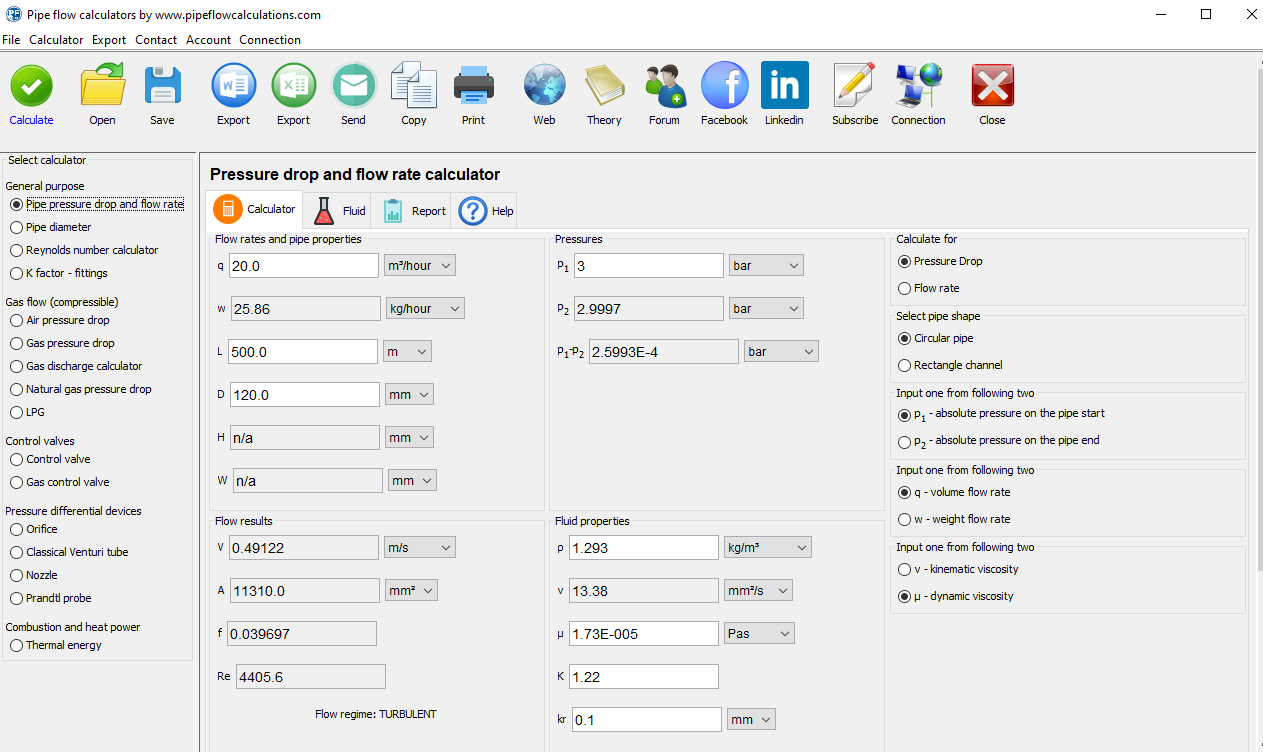
In conclusion, the pressure drop calculator empowers engineers with the knowledge and tools to optimize fluid system design and operation. By considering pressure drop in component selection and system layout, engineers can minimize energy consumption, prevent equipment damage, and ensure reliable system performance.