Welcome to the realm of estimation, where the Linear Approximation Calculator emerges as a beacon of simplicity and precision. As we delve into its intricacies, we’ll explore its applications, unravel its benefits, and uncover its nuances. Get ready to witness the transformative power of linear approximation, a tool that empowers us to make informed decisions with confidence.
Harnessing the principles of linear approximation, this calculator empowers you to approximate complex functions with ease. Whether you’re navigating the complexities of engineering, navigating the intricacies of finance, or exploring the vastness of scientific research, the Linear Approximation Calculator stands ready to guide your path.
Introduction to Linear Approximation Calculator
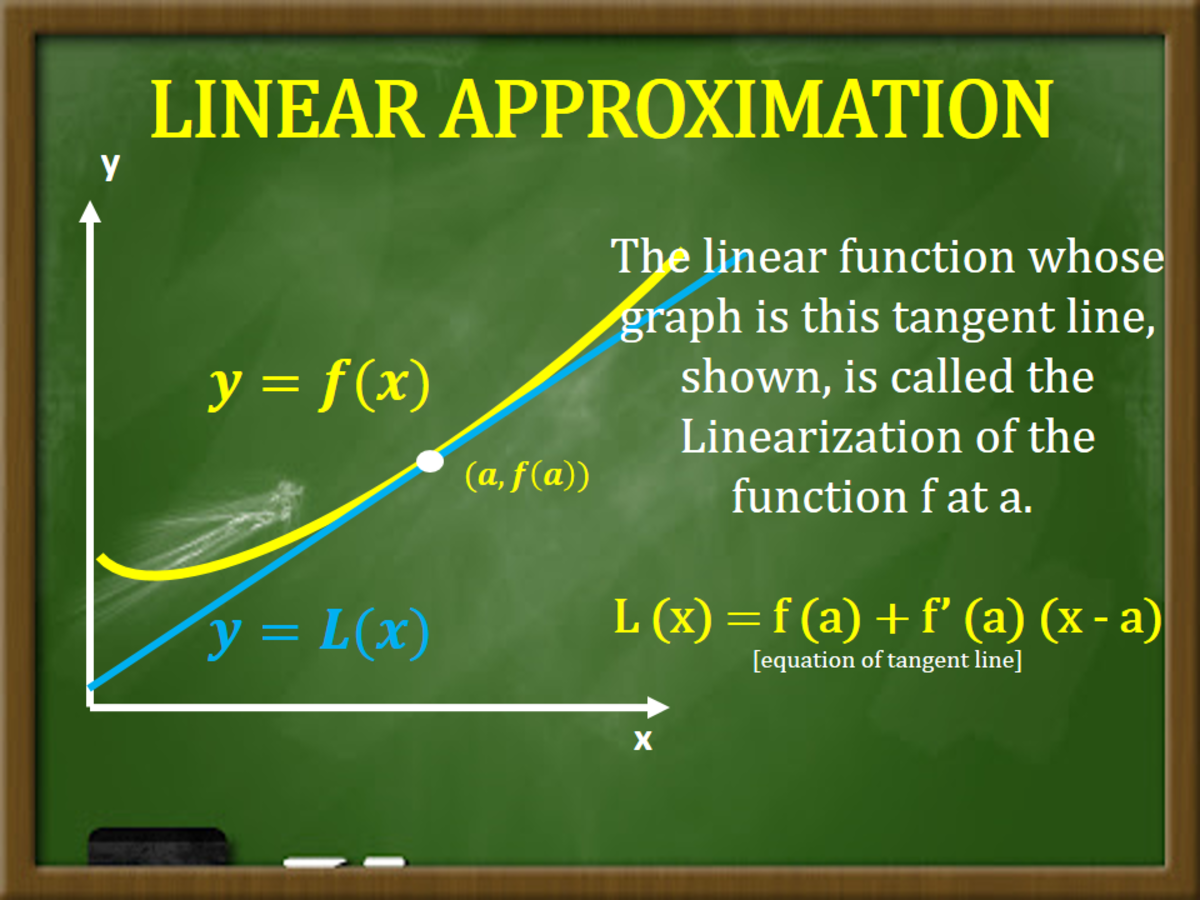
Linear approximation, a fundamental concept in mathematics, offers a simplified approach to estimate the value of a complex function near a specific point. This approximation technique involves creating a linear function that closely resembles the original function’s behavior in the vicinity of that point.
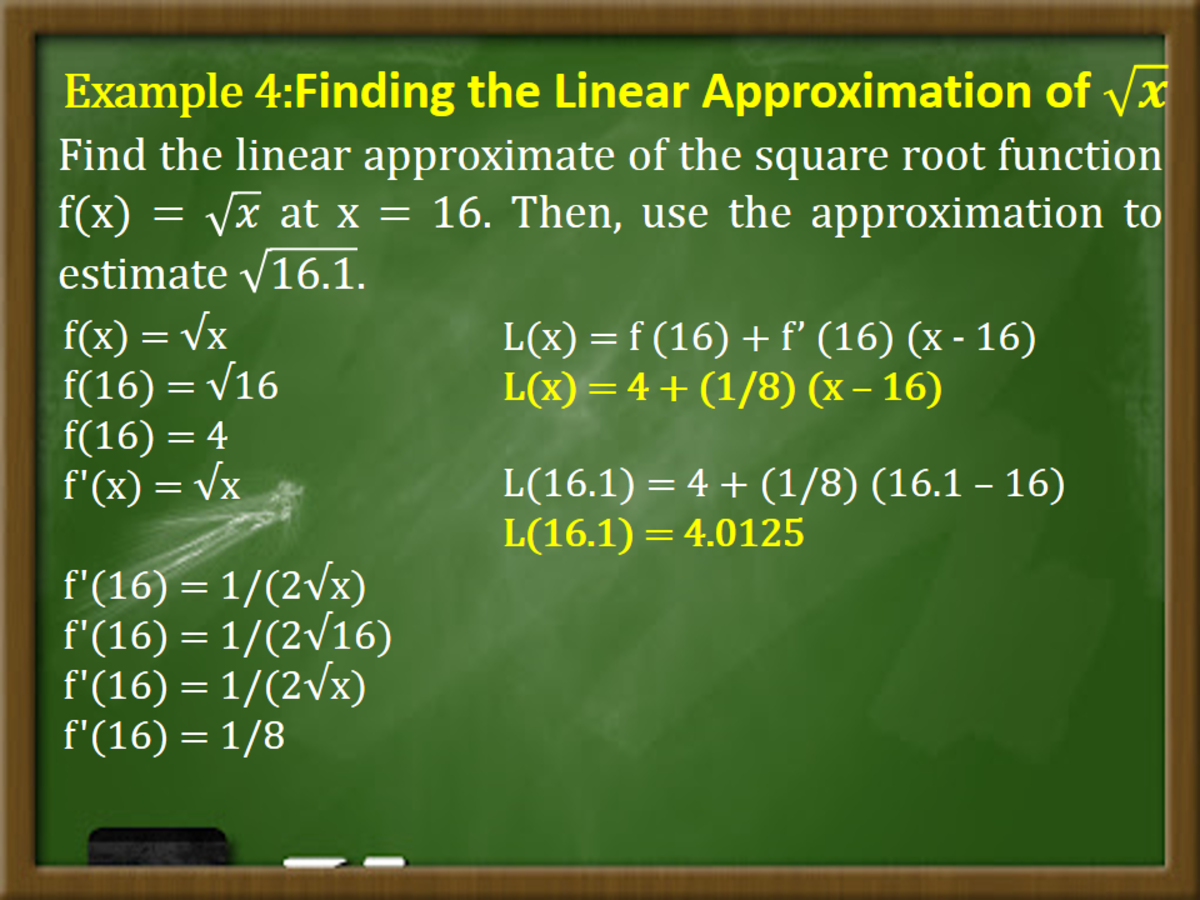
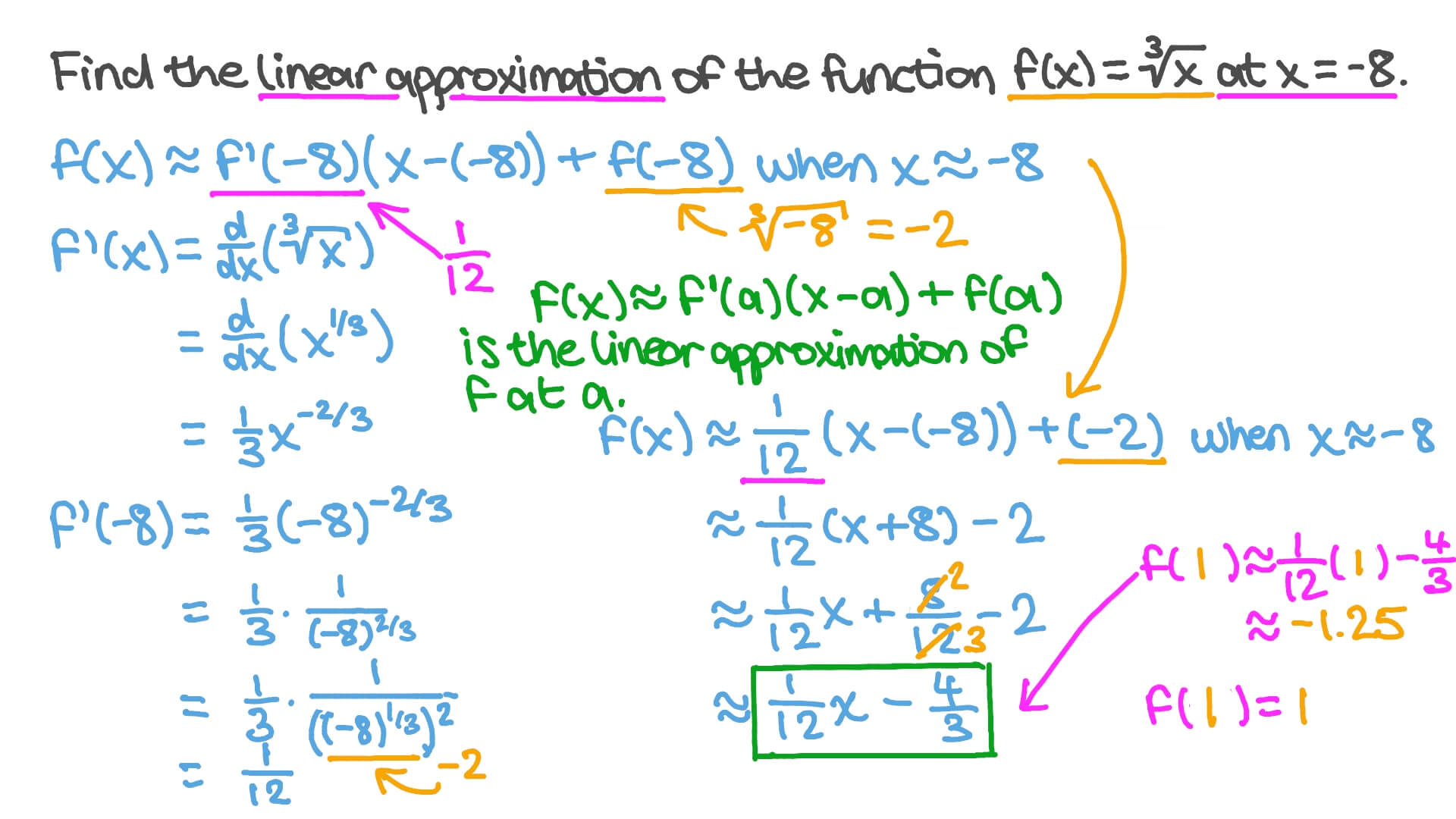
The formula for linear approximation is:
$$L(x) = f(a) + f'(a)(x-a)$$
where: – \(L(x)\) represents the linear approximation of the function \(f(x)\) – \(a\) is the point around which the approximation is made – \(f(a)\) is the value of the function at point \(a\) – \(f'(a)\) is the derivative of the function at point \(a\)
Applications of Linear Approximation
Linear approximation finds extensive use in various real-world scenarios:
- Physics:Estimating the trajectory of a projectile, calculating the velocity of an object, and modeling the motion of a pendulum.
- Economics:Forecasting demand, predicting stock prices, and estimating production costs.
- Biology:Modeling population growth, estimating enzyme activity, and approximating the rate of chemical reactions.
Benefits of Using a Linear Approximation Calculator
Employing a linear approximation calculator offers several advantages:
- Simplicity:Calculators automate the process, making it accessible to users without advanced mathematical knowledge.
- Speed:Calculations are performed swiftly, saving time and effort compared to manual computations.
- Accuracy:Calculators provide precise approximations within the specified range of values.
Limitations of Linear Approximation
It’s important to note the limitations of linear approximation:
- Accuracy:Approximations become less accurate as the distance from the point of approximation increases.
- Non-linear Functions:Linear approximation is not suitable for functions that exhibit significant non-linear behavior.
Using a Linear Approximation Calculator
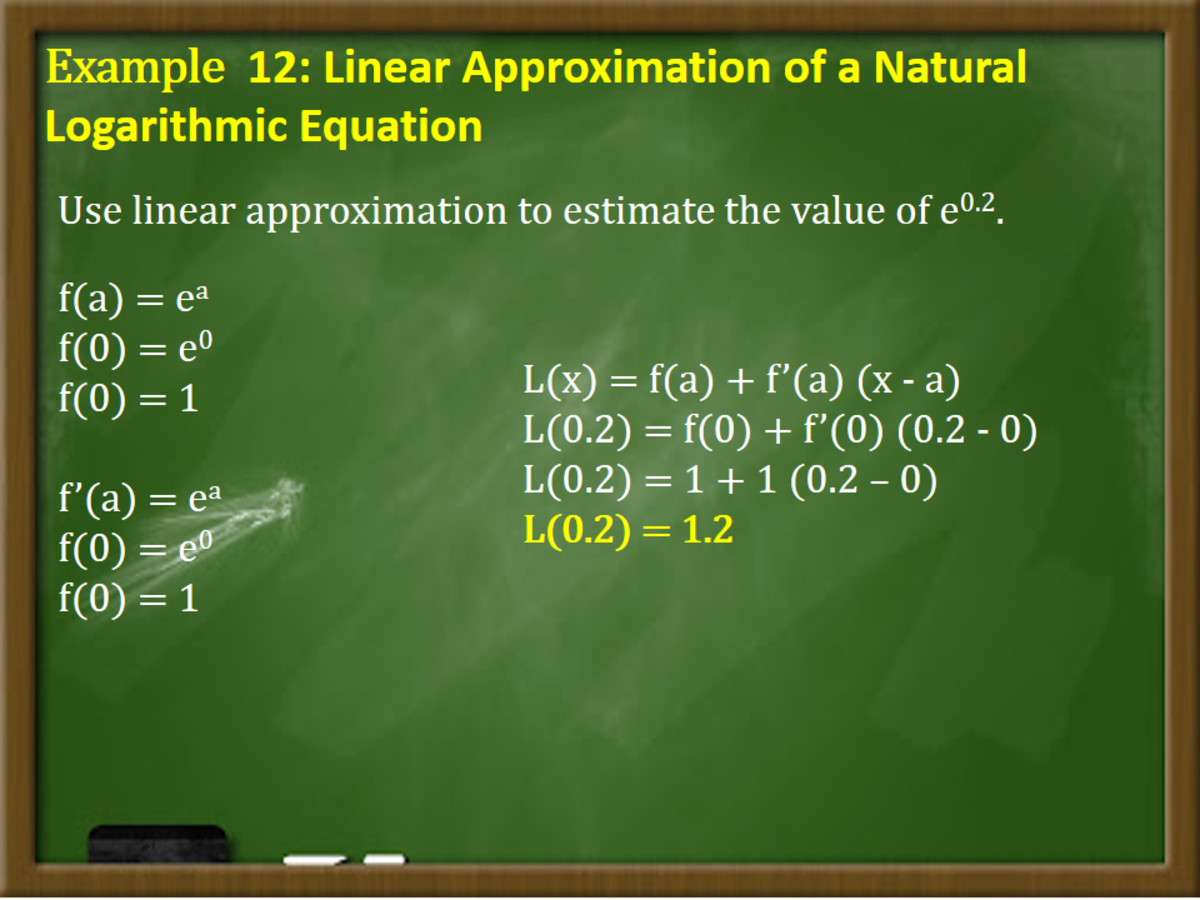
Using a linear approximation calculator is a straightforward process that can help you estimate the value of a function at a given point. Here are the steps on how to use one:
1. Enter the functionyou want to approximate.
2. Enter the pointat which you want to approximate the function.
3. Click the “Calculate” button.
The calculator will return the linear approximation of the function at the given point. The linear approximation is a straight line that is tangent to the function at the given point.
Inputs and Outputs
The inputs to a linear approximation calculator are the function and the point at which you want to approximate the function. The output is the linear approximation of the function at the given point.
Tips and Tricks
Here are some tips and tricks for getting the most accurate results from a linear approximation calculator:
- Use a calculator that is designed for linear approximation. There are many different calculators available online, so make sure to choose one that is specifically designed for this purpose.
- Enter the function and the point as accurately as possible. The more accurate your inputs are, the more accurate the output will be.
- Be aware of the limitations of linear approximation. Linear approximation is only a good approximation for functions that are relatively linear near the given point. If the function is not linear near the given point, then the linear approximation may not be very accurate.
Applications of Linear Approximation Calculator
Linear approximation calculators find widespread use across various fields and industries due to their ability to provide quick and reasonably accurate estimates for complex functions.
In engineering, linear approximation is employed in:
- Approximating the behavior of physical systems, such as springs and beams, within a limited range of operation.
- Estimating the performance of electronic circuits, simplifying complex calculations.
In finance, linear approximation is used for:
- Approximating the value of financial instruments, such as stocks and bonds, over short periods.
li>Estimating the risk and return of investment portfolios.
In scientific research, linear approximation is applied in:
- Approximating the solutions to differential equations, making complex mathematical problems more manageable.
- Estimating the parameters of statistical models, simplifying data analysis and interpretation.
The advantages of using linear approximation in these applications include:
- Simplicity:Linear approximation involves straightforward calculations, making it accessible to users with various backgrounds.
- Speed:Linear approximation provides estimates quickly, saving time compared to more complex methods.
- Reasonable accuracy:Within a limited range, linear approximation can provide reasonably accurate results, making it a practical tool for many applications.
Advanced Features of Linear Approximation Calculator
Linear approximation calculators can offer advanced features that enhance their accuracy and functionality. These features can provide more precise approximations and enable the calculator to be used in a wider range of applications.
Improved Accuracy Methods
- Some calculators employ higher-order approximations, such as quadratic or cubic approximations, which can yield more accurate results over larger intervals.
- Error estimation techniques can provide an estimate of the error in the approximation, allowing users to assess the reliability of the result.
Extended Functionality
- Advanced calculators may include built-in functions for finding critical points, extrema, and integrals, leveraging the linear approximation to obtain approximate solutions.
- Some calculators offer the ability to handle multivariate functions, enabling the approximation of surfaces and curves.
Real-World Applications, Linear approximation calculator
- In physics, linear approximations are used to model the motion of objects under the influence of gravity or other forces, providing simplified equations that can be used for analysis.
- In economics, linear approximations can be employed to estimate the change in a variable, such as consumer demand, as a function of another variable, such as price.
Final Thoughts
As we bid farewell to this exploration of linear approximation calculators, let us remember their remarkable ability to simplify complex functions and provide valuable insights. Embrace the power of estimation, and may this calculator serve as a constant companion in your quest for knowledge and problem-solving.
Farewell, dear reader, and may your future endeavors be marked by precision and clarity.