
Inverse Laplace Calculator is an indispensable tool for engineers, scientists, and students grappling with complex mathematical equations. Its ability to find the inverse Laplace transform of a given function unlocks a wealth of applications, from solving differential equations to analyzing circuits.
Dive into this comprehensive guide to master the intricacies of the inverse Laplace transform and harness its power for your mathematical endeavors.
This guide delves into the fundamental concepts of the Laplace transform, providing a solid foundation for understanding its inverse counterpart. We will explore various methods for finding the inverse Laplace transform, including partial fraction decomposition and the convolution theorem, equipping you with the techniques to tackle complex functions.
Laplace Transform Concepts
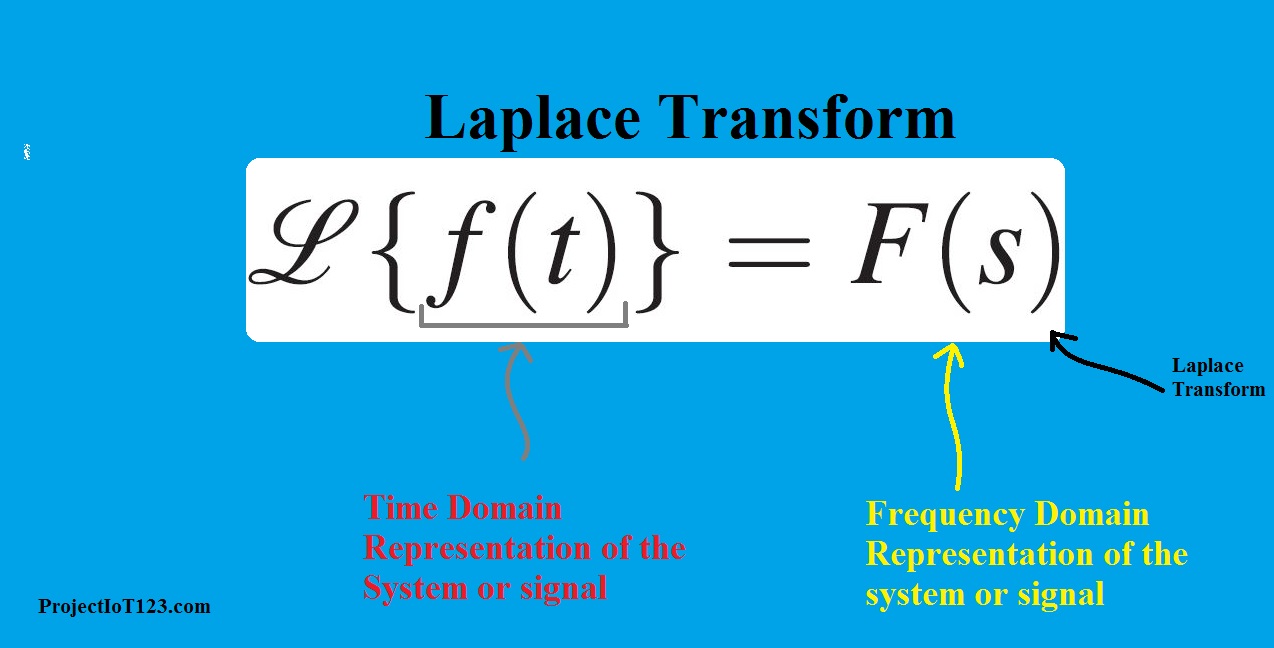
The Laplace transform is a mathematical tool used to transform a function of a real variable into a function of a complex variable. It is widely applied in various fields such as engineering, physics, and mathematics.
Common Laplace Transforms
Some common Laplace transforms include:
- $$f(t) = 1 \rightarrow F(s) = \frac1s$$
- $$f(t) = t \rightarrow F(s) = \frac1s^2$$
- $$f(t) = e^at \rightarrow F(s) = \frac1s-a$$
- $$f(t) = \sin(at) \rightarrow F(s) = \fracas^2+a^2$$
- $$f(t) = \cos(at) \rightarrow F(s) = \fracss^2+a^2$$
Properties of the Laplace Transform, Inverse laplace calculator
The Laplace transform possesses several important properties, including:
- Linearity: The Laplace transform of a linear combination of functions is equal to the linear combination of the Laplace transforms of the individual functions.
- Time Shifting: Shifting a function in the time domain corresponds to multiplying its Laplace transform by $$e^-as$$.
- Differentiation: The Laplace transform of the derivative of a function is equal to $$sF(s) – f(0)$$.
- Integration: The Laplace transform of the integral of a function is equal to $$\fracF(s)s$$.
Inverse Laplace Transform Methods: Inverse Laplace Calculator
The inverse Laplace transform is a mathematical operation that converts a function in the frequency domain (s-domain) back to the time domain (t-domain). There are several methods for finding the inverse Laplace transform, including:
Partial Fraction Decomposition
Partial fraction decomposition involves breaking down a rational function (a function that can be expressed as a ratio of polynomials) into a sum of simpler fractions. Each fraction can then be inverted using the following formula:
L-11/(s-a) = e at
where a is a constant.
Steps for using partial fraction decomposition:
- Factor the denominator of the rational function.
- For each factor (s-a), create a fraction of the form A/(s-a).
- Solve for the constants A by equating coefficients.
- Invert each fraction using the formula above.
Convolution Theorem
The convolution theorem states that the inverse Laplace transform of the product of two functions in the s-domain is equal to the convolution of their inverse Laplace transforms in the t-domain. The convolution of two functions f(t) and g(t) is defined as:
f(t)
g(t) = ∫0tf(τ)g(t-τ) dτ
Steps for using the convolution theorem:
- Find the inverse Laplace transforms of both functions.
- Convolve the two inverse Laplace transforms using the formula above.
Applications of the Inverse Laplace Transform

The inverse Laplace transform finds applications in various fields, including solving differential equations, circuit analysis, and other areas of engineering and science.
Solving Differential Equations
The inverse Laplace transform is a powerful tool for solving linear differential equations with constant coefficients. By taking the Laplace transform of both sides of a differential equation, we can transform it into an algebraic equation in the Laplace domain.
Solving this algebraic equation and then applying the inverse Laplace transform allows us to obtain the solution to the original differential equation.
For example, consider the following differential equation:
$$y”
3y’ + 2y = e^t$$
Taking the Laplace transform of both sides, we get:
$$s^2Y(s)
3sY(s) + 2Y(s) = \frac1s-1$$
Solving for Y(s), we get:
$$Y(s) = \frac1(s-1)(s^2-3s+2)$$
Using partial fraction decomposition, we can write Y(s) as:
$$Y(s) = \frac1s-1
\frac1s-2 + \frac1s-1$$
Applying the inverse Laplace transform to each term, we get the solution to the differential equation:
$$y(t) = e^t
e^2t + t e^t$$
Resources for Inverse Laplace Transform Calculations
To assist in the computation of inverse Laplace transforms, various resources are available. These include tables of common Laplace transform pairs, online calculators, and specialized software.
Common Laplace Transform Pairs
Tables of Laplace transform pairs provide a convenient reference for finding the inverse Laplace transform of common functions. These tables typically include the Laplace transform and the corresponding inverse Laplace transform for a range of functions, such as exponentials, trigonometric functions, and polynomials.
Online Inverse Laplace Transform Calculators
Online inverse Laplace transform calculators offer a quick and convenient way to compute the inverse Laplace transform of a given function. These calculators typically require the user to input the Laplace transform of the function, and they then provide the inverse Laplace transform as output.
Software for Inverse Laplace Transform Computations
Specialized software packages can be used for more complex inverse Laplace transform computations. These packages typically offer a range of features, such as the ability to handle multiple Laplace transforms, perform symbolic computations, and generate plots of the inverse Laplace transform.
Last Recap
Throughout this guide, we have explored the fascinating world of the inverse Laplace transform, uncovering its applications in diverse fields. From solving differential equations to analyzing circuits, this mathematical tool proves invaluable. Whether you are a seasoned engineer or a budding student, we hope this guide has empowered you with the knowledge and skills to confidently navigate the complexities of the inverse Laplace transform.
