Embark on a mathematical journey to uncover the secrets of asymptotes—those elusive lines that functions approach but never quite touch. This comprehensive guide, “How to Find the Asymptotes of a Function on a Graphing Calculator,” will equip you with the knowledge and techniques to conquer this intriguing concept.
As we delve into the world of asymptotes, we’ll explore their different types—vertical, horizontal, and oblique—and their profound impact on the behavior of functions. Brace yourself for a captivating exploration that will transform your understanding of graphing and mathematical analysis.
Finding Vertical Asymptotes

Vertical asymptotes are vertical lines that the graph of a function approaches but never touches. They occur when the function has a discontinuity, meaning that there is a break or jump in the graph.
Identifying Vertical Asymptotes on a Graphing Calculator
- Graph the function on the graphing calculator.
- Look for any vertical lines that the graph approaches but does not touch.
- The equations of these vertical lines are the vertical asymptotes of the function.
Examples of Functions with Vertical Asymptotes
- The function f(x) = 1/(x-2) has a vertical asymptote at x = 2.
- The function f(x) = tan(x) has vertical asymptotes at x = (n + 1/2)π, where n is an integer.
Locating Horizontal Asymptotes: How To Find The Asymptotes Of A Function On A Graphing Calculator
Horizontal asymptotes are horizontal lines that the graph of a function approaches as the input values approach infinity or negative infinity. They indicate the long-term behavior of the function as the input values become very large or very small.
To determine horizontal asymptotes using a graphing calculator, follow these steps:
Using a Graphing Calculator
- Enter the function into the graphing calculator.
- Set the viewing window to a large enough range so that the graph extends far to the left and right.
- Observe the behavior of the graph as the input values approach infinity and negative infinity. If the graph approaches a horizontal line, that line is a potential horizontal asymptote.
- To confirm the horizontal asymptote, use the “trace” feature of the graphing calculator. Move the cursor along the graph as the input values approach infinity and negative infinity. If the output values approach a constant value, that value is the horizontal asymptote.
Horizontal asymptotes are significant in function behavior because they provide information about the long-term behavior of the function. For example, if a function has a horizontal asymptote at y = 5, it means that as the input values become very large or very small, the output values will approach 5.
When investigating detailed guidance, check out What is a BMI calculator? now.
Identifying Oblique Asymptotes
Oblique asymptotes are lines that a function approaches as \(x\) approaches infinity or negative infinity. They are significant because they provide insights into the behavior of the function at large values of \(x\).
Step-by-Step Method for Finding Oblique Asymptotes on a Graphing Calculator
1. Enter the function into the graphing calculator.
2. Press the “CALC” button and select “Asymptotes.”
3. Select “Oblique.”
4. The calculator will display the equation of the oblique asymptote, if one exists.
Examples of Functions with Oblique Asymptotes
* \(f(x) = x + \frac1x\) has an oblique asymptote at \(y = x\).
* \(g(x) = \fracx^2 + 2xx-1\) has an oblique asymptote at \(y = x + 3\).
Analyzing Functions for Asymptotes

Asymptotes are essential lines that help define the behavior of functions at infinity or when certain values are approached. Understanding the different types of asymptotes and their impact on the shape and behavior of functions is crucial for comprehensive analysis.
Comparing Asymptotes
There are three primary types of asymptotes:
- Vertical Asymptotes: Vertical lines where the function approaches infinity or minus infinity as x approaches a specific value.
- Horizontal Asymptotes: Horizontal lines where the function approaches a specific value as x approaches infinity or minus infinity.
- Oblique Asymptotes: Non-vertical, non-horizontal lines where the function approaches a linear function as x approaches infinity or minus infinity.
Impact of Asymptotes on Functions
Asymptotes significantly influence the shape and behavior of functions:
- Vertical Asymptotes: Divide the plane into regions where the function has different signs or is undefined.
- Horizontal Asymptotes: Indicate the limit of the function as x approaches infinity or minus infinity.
- Oblique Asymptotes: Represent the long-term behavior of the function as x becomes very large or very small.
Tips for Analyzing Functions for Asymptotes, How to find the asymptotes of a function on a graphing calculator
Effectively analyze functions for asymptotes using a graphing calculator:
- Graph the function and observe its behavior as x approaches infinity or minus infinity.
- Use the “Trace” feature to move along the graph and pinpoint the coordinates where the function approaches vertical or horizontal asymptotes.
- For oblique asymptotes, examine the long-term behavior of the graph as x becomes very large or very small and identify the linear function that the graph approaches.
Ending Remarks
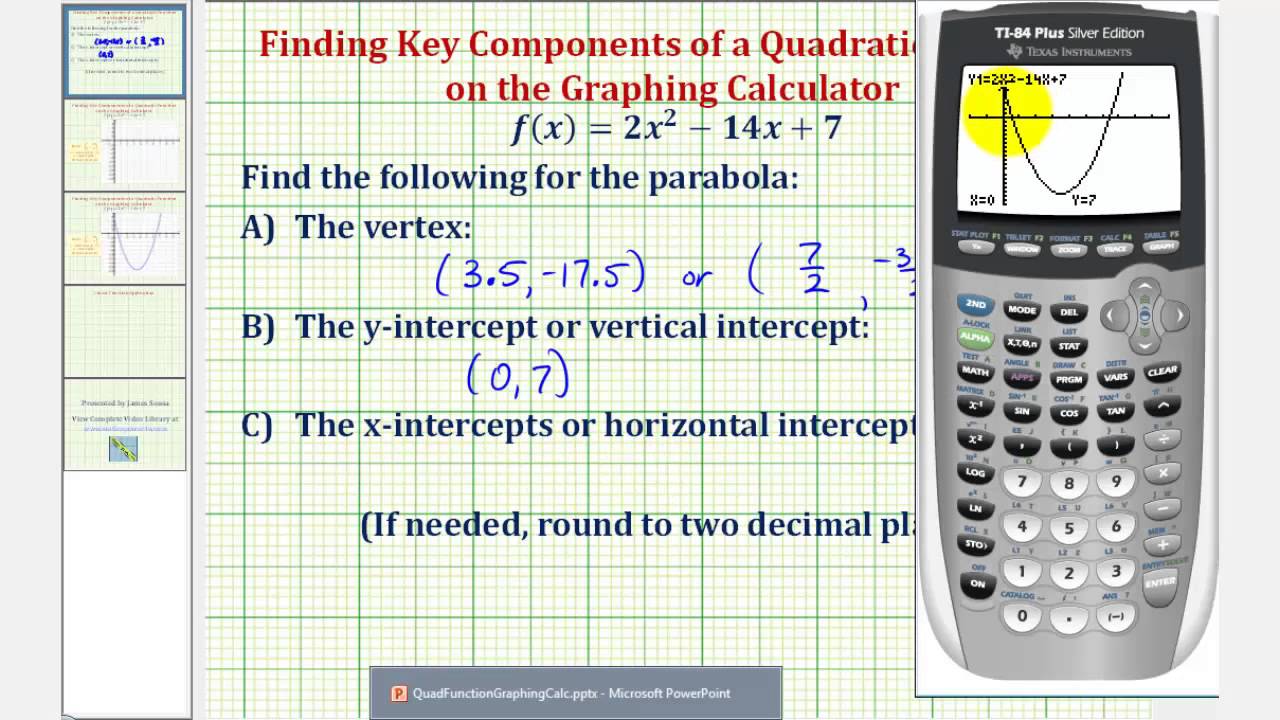
Through this exploration, you’ve mastered the art of finding asymptotes on a graphing calculator. This newfound skill empowers you to analyze functions with greater precision, unlocking deeper insights into their behavior and characteristics. Remember, asymptotes serve as valuable guides, revealing the hidden patterns and boundaries that shape the mathematical landscape.
Questions Often Asked
What are asymptotes?
Asymptotes are lines that a function approaches but never intersects, acting as boundaries that guide the function’s behavior.
How do I find vertical asymptotes on a graphing calculator?
To find vertical asymptotes, set the denominator of the function to zero and solve for x. These values represent the x-coordinates of the vertical asymptotes.
What is the significance of horizontal asymptotes?
Horizontal asymptotes indicate the function’s long-term behavior as x approaches infinity or negative infinity, providing insights into the function’s overall trend.