How to calculate weighted grades? This question plagues educators and students alike. But fear not, for this guide will provide a step-by-step explanation of the process, making it easy for you to calculate weighted grades accurately and efficiently.
Weighted grading systems are commonly used in education to assign different values to different assignments and assessments. This allows educators to emphasize the importance of certain assignments and to ensure that all assignments contribute fairly to the final grade.
Weighting Assignment Components: How To Calculate Weighted Grades?
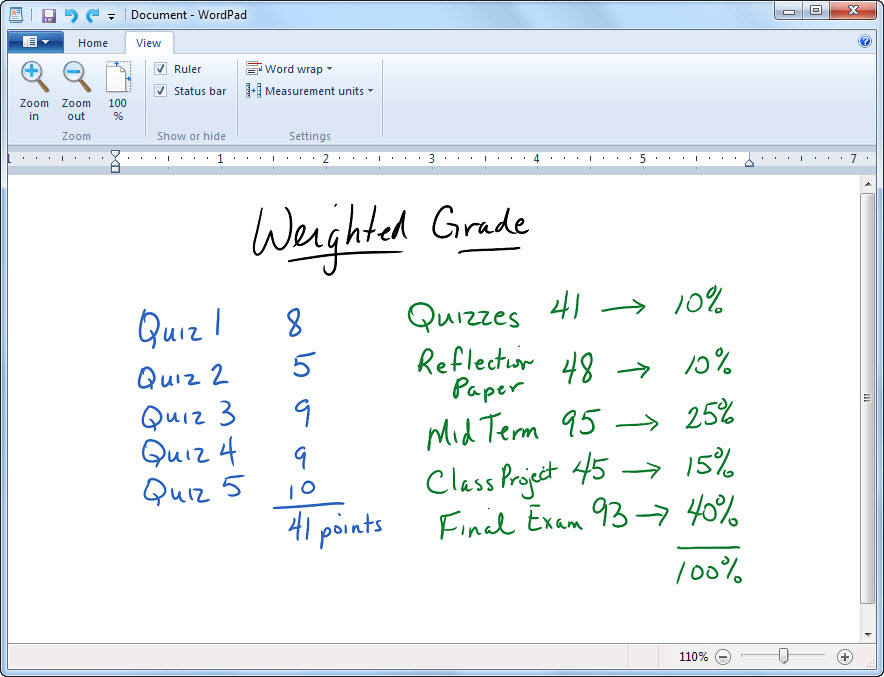
Determining the weight of each assignment component is a crucial step in calculating weighted grades. It ensures that the importance of different assignments is reflected in the final grade.
To determine the weight, educators consider several factors, including the difficulty, length, and importance of each assignment. Common weighting systems include:
Point System
- Assigns a specific number of points to each assignment.
- Points are typically based on the difficulty and importance of the assignment.
- The final grade is calculated by dividing the total points earned by the total possible points.
Percentage System
- Assigns a percentage value to each assignment.
- The percentage is typically based on the proportion of time or effort required for the assignment.
- The final grade is calculated by adding the percentages of all assignments and dividing by the total number of assignments.
Letter Grade System
- Assigns a letter grade (e.g., A, B, C) to each assignment.
- The letter grade is typically based on the quality of the work.
- The final grade is calculated by converting the letter grades to numerical values and averaging them.
Calculating Individual Component Grades

To calculate the grade for each assignment component, follow these steps:
Determining Raw Scores
- For assignments that involve numeric scores (e.g., tests, quizzes), the raw score is the numerical value awarded for the student’s performance.
- For assignments that involve non-numeric assessments (e.g., essays, projects), the raw score is typically determined using a rubric or grading scale that assigns points based on specific criteria.
Converting to a Common Scale
- If the assignment components use different grading scales (e.g., percentage, letter grades), convert the raw scores to a common scale for easier comparison and calculation.
- For example, you can convert percentage scores to a 4.0 GPA scale or letter grades to a 100-point scale.
Calculating Component Grades
- Multiply the converted raw score by the component’s weighting factor.
- The resulting value is the component grade.
Formula: Component Grade = Converted Raw Score × Weighting Factor
Combining Component Grades
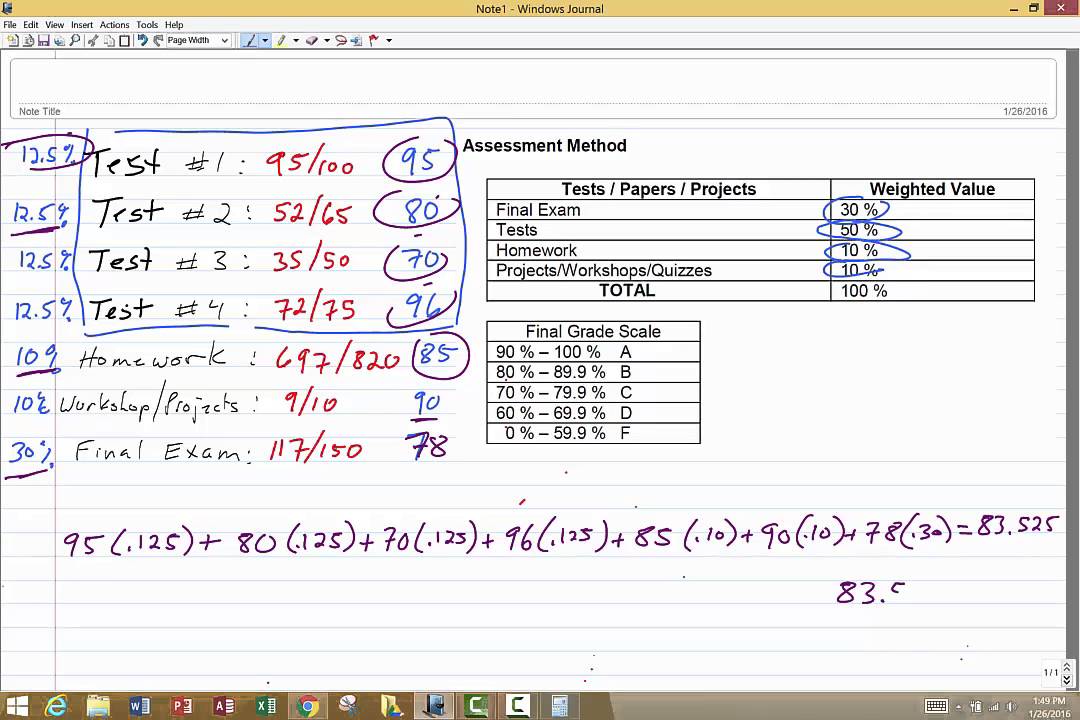
To calculate the final weighted grade, the individual component grades are combined based on their respective weights.
There are different methods for calculating the final grade, such as the weighted average or point system. Let’s discuss each method in detail.
Weighted Average
The weighted average is the most common method for calculating the final grade. In this method, each component grade is multiplied by its weight, and the results are summed up. The sum is then divided by the total weight to get the final weighted grade.
Weighted Average = (Component Grade 1 x Weight 1 + Component Grade 2 x Weight 2 + … + Component Grade n x Weight n) / Total Weight
Point System
The point system is another method for calculating the final grade. In this method, each component grade is converted to a point value based on a predetermined scale. The point values are then summed up to get the final grade.
Final Grade = Sum of Point Values
Example
Let’s consider an example to illustrate the calculation of the final weighted grade.
Suppose a course has three components with the following weights and grades:
- Midterm Exam: 30% – Grade: 85%
- Final Exam: 50% – Grade: 90%
- Homework Assignments: 20% – Grade: 80%
Using Weighted Average
Weighted Average = (85% x 30%) + (90% x 50%) + (80% x 20%) / 100%
Investigate the pros of accepting What is a BMI calculator? in your business strategies.
Weighted Average = 25.5% + 45% + 16% / 100%
Weighted Average = 86.5%
Using Point System
Assuming the following point scale:
- 90-100%: 4.0
- 80-89%: 3.0
- 70-79%: 2.0
- 60-69%: 1.0
- Below 60%: 0.0
Point Value for Midterm Exam = 85% x 4.0 = 3.4
Point Value for Final Exam = 90% x 4.0 = 3.6
Point Value for Homework Assignments = 80% x 3.0 = 2.4
Final Grade = 3.4 + 3.6 + 2.4 = 9.4
Presenting and Interpreting Results
Once the weighted grades have been calculated, it is important to present them to students in a clear and concise manner. This will help them understand their performance in the course and identify areas where they may need improvement.
Best Practices for Presenting Weighted Grades
- Use a grading rubric that clearly Artikels the weight of each assignment component.
- Provide students with regular feedback throughout the semester so that they are aware of their progress.
- Hold office hours or provide other opportunities for students to ask questions and get clarification on their grades.
Interpreting Weighted Grades
Weighted grades provide a more accurate representation of student performance than unweighted grades. This is because they take into account the importance of different assignments and components. When interpreting weighted grades, it is important to consider the following factors:
- The weight of each assignment component.
- The student’s performance on each assignment component.
- The course objectives.
By considering these factors, instructors can make informed decisions about student performance and provide feedback that is tailored to their individual needs.
Importance of Clear Communication and Transparency in Grading, How to calculate weighted grades?
Clear communication and transparency in grading are essential for building trust between instructors and students. When students understand how their grades are calculated, they are more likely to be engaged in the learning process and to take ownership of their performance.
Instructors should make sure to communicate their grading policies to students at the beginning of the semester. They should also be willing to answer student questions about grading and to provide feedback on student work.
By fostering a culture of clear communication and transparency, instructors can create a positive learning environment where students feel supported and motivated to succeed.
Closing Notes
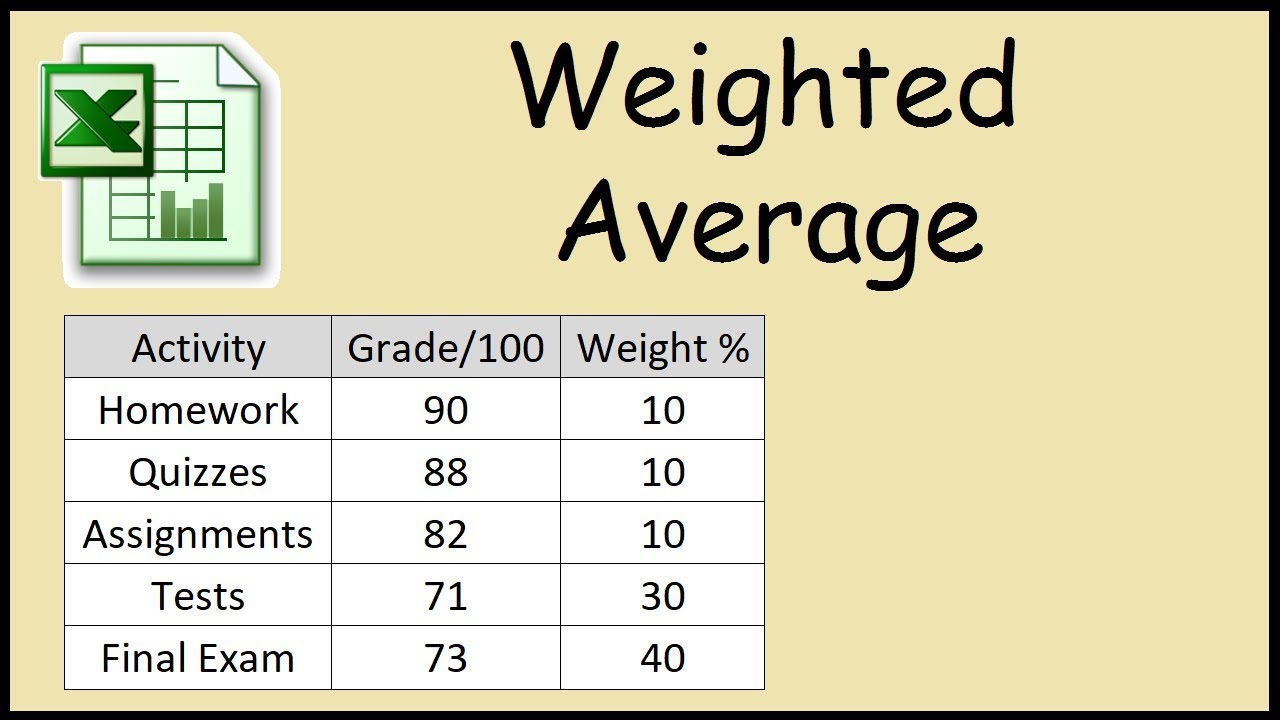
Calculating weighted grades may seem like a daunting task, but it is a valuable skill for both educators and students. By understanding the steps involved and the factors to consider, you can ensure that your weighted grading system is fair, accurate, and transparent.
Commonly Asked Questions
What is weighted grading?
Weighted grading is a system of assigning different values to different assignments and assessments. This allows educators to emphasize the importance of certain assignments and to ensure that all assignments contribute fairly to the final grade.
How do I calculate weighted grades?
To calculate weighted grades, you need to first determine the weight of each assignment. This can be done by considering the difficulty of the assignment, the time required to complete it, and the importance of the assignment to the overall course objectives. Once you have determined the weights, you can then calculate the weighted grade by multiplying each assignment grade by its weight and then adding the results together.
What are the benefits of using weighted grading?
Weighted grading can provide several benefits, including:
- It allows educators to emphasize the importance of certain assignments.
- It ensures that all assignments contribute fairly to the final grade.
- It can help to improve student motivation and engagement.
- It can provide students with a more accurate representation of their overall achievement.