
How to calculate compound interest manually – Compound interest, a financial concept that has the power to multiply your savings, can be calculated manually using a few simple steps. In this comprehensive guide, we will delve into the intricacies of compound interest, providing you with a step-by-step process and practical examples to help you master the art of calculating compound interest manually.
As we embark on this journey, we will explore the factors that influence compound interest, uncover its applications in real-life scenarios, and discuss advanced topics such as continuous compounding and effective annual rate. By the end of this guide, you will be equipped with the knowledge and skills to harness the power of compound interest for your financial success.
Understanding Compound Interest
Compound interest is a financial calculation that takes into account the interest earned on both the principal amount and the accumulated interest from previous periods. Unlike simple interest, which only considers the interest on the principal amount, compound interest allows for exponential growth of earnings over time.
Accumulation of Compound Interest
To illustrate how compound interest accumulates, consider an initial investment of $1,000 earning 5% annual interest compounded annually. At the end of the first year, the interest earned would be $50, bringing the total balance to $1,050. In the second year, interest is earned not only on the original $1,000 but also on the $50 earned in the first year. This results in interest of $52.50, increasing the balance to $1,102.50. As time progresses, the amount of interest earned each year continues to grow, leading to a snowball effect that accelerates the growth of the investment.
You also can investigate more thoroughly about Mortgage payment calculator with down payment to enhance your awareness in the field of Mortgage payment calculator with down payment.
Factors Affecting Compound Interest
- Principal Amount: The initial amount invested significantly influences the growth of compound interest. A larger principal amount will result in higher interest earnings and, consequently, a more substantial future value.
- Interest Rate: The annual interest rate determines the rate at which interest is earned. A higher interest rate leads to more rapid growth of the investment.
- Compounding Frequency: The frequency with which interest is compounded, whether annually, semi-annually, quarterly, or even daily, affects the overall growth of the investment. More frequent compounding results in a higher future value.
- Investment Duration: The length of time over which the investment is held plays a crucial role in the accumulation of compound interest. The longer the investment is held, the more time the interest has to compound and grow exponentially.
Calculating Compound Interest Manually
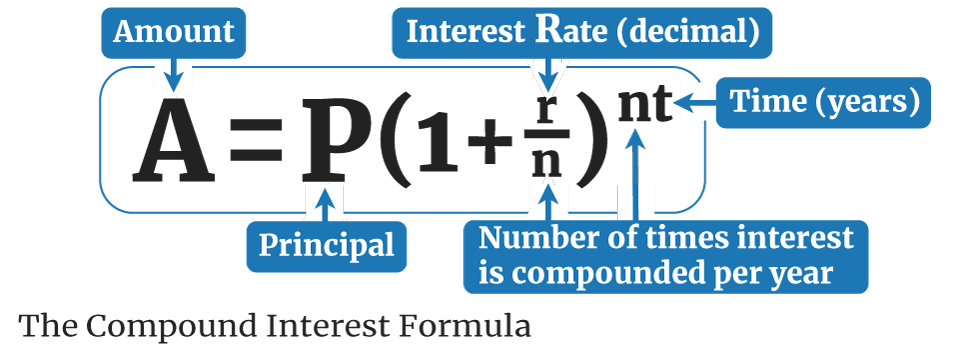
To calculate compound interest manually, you’ll need to follow these steps:
- Determine the principal amount: This is the initial amount of money you invest or borrow.
- Find the annual interest rate: This is the percentage rate at which your money earns interest each year.
- Calculate the number of compounding periods: This is the number of times per year that interest is added to your principal.
- Calculate the interest rate per period: Divide the annual interest rate by the number of compounding periods.
- Raise the principal to the power of the number of periods: This gives you the future value of your investment or loan.
- Subtract the principal amount: This gives you the total amount of compound interest earned.
Here’s an example to illustrate the process:
| Year | Principal | Interest | Future Value |
|---|---|---|---|
| 0 | $1,000 | $0 | $1,000 |
| 1 | $1,050 | $50 | $1,100 |
| 2 | $1,102.50 | $51.25 | $1,153.75 |
| 3 | $1,157.63 | $52.58 | $1,210.21 |
| 4 | $1,215.51 | $53.94 | $1,269.45 |
| 5 | $1,276.28 | $55.34 | $1,331.62 |
In this example, the principal amount is $1,000, the annual interest rate is 5%, and the number of compounding periods is 1 (annually). The future value of the investment after 5 years is $1,331.62, and the total amount of compound interest earned is $331.62.
The formula for calculating compound interest is:
FV = P(1 + r/n)^(nt)
Where:
- FV is the future value of the investment or loan
- P is the principal amount
- r is the annual interest rate
- n is the number of compounding periods per year
- t is the number of years
Applications of Compound Interest
Compound interest finds widespread application in various financial scenarios, ranging from personal savings to large-scale investments.
The most common use of compound interest is in savings accounts, where interest earned in one period is added to the principal and earns interest in subsequent periods. This snowball effect can significantly increase the value of savings over time.
Advantages of Compound Interest
- Exponential Growth: Compounding allows for exponential growth of investments, resulting in a faster accumulation of wealth compared to simple interest.
- Time Value of Money: Compound interest considers the time value of money, as it accounts for the future value of current investments.
- Financial Planning: Compound interest is a crucial factor in financial planning, as it helps individuals estimate the future value of investments and plan for retirement or other financial goals.
Disadvantages of Compound Interest
- Debt Accumulation: While beneficial for savings, compound interest can also lead to rapid accumulation of debt if not managed responsibly.
- Inflation: Compound interest may not outpace inflation, which can erode the real value of investments over time.
Financial Planning with Compound Interest
Compound interest is a powerful tool for financial planning. By understanding the concept and its implications, individuals can make informed decisions about savings, investments, and debt management.
Financial planners use compound interest calculations to project the future value of investments, estimate retirement savings needs, and assess the impact of different investment strategies.
Advanced Topics in Compound Interest
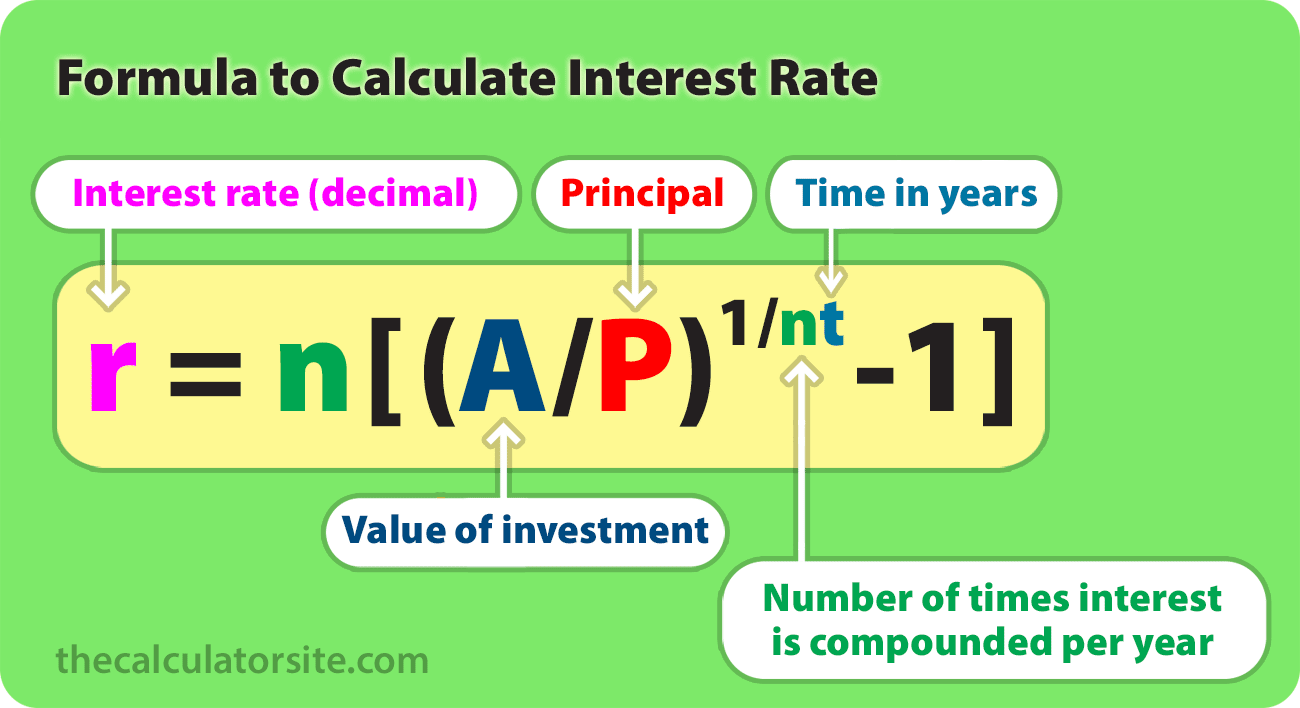
Understanding the nuances of compound interest calculations is crucial for financial planning and investment strategies. This section explores advanced concepts and techniques that extend beyond basic compound interest calculations.
Continuous Compounding, How to calculate compound interest manually
Continuous compounding is a theoretical concept where interest is calculated continuously over time, rather than at discrete intervals. This results in a slightly higher effective annual rate compared to traditional compounding methods.
Effective Annual Rate (EAR)
The effective annual rate (EAR) represents the true annual rate of return on an investment, taking into account the impact of compounding. It is typically higher than the nominal annual rate due to the effect of compounding over time.
Limitations and Assumptions
Compound interest calculations are based on certain assumptions and limitations. These include:
- Interest rates remain constant over the investment period.
- Interest is reinvested at the same rate as the original investment.
- No additional deposits or withdrawals are made during the investment period.
Closure: How To Calculate Compound Interest Manually
Understanding how to calculate compound interest manually empowers you to make informed financial decisions and plan for your future. Whether you are saving for a down payment on a house, planning for retirement, or simply seeking to grow your wealth, mastering compound interest calculations is a valuable skill that can help you achieve your financial goals.
Remember, the key to success lies in consistently applying the principles Artikeld in this guide. With patience, discipline, and a commitment to financial literacy, you can harness the power of compound interest to build a secure and prosperous future.
Clarifying Questions
What is the difference between compound interest and simple interest?
Simple interest is calculated on the initial principal amount only, while compound interest is calculated on the principal plus any accumulated interest from previous periods.
How often should I compound interest?
The more frequently you compound interest, the faster your savings will grow. Compounding annually is a common practice, but you can also compound monthly, quarterly, or even daily.
What is the formula for calculating compound interest?
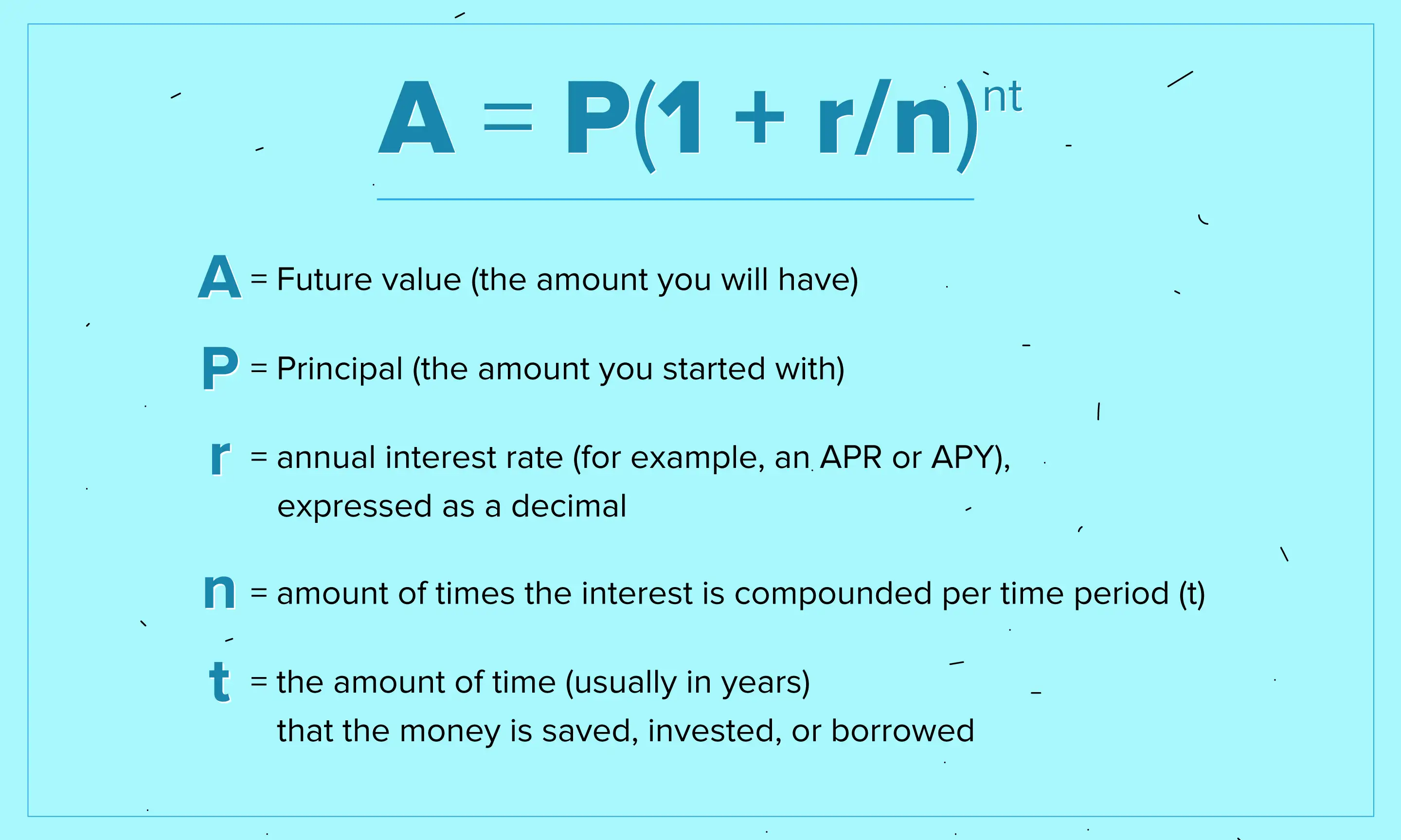
The formula for calculating compound interest is: A = P(1 + r/n)^(nt), where A is the future value, P is the principal, r is the annual interest rate, n is the number of times interest is compounded per year, and t is the number of years.
