
The growth or decay calculator is an indispensable tool for understanding and predicting the exponential growth or decay of quantities over time. It allows users to input parameters and calculate the growth or decay of a given quantity, providing insights into real-world scenarios.
This calculator empowers users to explore the key characteristics of growth and decay functions, such as growth rate, decay rate, and initial value. By visualizing the changes in quantities over time, it enhances understanding and facilitates informed decision-making.
Growth and Decay Functions
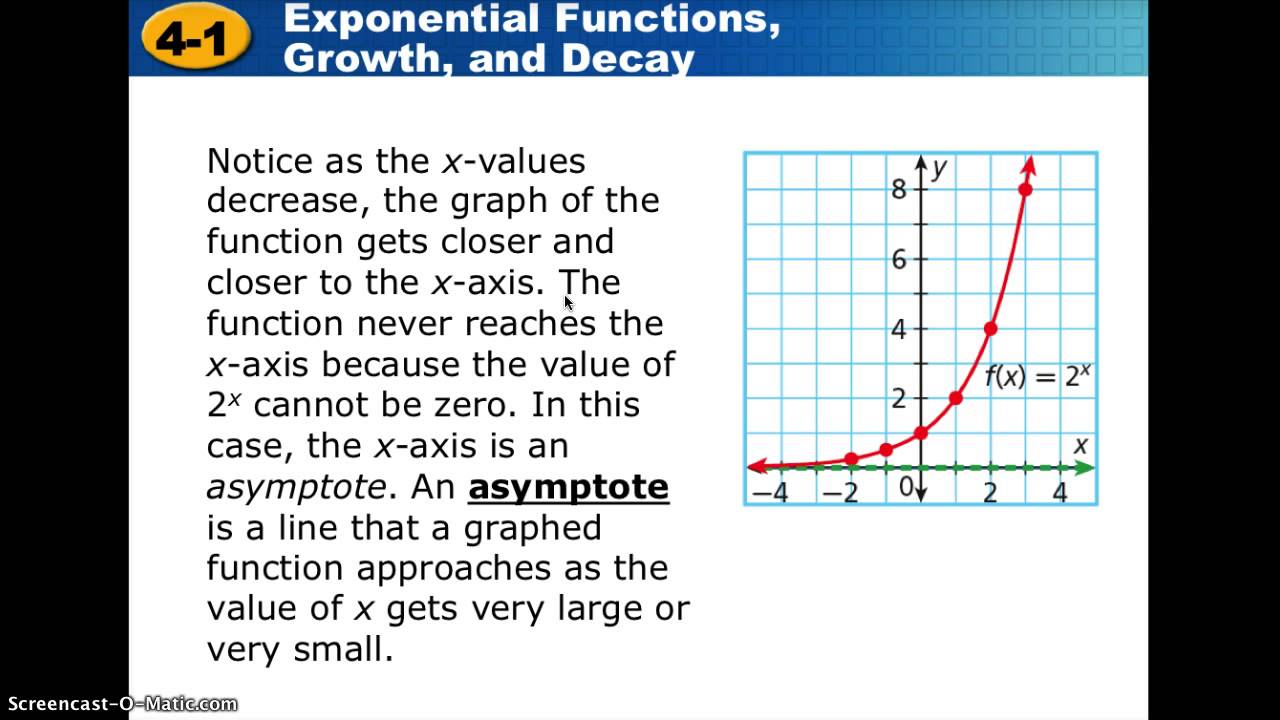
Growth and decay functions are mathematical equations that describe the change in a quantity over time. These functions are commonly used to model real-world phenomena such as population growth, radioactive decay, and economic growth.
There are two main types of growth and decay functions: exponential growth and exponential decay.
Exponential Growth
The exponential growth function is given by the equation:
$$y = ae^kt$$
- where:
- yis the quantity at time t
- ais the initial value of the quantity
- kis the growth rate
- eis the base of the natural logarithm (approximately 2.718)
The growth rate, k, determines how quickly the quantity grows. A positive growth rate indicates that the quantity is increasing over time, while a negative growth rate indicates that the quantity is decreasing over time.
Exponential Decay
The exponential decay function is given by the equation:
$$y = ae^-kt$$
- where:
- yis the quantity at time t
- ais the initial value of the quantity
- kis the decay rate
- eis the base of the natural logarithm (approximately 2.718)
The decay rate, k, determines how quickly the quantity decays. A positive decay rate indicates that the quantity is decreasing over time, while a negative decay rate indicates that the quantity is increasing over time.
Using Growth and Decay Functions to Model Real-World Scenarios
Growth and decay functions can be used to model a wide variety of real-world phenomena. Some common examples include:
- Population growth
- Radioactive decay
- Economic growth
- Drug concentrations in the body
- Temperature changes
By understanding the mathematical equations that govern growth and decay, we can better understand and predict the behavior of these phenomena.
Growth and Decay Calculator
Need to calculate the growth or decay of a given quantity? Our user-friendly calculator is here to help! Simply input the initial value, growth/decay rate, and time period, and we’ll do the rest.
This calculator is based on the formula:
Final Value = Initial Value- (1 + Growth/Decay Rate) ^ Time Period
Where:
- Final Value is the value of the quantity at the end of the time period.
- Initial Value is the value of the quantity at the beginning of the time period.
- Growth/Decay Rate is the percentage by which the quantity increases or decreases each period.
- Time Period is the number of periods over which the growth or decay occurs.
To use the calculator, simply enter the following information:
- Initial Value: The starting value of the quantity.
- Growth/Decay Rate: The percentage by which the quantity increases or decreases each period. Enter a positive value for growth and a negative value for decay.
- Time Period: The number of periods over which the growth or decay occurs.
Once you have entered all of the information, click the “Calculate” button and the calculator will display the final value of the quantity.
Applications of Growth and Decay: Growth Or Decay Calculator
Growth and decay functions are widely used in various fields to model and predict changes in quantities over time. These functions have significant practical implications and can be used to make informed decisions in diverse areas.
Finance
In finance, growth functions are used to model the growth of investments, such as compound interest. Decay functions are used to model the depreciation of assets over time, such as the value of a car. Understanding these functions allows financial professionals to make informed decisions about investments, loans, and asset management.
Population Dynamics
Growth functions are used to model the growth of populations, such as the human population or the population of a species in an ecosystem. Decay functions are used to model the decline of populations due to factors such as disease or habitat loss.
Understanding these functions is crucial for population management, conservation efforts, and predicting future population trends.
Radioactive Decay
Decay functions are used to model the decay of radioactive elements over time. This knowledge is essential for nuclear physics, radiation safety, and the dating of archaeological artifacts. Understanding radioactive decay allows scientists to safely handle and dispose of radioactive materials and to estimate the age of ancient objects.
Visualizing Growth and Decay
Visualizing growth and decay through interactive graphs and charts can significantly enhance our understanding and decision-making processes. By observing the graphical representations of data, we can identify patterns, trends, and relationships that may not be readily apparent from numerical data alone.
Interactive Graphs and Charts
- Create interactive graphs that allow users to adjust parameters and observe the corresponding changes in the growth or decay curves.
- Use different types of charts, such as line graphs, bar graphs, and scatter plots, to represent growth and decay data in various ways.
- Incorporate zoom and pan functionality to enable users to focus on specific regions of the graphs.
Benefits of Visualizing Growth and Decay, Growth or decay calculator
Visualizing growth and decay offers several benefits:
- Enhanced understanding of the underlying processes: Graphs and charts provide a visual representation of the mathematical relationships between variables, making it easier to comprehend the dynamics of growth and decay.
- Identification of trends and patterns: Visualizations can reveal trends and patterns in the data, such as exponential growth or logarithmic decay, which may not be obvious from numerical data.
- Improved decision-making: By visualizing the potential outcomes of different scenarios, decision-makers can make informed choices based on a clear understanding of the growth or decay trajectories.
Wrap-Up

The growth or decay calculator is a versatile tool with applications in diverse fields, including finance, population dynamics, and radioactive decay. It provides practical insights into the dynamics of growth and decay, enabling users to make informed decisions based on a deeper understanding of exponential change.
