The gravitational potential energy calculator is an indispensable tool for understanding the interplay of mass, height, and gravity. This article delves into the intricacies of gravitational potential energy, providing a comprehensive guide to its formula, factors, and applications, culminating in our user-friendly calculator that empowers you to effortlessly solve complex calculations.
Gravitational potential energy embodies the energy stored within an object due to its position within a gravitational field. Understanding this concept is crucial in various fields, from physics to engineering. Our calculator simplifies these calculations, allowing you to explore the fascinating world of gravitational potential energy with ease.
Gravitational Potential Energy Formula and Calculations
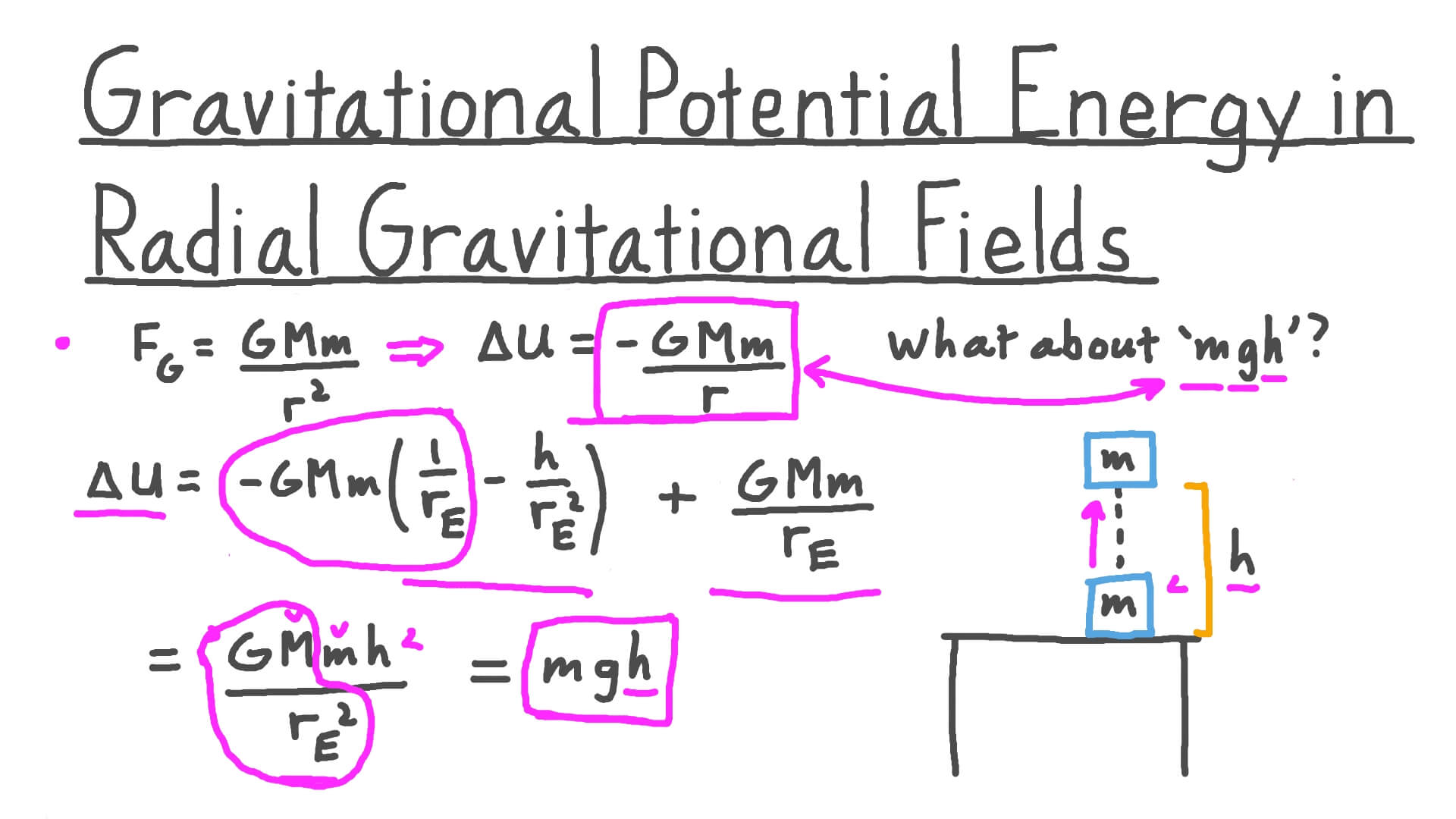
Gravitational potential energy (PE) is the energy an object possesses due to its position within a gravitational field. It is directly proportional to the object’s mass (m), the acceleration due to gravity (g), and its height (h) above a reference point.
The formula for gravitational potential energy is:
PE = mgh
Where:
- PE is the gravitational potential energy in joules (J)
- m is the mass of the object in kilograms (kg)
- g is the acceleration due to gravity, which is approximately 9.8 m/s² on Earth
- h is the height of the object above the reference point in meters (m)
For example, if an object with a mass of 1 kg is lifted to a height of 10 meters above the ground, its gravitational potential energy would be:
PE = (1 kg) × (9.8 m/s²) × (10 m) = 98 J
Factors Affecting Gravitational Potential Energy: Gravitational Potential Energy Calculator
Gravitational potential energy depends on three primary factors: mass, height, and gravitational acceleration. Understanding how these factors influence gravitational potential energy is crucial for comprehending its behavior in various scenarios.
Mass
The mass of an object directly affects its gravitational potential energy. The greater the mass of an object, the higher its gravitational potential energy at a given height. This is because mass is a measure of the amount of matter in an object, and more matter implies a stronger gravitational pull and, consequently, higher potential energy.
Example:A bowling ball has a greater mass than a tennis ball. When both balls are lifted to the same height, the bowling ball will have a higher gravitational potential energy due to its larger mass.
Height
The height of an object above a reference point also impacts its gravitational potential energy. The greater the height, the higher the gravitational potential energy. This is because height represents the distance over which an object can fall and convert its potential energy into kinetic energy.
Example:A book placed on a shelf has a higher gravitational potential energy than the same book placed on the floor because it is at a greater height above the ground.
Gravitational Acceleration
The strength of the gravitational field in which an object is located affects its gravitational potential energy. Gravitational acceleration ( g) represents the strength of the gravitational field, and its value varies depending on the location and the presence of nearby massive objects.
Example:An object on the surface of the Earth has a higher gravitational potential energy than the same object on the surface of the Moon because the gravitational acceleration on Earth is stronger than on the Moon.
Applications of Gravitational Potential Energy
Gravitational potential energy plays a crucial role in numerous practical applications. It is the energy stored in an object due to its position relative to a gravitational field.
When an object is lifted against gravity, its gravitational potential energy increases. This stored energy can be converted into other forms of energy, such as kinetic energy, when the object is allowed to fall or move.
Dams
Dams utilize the gravitational potential energy of water to generate electricity. Water is stored in a reservoir at a higher elevation, creating a large potential energy reserve. When the water is released through turbines, its potential energy is converted into kinetic energy, which is then used to generate electricity.
Roller Coasters, Gravitational potential energy calculator
Roller coasters are another example of gravitational potential energy in action. The initial climb up the first hill stores gravitational potential energy in the coaster and its passengers. As the coaster descends, this potential energy is converted into kinetic energy, providing the thrilling ride experience.
Satellites
Satellites orbit Earth due to the gravitational force between them. The gravitational potential energy between the satellite and Earth keeps the satellite in orbit, preventing it from falling back to Earth. This potential energy is crucial for maintaining satellite communication and other space-based applications.
Gravitational Potential Energy Calculator
Gravitational potential energy is the energy stored within an object due to its position within a gravitational field. To calculate this energy, we can use a user-friendly calculator that takes into account the object’s mass, height, and gravitational acceleration.
Our calculator is designed with HTML table tags to present the results clearly. You can choose from different units of measurement and receive detailed explanations of the calculations. Let’s dive into the details and learn how to use it.
Using the Gravitational Potential Energy Calculator
To use the calculator, simply input the following values:
- Mass of the object (in kilograms)
- Height of the object above the ground (in meters)
- Gravitational acceleration (default is 9.8 m/s², but you can change it if needed)
Once you have entered all the required information, click on the “Calculate” button. The calculator will then display the gravitational potential energy of the object in joules (J).
Understanding the Calculations
The gravitational potential energy (U) of an object is calculated using the following formula:
U = mgh
where:
- m is the mass of the object (in kilograms)
- g is the gravitational acceleration (in meters per second squared)
- h is the height of the object above the ground (in meters)
The calculator uses this formula to determine the gravitational potential energy of the object based on the values you provide.
Closure
In conclusion, gravitational potential energy plays a pivotal role in our understanding of the physical world. Our calculator serves as a valuable resource for students, educators, and professionals alike, empowering them to delve deeper into the intricacies of this fundamental concept.
Whether you’re navigating complex physics problems or simply curious about the forces that shape our universe, our gravitational potential energy calculator is an invaluable tool that will illuminate your path.