The fire hose friction loss calculator is an invaluable tool for firefighters, providing crucial insights into the performance of fire hoses. By understanding the concept of friction loss and utilizing this calculator, firefighters can optimize their hose deployments, ensuring maximum water delivery and effectiveness in firefighting operations.
This comprehensive guide delves into the intricacies of fire hose friction loss, exploring its significance and providing practical guidance on using the calculator to determine friction loss for various hose configurations. With real-world examples and expert insights, we empower firefighters with the knowledge and tools to enhance their firefighting strategies.
Fire Hose Friction Loss Overview
Fire hose friction loss is a crucial aspect of fire hose deployment. It refers to the reduction in water pressure as water flows through a fire hose due to friction between the water and the hose lining.
Factors affecting friction loss include:
- Hose length: Longer hoses result in higher friction loss.
- Hose diameter: Wider hoses have lower friction loss than narrower hoses.
- Water flow rate: Higher flow rates lead to greater friction loss.
Calculating friction loss is essential for determining the required water pressure at the pump to deliver the desired flow rate at the nozzle. Accurate friction loss calculations ensure efficient fire hose deployment and effective firefighting operations.
Fire Hose Friction Loss Calculator

Key Features of a Fire Hose Friction Loss Calculator
A fire hose friction loss calculator is a tool that helps firefighters determine the amount of friction loss that will occur when water flows through a fire hose. This information is important for firefighters to know because it helps them to select the correct hose size and length for a given situation.
The key features of a fire hose friction loss calculator include:
- The ability to calculate friction loss for different hose sizes and lengths
- The ability to calculate friction loss for different water flow rates
- The ability to calculate friction loss for different types of hose
- The ability to calculate friction loss for different elevations
Using a Fire Hose Friction Loss Calculator
To use a fire hose friction loss calculator, simply enter the following information:
- The hose size (in inches)
- The hose length (in feet)
- The water flow rate (in gallons per minute)
- The type of hose
- The elevation (in feet)
The calculator will then calculate the friction loss for the given situation.
Examples of Using a Fire Hose Friction Loss Calculator
Here are a few examples of how a fire hose friction loss calculator can be used:
- To select the correct hose size for a given situation
- To determine the maximum length of hose that can be used for a given situation
- To calculate the amount of friction loss that will occur when water flows through a hose
Fire hose friction loss calculators are a valuable tool for firefighters. They can help firefighters to select the correct hose size and length for a given situation, and they can also help firefighters to calculate the amount of friction loss that will occur when water flows through a hose.
Interpreting and Applying Friction Loss Calculations: Fire Hose Friction Loss Calculator
Interpreting the results of friction loss calculations is crucial for understanding how friction affects fire hose performance and optimizing water delivery. Friction loss calculations provide a quantitative measure of the pressure drop that occurs as water flows through a fire hose.
This pressure drop can have a significant impact on the distance and force with which water can be delivered.
Implications of Friction Loss on Fire Hose Performance
- Reduced Water Flow:Friction loss can significantly reduce the flow rate of water through a fire hose. This can limit the amount of water available to extinguish a fire and can make it difficult to reach higher floors or distant locations.
- Increased Pump Pressure:To overcome friction loss, fire pumps must generate higher pressure. This can put additional strain on the pump and may limit its ability to deliver water at the desired flow rate.
- Reduced Nozzle Pressure:Friction loss reduces the pressure available at the nozzle, which can affect the reach and effectiveness of the water stream. Lower nozzle pressure can result in a weaker stream and a shorter spray distance.
Adjusting Hose Configurations to Optimize Water Delivery
Understanding the implications of friction loss allows firefighters to adjust hose configurations to optimize water delivery. By considering the following factors, firefighters can minimize friction loss and ensure that water is delivered effectively:
- Hose Diameter:Larger diameter hoses have lower friction loss than smaller diameter hoses. Using larger diameter hoses can reduce pressure drop and improve water flow.
- Hose Length:Friction loss increases with hose length. Using shorter hoses or connecting multiple hoses in series can reduce friction loss and maintain adequate water flow.
- Hose Bends and Obstructions:Bends and obstructions in the hose can increase friction loss. Avoiding sharp bends and removing obstructions can help to minimize pressure drop.
- Water Flow Rate:The flow rate of water through the hose also affects friction loss. Higher flow rates result in greater friction loss. Adjusting the flow rate can help to balance pressure drop and water delivery.
By carefully considering these factors and making appropriate adjustments to hose configurations, firefighters can optimize water delivery and ensure that friction loss does not compromise fire suppression efforts.
Applications of Friction Loss Calculations in Firefighting Operations
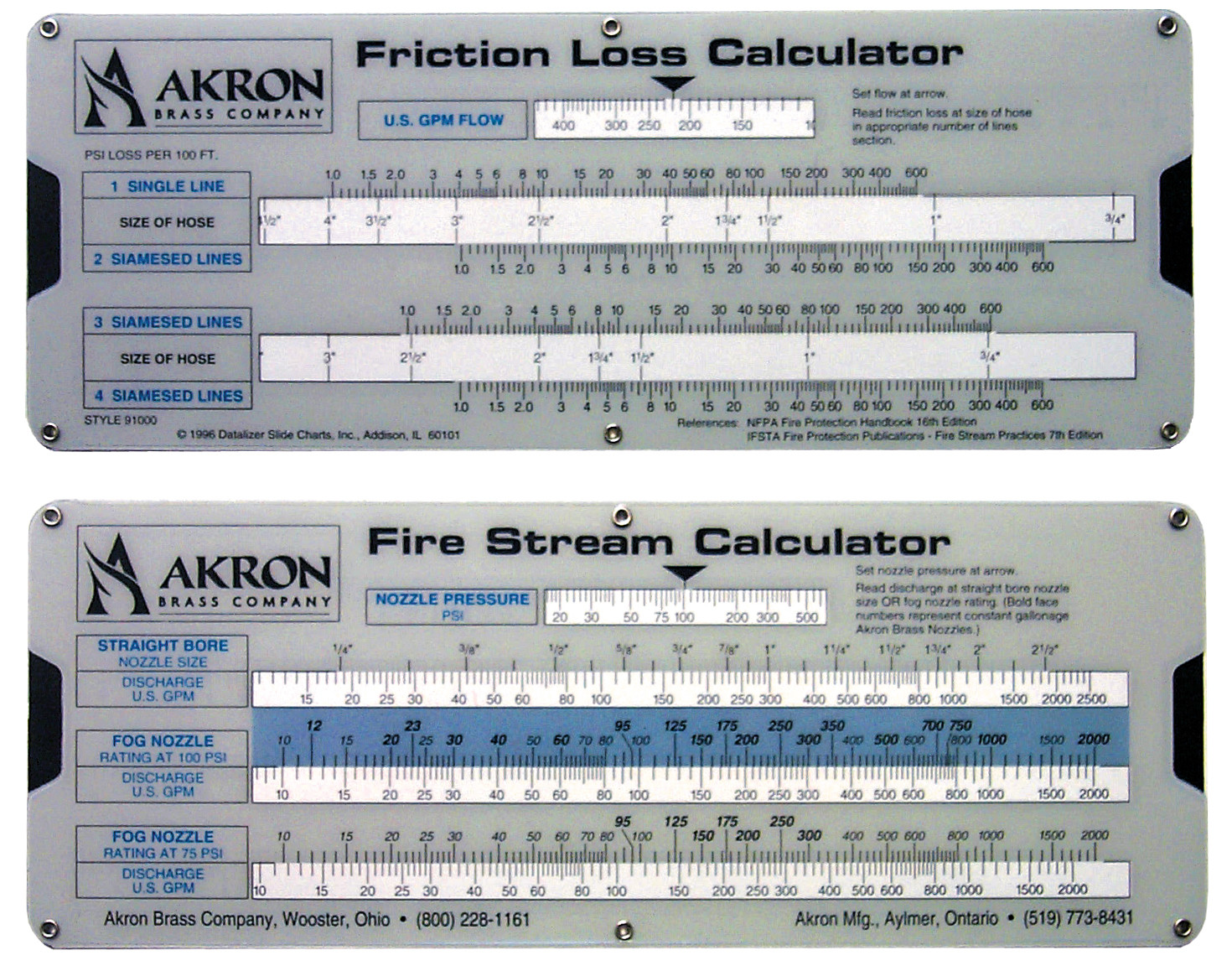
Friction loss calculations play a crucial role in ensuring the effectiveness, safety, and efficiency of firefighting operations. By understanding and applying these calculations, firefighters can optimize hose deployments, minimize pressure loss, and maximize water flow to the fire.
Planning Hose Deployments for Maximum Effectiveness
Friction loss calculations help firefighters determine the appropriate hose size, length, and layout for a given firefighting scenario. By calculating the pressure loss over a specific hose length, firefighters can ensure that sufficient pressure is available at the nozzle to deliver an effective water stream.
This helps prevent situations where excessive friction loss results in inadequate water flow or a loss of nozzle pressure.
Role in Ensuring Safety and Efficiency
Friction loss calculations also contribute to firefighter safety and efficiency. By understanding the pressure loss characteristics of different hose types, firefighters can select hoses that minimize friction loss and maximize water flow. This reduces the risk of hose ruptures due to excessive pressure buildup and ensures that firefighters can effectively extinguish the fire while conserving water resources.
Epilogue

In conclusion, the fire hose friction loss calculator serves as a vital tool for firefighters, enabling them to make informed decisions and optimize their hose deployments. By understanding the impact of friction loss on water delivery, firefighters can ensure efficient and effective firefighting operations, maximizing their ability to protect lives and property.