
Cramer’s Rule Calculator is an indispensable tool for solving systems of linear equations, providing speed and accuracy to complex mathematical calculations. Discover the principles, applications, and limitations of this powerful tool, empowering you to tackle even the most challenging equations with confidence.
This comprehensive guide delves into the mathematical foundations of Cramer’s Rule, guiding you through its step-by-step process and interpreting the results obtained. Learn about alternative methods and advanced applications, expanding your understanding and problem-solving capabilities.
Cramer’s Rule Calculator Overview
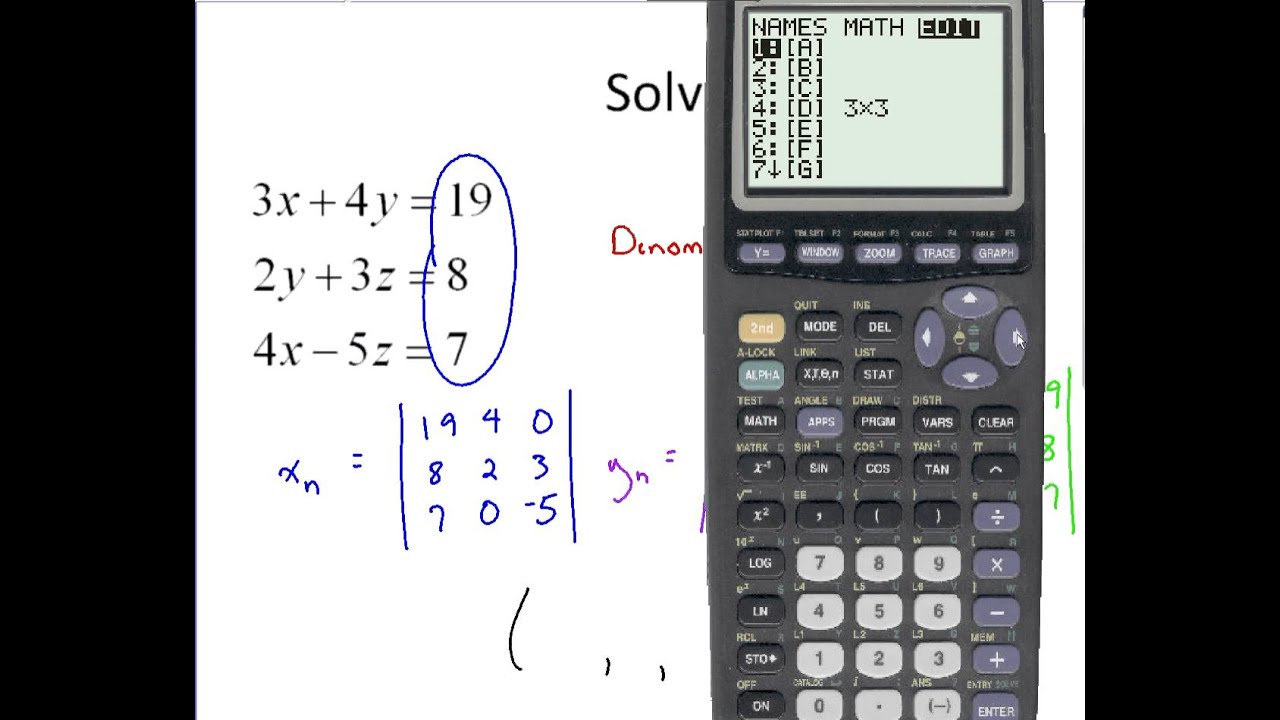
Cramer’s Rule calculators are indispensable tools for solving systems of linear equations with ease and accuracy. They employ the mathematical principles of Cramer’s Rule, a technique developed by the Swiss mathematician Gabriel Cramer in the 18th century.
Cramer’s Rule provides a systematic method for finding the solution to a system of linear equations by calculating the determinants of specific matrices. It is particularly useful when dealing with systems of two or three equations, as it offers a straightforward and efficient approach compared to other methods like substitution or elimination.
Applications of Cramer’s Rule
Cramer’s Rule finds practical applications in various fields, including:
- Solving systems of linear equations in mathematics and engineering
- Determining the inverse of a matrix
- Analyzing electrical circuits and networks
- Solving problems in physics and mechanics
- Calculating the area of polygons and volumes of solids
Using a Cramer’s Rule Calculator
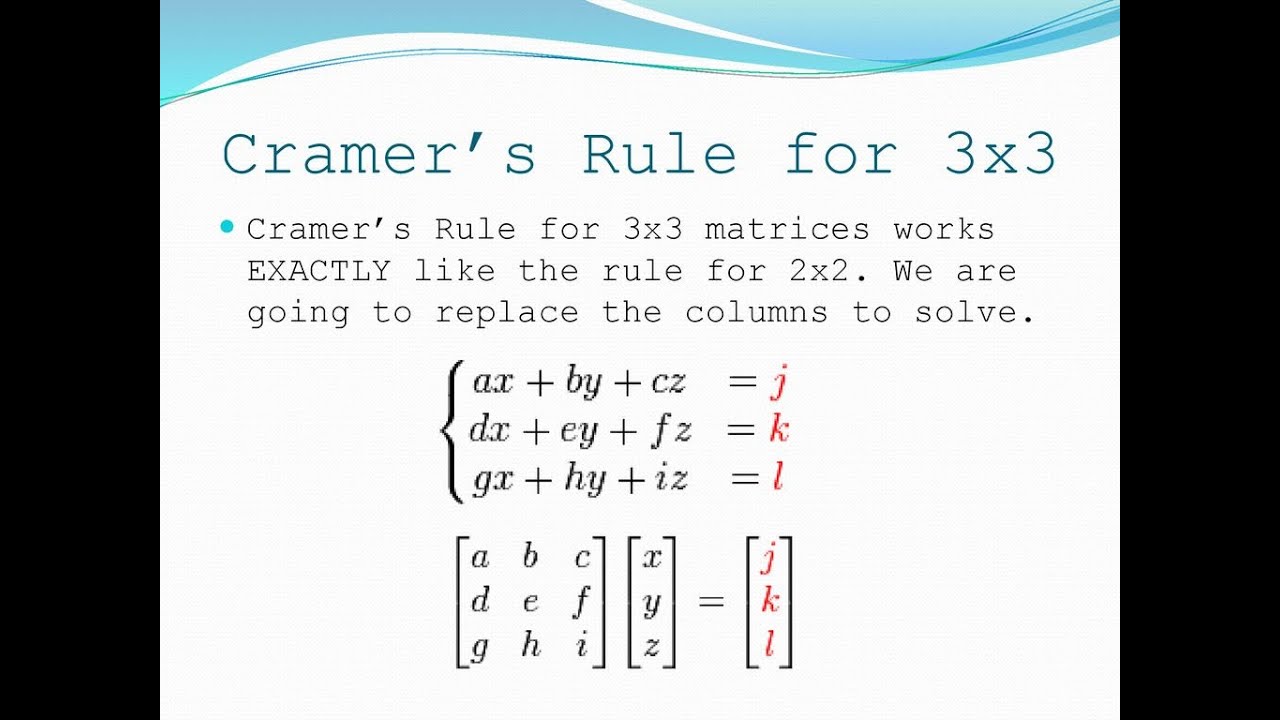
Using a Cramer’s Rule calculator simplifies the process of solving systems of linear equations. This step-by-step guide will help you navigate the calculator effectively.
Inputting Coefficients and Constants
Input the coefficients of the variables and the constants on the right-hand side of the equations into the designated fields. Ensure that the coefficients and constants are entered correctly, as any errors will affect the accuracy of the results.
Solving the System
Once the coefficients and constants are entered, click the “Calculate” button. The calculator will perform the necessary computations using Cramer’s Rule and display the solution to the system of equations.
Interpreting the Results
The results obtained from the calculator represent the values of the variables that satisfy the system of equations. Each variable will have a corresponding value displayed in the results section.
Benefits and Limitations of Cramer’s Rule Calculators
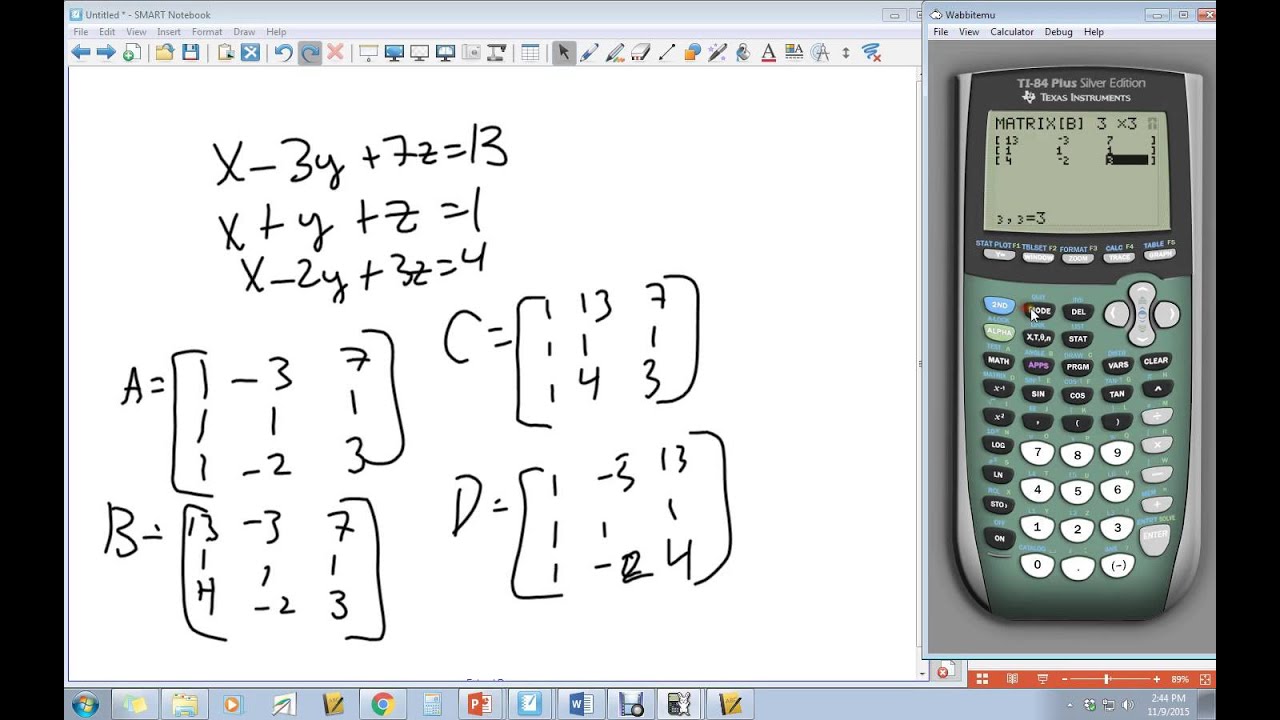
Cramer’s Rule calculators offer several advantages, including:
- Speed:They can quickly solve systems of equations, especially large ones, saving you time and effort.
- Accuracy:The calculations are performed using precise mathematical algorithms, ensuring accurate results.
- Ease of use:Most calculators have user-friendly interfaces that make it easy to enter equations and obtain solutions.
However, Cramer’s Rule has some limitations:
- Computational errors:Calculations can become complex and prone to errors, especially for large systems of equations.
- Applicability:Cramer’s Rule is only applicable to square systems of equations (i.e., the number of equations equals the number of variables).
- Coefficient matrix:The coefficient matrix must be non-singular (i.e., its determinant is not zero) for the rule to be applicable.
Tips for Choosing a Cramer’s Rule Calculator
When selecting a calculator, consider the following factors:
- Equation size:Choose a calculator that can handle the size of your equations.
- Accuracy requirements:Determine the level of accuracy you need for your calculations.
- User interface:Look for a calculator with a user-friendly interface that simplifies equation entry and solution retrieval.
Alternative Methods and Applications
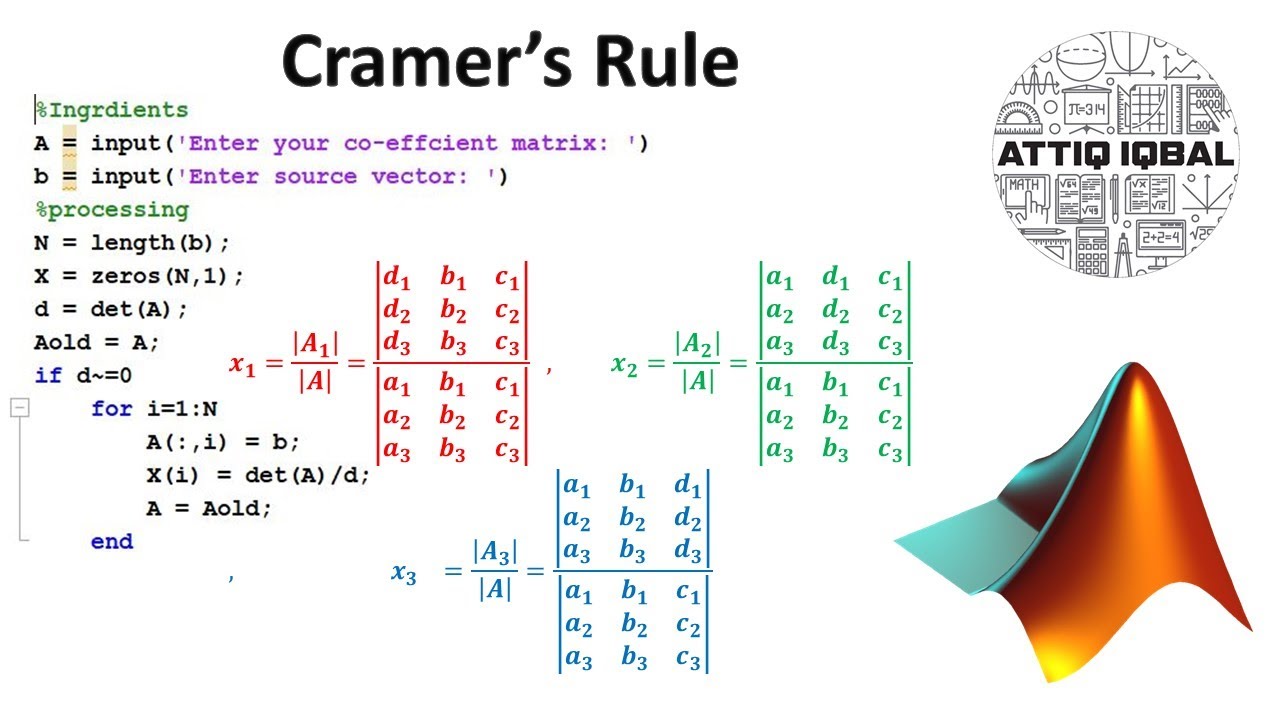
Cramer’s Rule is not the only method for solving systems of linear equations. Alternative approaches include Gaussian elimination and matrix inversion, each with its own advantages and disadvantages compared to Cramer’s Rule.
Gaussian Elimination
- Gaussian elimination involves transforming a system of equations into an equivalent system in triangular form, making it easier to solve for the variables.
- It is more efficient than Cramer’s Rule for solving systems with a large number of equations.
- However, Gaussian elimination can be more complex to implement and may require more computational steps.
Matrix Inversion, Cramer’s rule calculator
- Matrix inversion involves finding the inverse of the coefficient matrix in a system of equations.
- Once the inverse is known, the solution to the system can be obtained by multiplying the inverse by the constant vector.
- Matrix inversion is generally more efficient than Cramer’s Rule for solving systems with a small number of equations.
- However, it can be computationally expensive for large systems and may not be feasible for ill-conditioned matrices.
Advanced Applications of Cramer’s Rule
Beyond its use in solving systems of linear equations, Cramer’s Rule finds applications in various advanced fields:
- Electrical Engineering:Cramer’s Rule is used in circuit analysis to determine the currents and voltages in complex circuits.
- Physics:Cramer’s Rule is applied in solving systems of differential equations that arise in various physical phenomena, such as heat transfer and fluid dynamics.
- Computer Graphics:Cramer’s Rule is employed in calculating transformations and projections in 3D computer graphics.
Last Recap: Cramer’s Rule Calculator
Cramer’s Rule Calculator proves to be an invaluable asset for students, engineers, and anyone seeking efficient solutions to systems of linear equations. Its versatility extends to various fields, including electrical engineering and physics, demonstrating its practical significance in real-world applications.
