The conduit size calculator is an indispensable tool for electricians, contractors, and engineers, enabling precise determination of the appropriate conduit size for electrical installations. This guide delves into the intricacies of conduit sizing, empowering professionals with the knowledge to ensure safe, efficient, and code-compliant electrical systems.
Factors such as voltage drop, power factor, and ambient temperature play crucial roles in conduit sizing calculations. Understanding these variables and applying the correct formulas and equations is essential for accurate sizing. Additionally, this guide explores the various types of conduits available, their advantages, disadvantages, and common applications.
Conduit Sizing Calculations
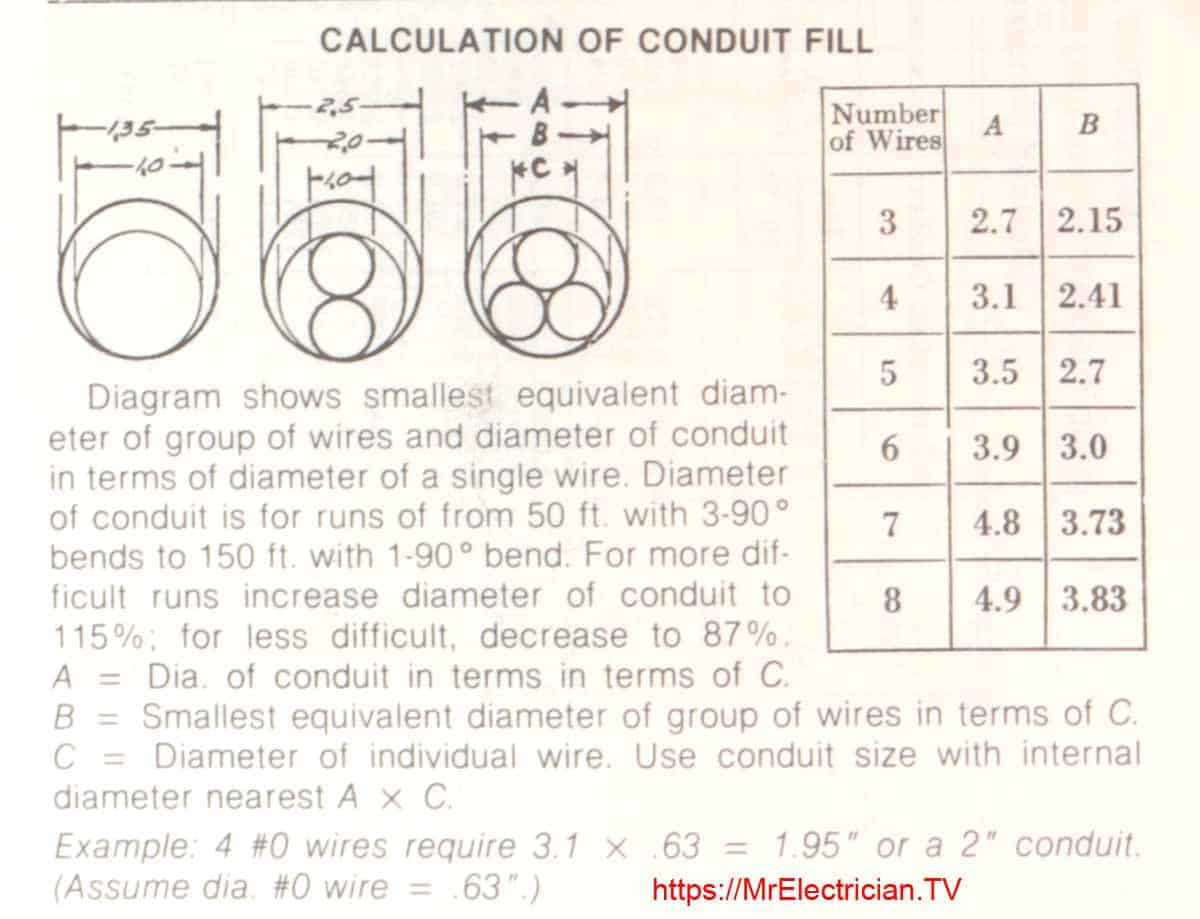
Determining the appropriate conduit size is crucial for ensuring the safe and efficient operation of electrical systems. Several factors must be considered when calculating conduit size, including the number and size of conductors, the type of insulation, the ambient temperature, and the voltage drop.
Factors Affecting Conduit Size
- Number and Size of Conductors:The total cross-sectional area of the conductors within the conduit determines the minimum conduit size required.
- Type of Insulation:The thickness and type of insulation on the conductors affect the overall diameter of the bundle and, consequently, the required conduit size.
- Ambient Temperature:The ambient temperature influences the current-carrying capacity of the conductors, which in turn affects the required conduit size.
- Voltage Drop:The voltage drop along the length of the conduit must be within acceptable limits to ensure proper equipment operation.
Formulas for Conduit Size Calculation
The National Electrical Code (NEC) provides formulas for calculating conduit size based on the factors mentioned above.
Conduit Area Calculation
Conduit Area (Ac) = K × (Sum of Conductor Areas (A c))
- K:Conduit fill factor (varies based on conduit type and number of conductors)
- Ac: Cross-sectional area of each conductor
Voltage Drop Calculation
Voltage Drop (Vd) = (2 × L × I × R c) / V s
- L:Length of the conduit run
- I:Current flowing through the conductors
- Rc: Resistance of the conductors
- Vs: Supply voltage
Accounting for Voltage Drop, Power Factor, and Ambient Temperature
In addition to the formulas mentioned above, it is important to consider voltage drop, power factor, and ambient temperature when selecting the appropriate conduit size.
- Voltage Drop:The voltage drop along the length of the conduit should be within acceptable limits to ensure proper equipment operation. The voltage drop formula can be used to calculate the voltage drop and ensure it is within the specified limits.
- Power Factor:The power factor of the load affects the current flowing through the conductors and, consequently, the voltage drop. A lower power factor results in a higher current and, therefore, a greater voltage drop.
- Ambient Temperature:The ambient temperature affects the current-carrying capacity of the conductors. Higher ambient temperatures reduce the current-carrying capacity and, therefore, require a larger conduit size.
Types of Conduits and Their Applications
Conduits are protective enclosures used to route electrical wires and cables. They provide mechanical protection, prevent damage from environmental factors, and maintain the integrity of the electrical system. Conduits come in various types, each with its own advantages and applications.
-
PVC Conduits
PVC (Polyvinyl Chloride) conduits are lightweight, durable, and resistant to corrosion. They are easy to install and cost-effective. PVC conduits are commonly used in residential, commercial, and industrial applications for protecting electrical wiring in walls, ceilings, and underground.
-
Metal Conduits
Metal conduits, such as EMT (Electrical Metallic Tubing) and RMC (Rigid Metal Conduit), offer superior mechanical protection and are suitable for harsh environments. EMT is lightweight and flexible, making it easy to bend and install. RMC is more rigid and provides better protection against physical impact and environmental hazards.
Metal conduits are commonly used in industrial settings, commercial buildings, and outdoor applications.
-
Flexible Conduits
Flexible conduits, such as LFNC (Liquid-Tight Flexible Non-Metallic Conduit) and FMC (Flexible Metal Conduit), are designed for use in areas where flexibility and movement are required. LFNC is resistant to moisture, oils, and chemicals, making it suitable for outdoor applications and harsh environments.
FMC provides excellent EMI/RFI shielding and is often used in industrial control systems and data centers.
The choice of conduit type depends on factors such as the environment, application, and specific requirements of the electrical system. By understanding the different types of conduits and their applications, engineers and electricians can select the most appropriate conduit for their projects, ensuring the safety and reliability of the electrical installation.
Conduit Installation Guidelines
Conduit installation requires careful planning and execution to ensure safety, reliability, and longevity. Proper installation practices are crucial for protecting conductors from damage, preventing electrical hazards, and ensuring optimal performance of the electrical system.
This section Artikels the best practices for installing conduits, selecting appropriate fittings and connectors, and emphasizing the importance of proper grounding and bonding.
Conduit Installation Best Practices
- Plan the conduit route carefully to avoid obstructions and minimize bends.
- Use the appropriate conduit size and type for the specific application and number of conductors.
- Install conduits securely using straps or hangers at regular intervals.
- Make smooth bends in conduits using approved bending tools to avoid kinking or damage.
- Protect conduits from physical damage by using protective sleeves or enclosures in exposed areas.
- Seal conduit openings with approved sealing fittings to prevent moisture ingress.
- Label conduits clearly to facilitate identification and maintenance.
Conduit Fittings and Connectors
Selecting the right conduit fittings and connectors is essential for ensuring a secure and reliable connection. Fittings are used to connect conduits to boxes, enclosures, and other components. Connectors are used to join conduit sections together.
- Choose fittings and connectors that are compatible with the conduit type and size.
- Use watertight fittings and connectors in wet or outdoor locations.
- Tighten fittings and connectors securely to prevent loose connections and potential arcing.
Grounding and Bonding
Proper grounding and bonding are crucial for electrical safety. Grounding provides a low-resistance path for fault currents to flow, protecting equipment and personnel. Bonding connects non-current-carrying metal parts of the electrical system to the grounding system.
- Ground conduits using approved grounding clamps or straps.
- Bond all metal enclosures, boxes, and raceways to the grounding system.
- Ensure proper continuity of the grounding and bonding system throughout the installation.
Conduit Sizing Tools and Resources

Streamline your conduit sizing process with a range of online tools and resources. These calculators simplify complex calculations, ensuring accurate and efficient conduit selection.
Conduit Size Calculators
- Electrical Conduit Sizing Calculator:Calculate conduit size based on wire type, quantity, and voltage drop ( link).
- Conduit Fill Calculator:Determine the maximum number of wires that can fit within a conduit ( link).
- Conduit Bending Calculator:Calculate the bend radius and length for different conduit sizes and bend angles ( link).
Additional Resources, Conduit size calculator
- Conduit Sizing Guide:A comprehensive guide covering conduit types, sizing methods, and installation guidelines ( link).
- Conduit Installation Manual:Detailed instructions for proper conduit installation, including bending, pulling, and grounding ( link).
li> Conduit Bending Handbook:A practical guide to bending techniques, bend radius calculations, and tool selection ( link).
Tips for Interpreting Results
- Consider the future expansion of your electrical system and choose a conduit size that can accommodate additional wires.
- Ensure the conduit size complies with the National Electrical Code (NEC) and local regulations.
- Round up to the nearest standard conduit size for easier availability and compatibility with fittings.
End of Discussion: Conduit Size Calculator
By mastering the art of conduit sizing, professionals can optimize electrical installations, minimize voltage drop, and ensure the longevity and reliability of electrical systems. This comprehensive guide provides a wealth of knowledge and resources, empowering readers to make informed decisions and achieve optimal electrical performance.