
Embark on a scientific journey with the Combined Gas Law Calculator, a powerful tool that unlocks the secrets of gas behavior under varying conditions. Delve into the intricacies of pressure, volume, and temperature, and witness how this calculator simplifies complex gas law calculations.
Discover the versatility of the Combined Gas Law in real-world applications, from chemistry experiments to engineering feats and meteorological predictions. Its simplicity and accuracy make it an indispensable tool for students, researchers, and professionals alike.
Combined Gas Law Formula and Units: Combined Gas Law Calculator

The combined gas law is a formula that combines Boyle’s law, Charles’s law, and Gay-Lussac’s law into a single equation. It relates the pressure, volume, and temperature of a gas.
The combined gas law formula is:
P1V 1/T 1= P 2V 2/T 2
where:
- P 1is the initial pressure of the gas
- V 1is the initial volume of the gas
- T 1is the initial temperature of the gas
- P 2is the final pressure of the gas
- V 2is the final volume of the gas
- T 2is the final temperature of the gas
Units of Measurement
The units of measurement used in the combined gas law are:
- Pressure: atmospheres (atm), pascals (Pa), or torr (Torr)
- Volume: liters (L), milliliters (mL), or cubic centimeters (cm 3)
- Temperature: Kelvin (K) or degrees Celsius (°C)
Converting Units
To convert between different units, you can use the following conversion factors:
- 1 atm = 101325 Pa
- 1 Torr = 1/760 atm
- 1 L = 1000 mL
- 1 mL = 1 cm 3
- K = °C + 273.15
- °C = K – 273.15
Applications of the Combined Gas Law
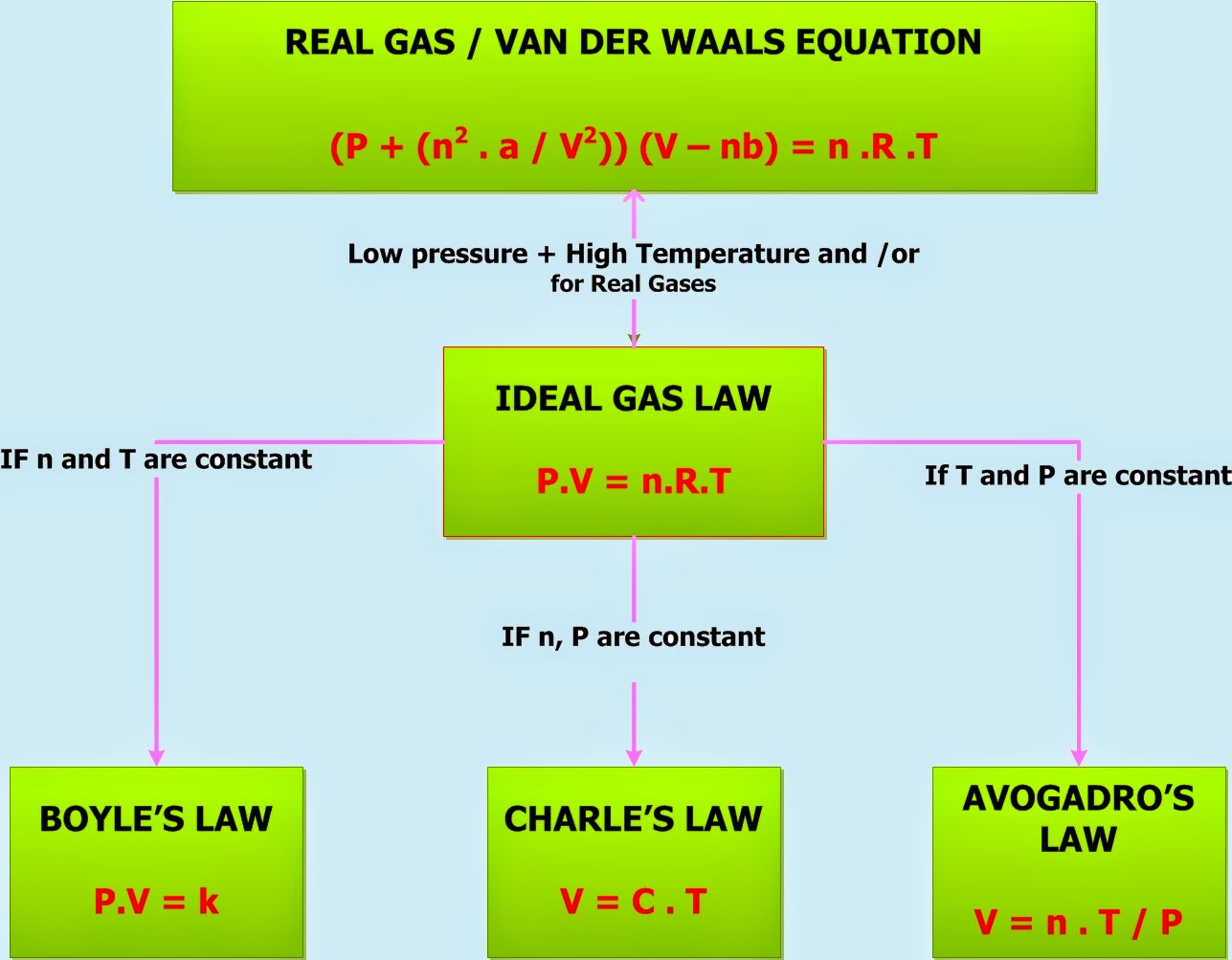
The combined gas law is a powerful tool used to solve problems involving changes in pressure, volume, and temperature of a gas. It combines Boyle’s law, Charles’s law, and Gay-Lussac’s law into a single equation that can be used to predict the behavior of a gas under various conditions.
Solving Problems with the Combined Gas Law
The combined gas law can be used to solve a wide range of problems, including:
- Predicting the volume of a gas at a different temperature and pressure
- Calculating the pressure of a gas at a different volume and temperature
- Determining the temperature of a gas at a different volume and pressure
Real-World Applications
The combined gas law has numerous real-world applications, including:
- Chemistry:To calculate the volume of a gas produced in a chemical reaction
- Engineering:To design gas compressors and turbines
- Meteorology:To predict weather patterns and climate change
Limitations of the Combined Gas Law
The combined gas law is a simplified model that assumes ideal gas behavior. It does not account for non-ideal gas behavior, such as:
- High pressures
- Low temperatures
- Strong intermolecular forces
In these situations, the combined gas law may not provide accurate predictions.
Interactive Combined Gas Law Calculator
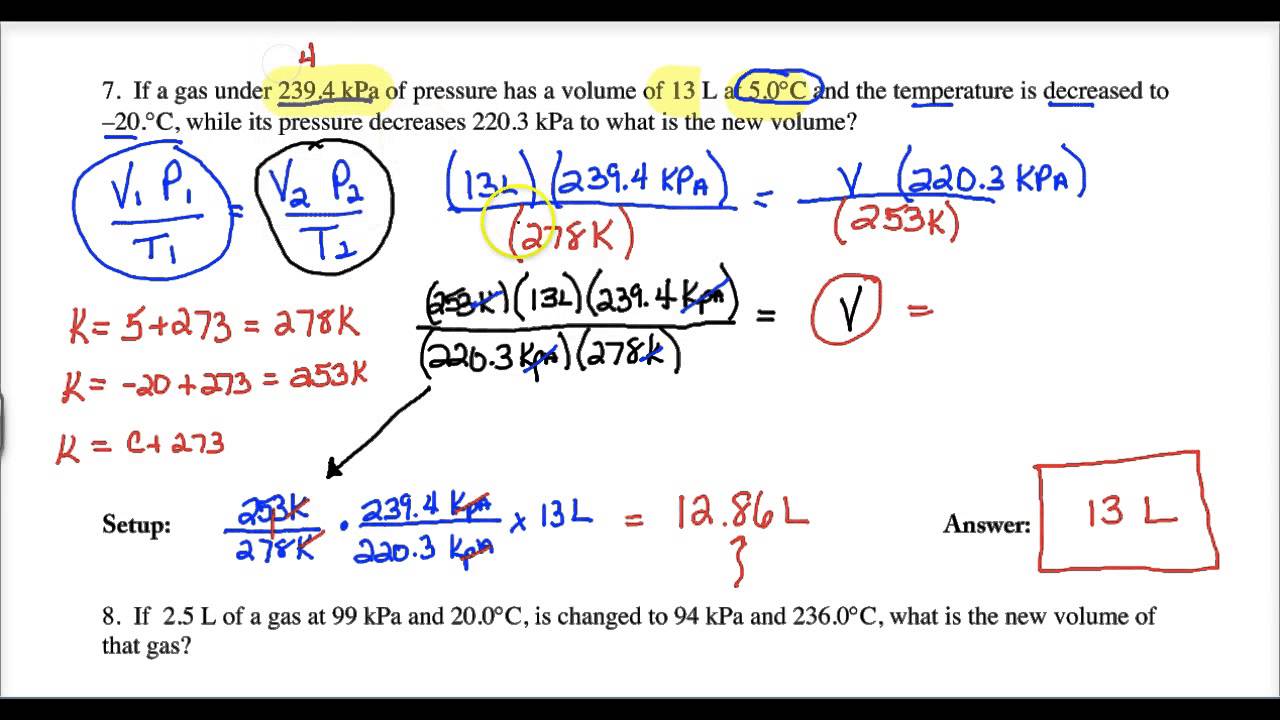
The interactive combined gas law calculator is a tool that allows you to calculate the missing variable in the combined gas law equation. The combined gas law is a mathematical equation that relates the pressure, volume, and temperature of a gas sample.
It is a combination of Boyle’s law, Charles’s law, and Gay-Lussac’s law.
How to Use the Calculator
To use the calculator, simply enter the known values for pressure, volume, and temperature into the corresponding input fields. Then, click the “Calculate” button. The calculator will then calculate the missing variable and display the result in the output field.
The calculator can be used to solve a variety of problems involving the combined gas law. For example, you can use it to calculate the pressure of a gas sample if you know its volume and temperature. You can also use it to calculate the volume of a gas sample if you know its pressure and temperature.
Explanation of the Calculator, Combined gas law calculator
The combined gas law calculator is based on the following equation:
“`P₁V₁/T₁ = P₂V₂/T₂“`
where:
* P₁ is the initial pressure of the gas
- V₁ is the initial volume of the gas
- T₁ is the initial temperature of the gas
- P₂ is the final pressure of the gas
- V₂ is the final volume of the gas
- T₂ is the final temperature of the gas
This equation can be rearranged to solve for any of the four variables. The calculator uses this equation to calculate the missing variable based on the values that you enter.
Case Studies and Examples
The combined gas law finds extensive applications in various fields of science and engineering. Here are some illustrative case studies and examples that showcase its utility in different scenarios:
The following table presents a structured compilation of examples, highlighting the initial conditions, final conditions, and the corresponding calculations involved:
| Example | Initial Conditions | Final Conditions | Calculations |
|---|---|---|---|
| Example 1: Balloon Expansion | Volume (V1) = 10 L, Pressure (P1) = 1 atm, Temperature (T1) = 273 K | Volume (V2) = 20 L, Pressure (P2) = ?, Temperature (T2) = 373 K | Using the combined gas law formula, we can calculate P2: P2 = (P1
|
| Example 2: Gas Compression | Volume (V1) = 500 mL, Pressure (P1) = 2 atm, Temperature (T1) = 300 K | Volume (V2) = 250 mL, Pressure (P2) = ?, Temperature (T2) = 300 K | Using the combined gas law formula, we can calculate P2: P2 = (P1
|
| Example 3: Gas Mixture | Gas A: Volume (V1) = 2 L, Pressure (P1) = 1.5 atm, Temperature (T1) = 298 KGas B: Volume (V2) = 3 L, Pressure (P2) = 2 atm, Temperature (T2) = 298 K | Total Volume (V3) = ?, Total Pressure (P3) = ?, Temperature (T3) = 298 K | Assuming the gases behave ideally and do not react, the total volume and pressure can be calculated using the combined gas law formula: V3 = V1 + V2 = 2 L + 3 L = 5 L; P3 = (P1
|
These examples reinforce the understanding of the combined gas law by demonstrating its application in practical scenarios. They illustrate how the law can be used to predict the behavior of gases under varying conditions of volume, pressure, and temperature.
Last Word

As we conclude our exploration of the Combined Gas Law Calculator, let us appreciate its invaluable role in understanding and predicting gas behavior. Its ability to handle complex calculations with ease makes it an essential tool for anyone seeking to unravel the mysteries of gases.
