Cartesian to polar coordinates calculator – Welcome to the realm of Cartesian to polar coordinates conversion, where our calculator simplifies the complexities of coordinate transformations. Immerse yourself in a seamless journey of understanding, from the fundamentals of both coordinate systems to practical applications.
Prepare to unravel the mysteries of Cartesian coordinates (x, y) and polar coordinates (r, θ), unlocking the secrets of their interconversion with our user-friendly calculator.
Cartesian and Polar Coordinates: Cartesian To Polar Coordinates Calculator
Coordinate systems are mathematical frameworks used to locate points in space or on a plane. Two commonly used coordinate systems are Cartesian coordinates and polar coordinates.
Cartesian Coordinates
Cartesian coordinates, also known as rectangular coordinates, use a grid system with two perpendicular axes, x-axis and y-axis. The point of intersection of these axes is called the origin. Each point in the Cartesian plane is identified by an ordered pair of numbers (x, y), where x represents the horizontal distance from the origin along the x-axis, and y represents the vertical distance from the origin along the y-axis.
Polar Coordinates
Polar coordinates, also known as cylindrical coordinates, use a different approach to locate points. They use a radial distance r and an angle θ. The radial distance r is the distance from the origin to the point, and the angle θ is the angle between the positive x-axis and the line connecting the origin to the point.
The relationship between Cartesian and polar coordinates is given by the following equations:
x = r cos(θ)y = r sin(θ)
Conversion Formulas

Converting from Cartesian coordinates to polar coordinates involves applying specific mathematical formulas. These formulas allow us to represent a point in the Cartesian plane using its distance from the origin and its angle relative to the positive x-axis.
Cartesian to Polar Conversion Formulas, Cartesian to polar coordinates calculator
- Radius (r): r = √(x² + y²)
- Angle (θ): θ = arctan(y/x)
Examples of Cartesian to Polar Conversions
Let’s convert the point (3, 4) from Cartesian to polar form:
- r = √(3² + 4²) = 5
- θ = arctan(4/3) ≈ 0.9273 radians
Therefore, the polar coordinates of the point (3, 4) are (5, 0.9273).
Conversion Formula Table
| Conversion | Formula |
|---|---|
| Cartesian to Polar: Radius (r) | r = √(x² + y²) |
| Cartesian to Polar: Angle (θ) | θ = arctan(y/x) |
Calculator Functionality

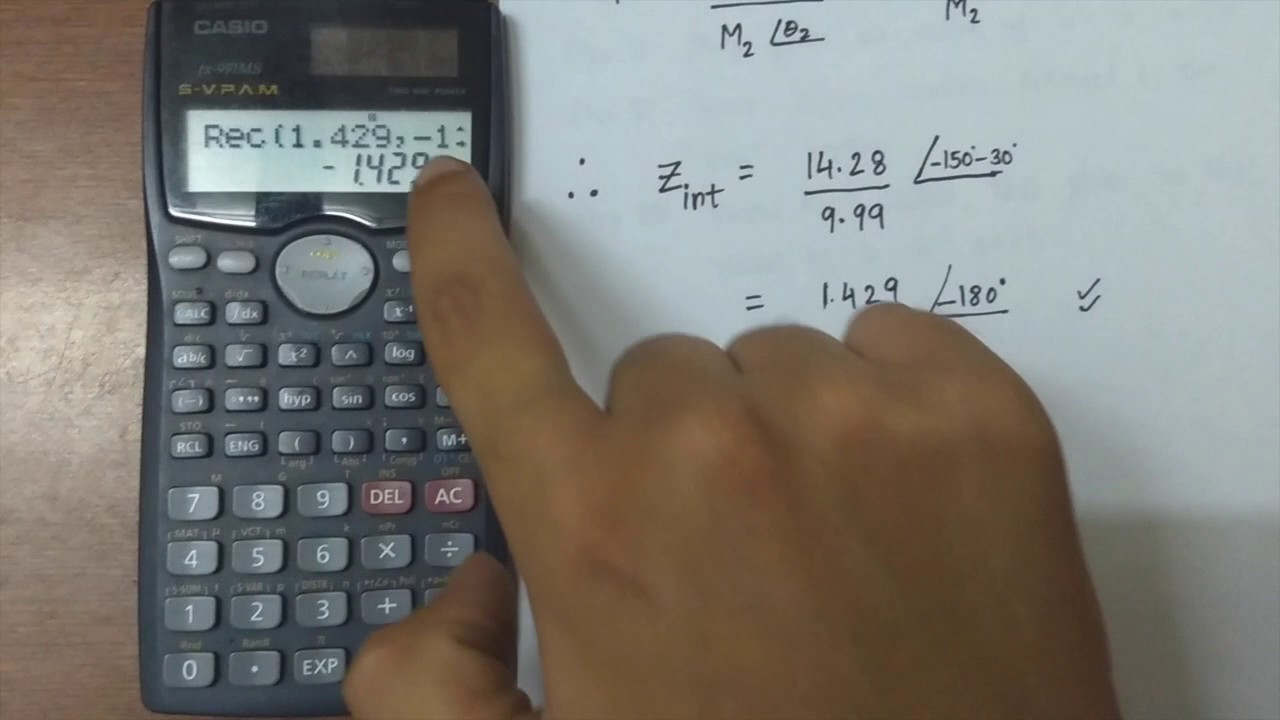
Cartesian to polar coordinates calculators are mathematical tools that facilitate the conversion of points between the Cartesian coordinate system (x, y) and the polar coordinate system (r, θ).
Using a Cartesian to polar coordinates calculator is straightforward. Simply input the x and y coordinates of the point you want to convert into the designated fields. The calculator will automatically calculate and display the corresponding polar coordinates (r, θ).
Conversion Scenarios
- Converting a point in the Cartesian coordinate system to polar coordinates:For example, to convert the point (3, 4) in the Cartesian coordinate system to polar coordinates, input the values x = 3 and y = 4 into the calculator. The calculator will return the polar coordinates (r, θ) = (5, 53.13°).
- Converting a point in the polar coordinate system to Cartesian coordinates:For example, to convert the point (5, 53.13°) in the polar coordinate system to Cartesian coordinates, input the values r = 5 and θ = 53.13° into the calculator. The calculator will return the Cartesian coordinates (x, y) = (3, 4).
Applications and Examples
Converting between Cartesian and polar coordinates finds practical applications in various fields. It allows for convenient representation, analysis, and problem-solving in situations where circular or angular relationships are involved.
The following are examples of real-world applications where converting between Cartesian and polar coordinates is useful:
Navigation and Mapping
- Describing the location of points on a map or chart using latitude and longitude (polar coordinates) instead of x and y coordinates (Cartesian coordinates).
- Calculating the distance and direction between two points on a map using polar coordinates.
Physics and Engineering
- Analyzing circular motion, such as the motion of a planet around the sun or an electron around a nucleus, using polar coordinates.
- Describing the wave function of an electron in quantum mechanics using polar coordinates.
Computer Graphics and Animation
- Creating and manipulating 2D and 3D shapes using polar coordinates, which is useful in computer-aided design (CAD) and animation.
- Simulating the movement of objects in a circular or elliptical path using polar coordinates.
Robotics
- Controlling the movement of robotic arms and other mechanical devices that move in circular or elliptical paths using polar coordinates.
- Calculating the position and orientation of a robot using polar coordinates.
Conclusion
Embark on a transformative journey with our Cartesian to polar coordinates calculator, empowering you to navigate the intricacies of coordinate systems with ease. Experience the elegance of mathematical conversions and unravel the practical applications that await you.