Embark on a journey of candle-making precision with candle wax calculators, your indispensable guide to crafting the perfect scented masterpieces. These ingenious tools empower you to determine the exact amount of wax, fragrance, and dye needed for your candles, ensuring optimal burn time, fragrance throw, and aesthetic appeal.
Delve into the world of candle wax, exploring the distinct characteristics of paraffin, soy, beeswax, and gel waxes. Our comprehensive table compares their melt points, burn times, and fragrance release, empowering you to make informed choices based on your desired candle qualities.
Candle Wax Calculator
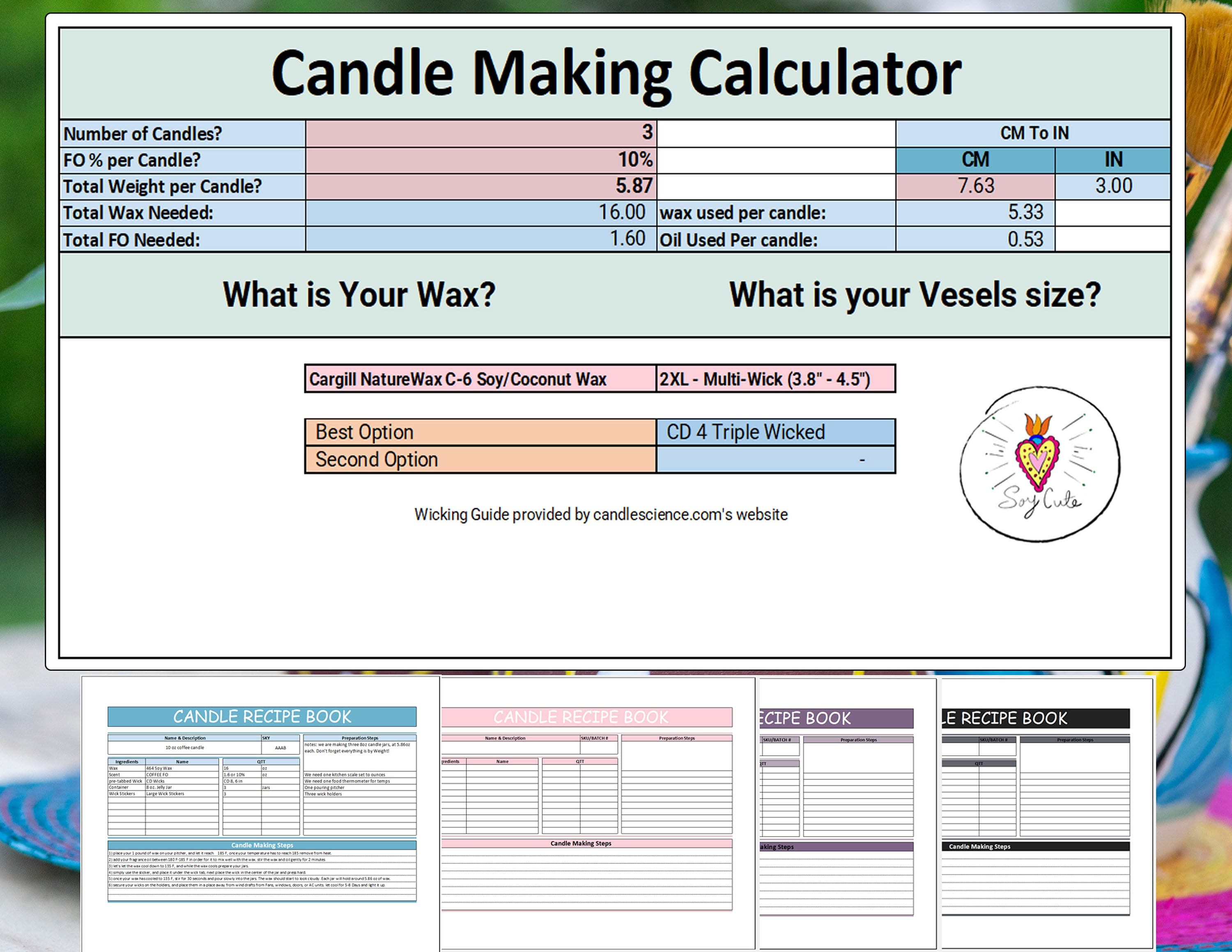
A candle wax calculator is a tool that helps you determine the amount of wax you need to make a candle of a specific size. This can be helpful for both beginner and experienced candle makers, as it can save you time and money by ensuring that you don’t waste wax on candles that are too small or too large.
Using a candle wax calculator is simple. First, you need to know the size of the candle you want to make. This can be measured in terms of height, width, and depth. Once you have these measurements, you can enter them into the calculator.
The calculator will then use these measurements to calculate the amount of wax you need.
Factors Affecting Accuracy, Candle wax calculator
There are a few factors that can affect the accuracy of a candle wax calculator. These factors include:
- The type of wax you are using
- The thickness of the wick
- The size of the container
- The temperature of the wax
It is important to keep these factors in mind when using a candle wax calculator. By taking these factors into account, you can ensure that the calculator gives you an accurate estimate of the amount of wax you need.
Types of Candle Wax
Candle wax is the main component of candles, and it determines the candle’s burn time, fragrance throw, and overall performance. There are various types of candle wax available, each with its own unique properties and characteristics.
The most common types of candle wax include:
- Paraffin wax
- Soy wax
- Beeswax
- Gel wax
Here is a table comparing the properties of different types of candle wax:
| Property | Paraffin Wax | Soy Wax | Beeswax | Gel Wax |
|---|---|---|---|---|
| Melt point | 120-140°F (49-60°C) | 115-130°F (46-54°C) | 140-145°F (60-63°C) | 180-200°F (82-93°C) |
| Burn time | Shorter | Longer | Longest | Medium |
| Fragrance throw | Strong | Moderate | Weak | Strong |
| Advantages |
|
|
|
|
| Disadvantages |
|
|
|
|
The choice of candle wax depends on the desired burn time, fragrance throw, and other factors. Paraffin wax is the most common type of candle wax, but soy wax, beeswax, and gel wax are becoming increasingly popular due to their unique properties and benefits.
Candle Making Process
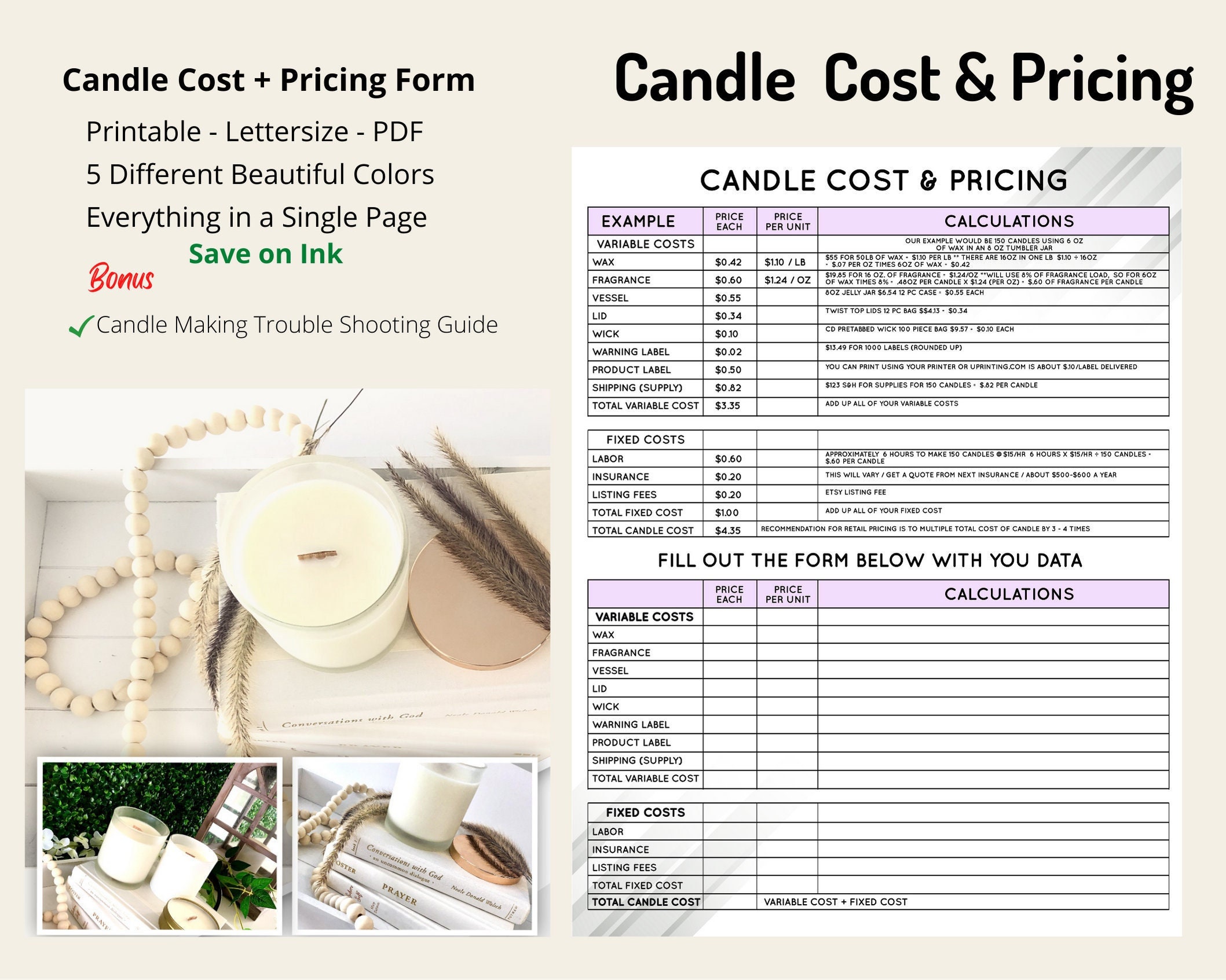
Candle making is a fun and rewarding craft that can be enjoyed by people of all ages. It’s a great way to relax and create something beautiful that can be used to decorate your home or give as gifts. The process of making candles is relatively simple, but there are a few things you need to know to get started.
The first step in making candles is to choose the type of wax you want to use. There are many different types of wax available, each with its own unique properties. Some of the most popular types of wax include:
- Soy wax
- Paraffin wax
- Beeswax
- Gel wax
Once you’ve chosen the type of wax you want to use, you need to gather your other materials. These include:
- Wicks
- Containers
- A double boiler
- A thermometer
- A stirring spoon
Now that you have all of your materials, you’re ready to start making candles. Here are the basic steps:
- Measure the wax and add it to the double boiler.
- Heat the wax over medium heat, stirring constantly, until it reaches the desired temperature.
- Remove the wax from the heat and add the fragrance oil or essential oil.
- Stir the wax until the fragrance oil is evenly distributed.
- Pour the wax into the containers.
- Center the wicks in the containers.
- Allow the candles to cool and harden completely.
Once your candles are finished, you can enjoy them for weeks or even months to come.
Safety Precautions
Candle making is a safe activity, but there are a few safety precautions you should take to avoid accidents.
- Never leave a candle burning unattended.
- Keep candles away from children and pets.
- Place candles on a stable surface away from flammable materials.
- Do not burn candles for more than four hours at a time.
- Trim the wicks to 1/4 inch before each use.
Candle Care and Maintenance
To ensure your candles burn cleanly and safely, proper care and maintenance are essential. Follow these tips to extend the life of your candles and prevent common problems.
Wick Trimming
- Before each use, trim the wick to 1/4 inch (6 mm) to prevent smoking and excessive soot.
- Trimming the wick helps create a steady flame and promotes even burning.
Proper Storage
- Store candles in a cool, dry place away from direct sunlight and heat sources.
- Extreme temperatures can cause the wax to melt or harden, affecting the candle’s performance.
Troubleshooting Common Candle Problems
Smoking
- Excess smoke can be caused by a long wick or drafts.
- Trim the wick and shield the candle from wind or air currents.
Tunneling
- Tunneling occurs when the candle burns down the center, leaving a ring of unmelted wax around the edges.
- To prevent tunneling, burn the candle for several hours at a time to allow the wax to melt evenly.
Frosting
- Frosting is a white, crystalline substance that can form on the surface of the candle.
- It is caused by temperature fluctuations and does not affect the candle’s performance.
Safety and Responsibility
- Never leave a burning candle unattended.
- Keep candles away from flammable materials and children.
- Dispose of used candles properly to prevent wax buildup.
Final Conclusion
Unleash your creativity and elevate your candle-making skills with the invaluable insights provided by candle wax calculators. Embrace the art of crafting candles that not only illuminate your space but also captivate your senses with their enchanting aromas. Remember, safety should always be a priority, so handle wax and flames with the utmost care.