
Calculating relative change is a crucial skill in various fields, providing valuable insights into data analysis and decision-making. From understanding its concept to exploring its applications, this guide will delve into the intricacies of calculating relative change, empowering you with the knowledge to effectively interpret and communicate data.
Relative change measures the percentage or ratio of change between two values, allowing for meaningful comparisons and trend analysis. Whether in business, economics, or finance, calculating relative change is essential for understanding growth, performance, and market dynamics.
Understanding Relative Change

Relative change measures the proportional difference between two values, providing insights into the magnitude and direction of change.
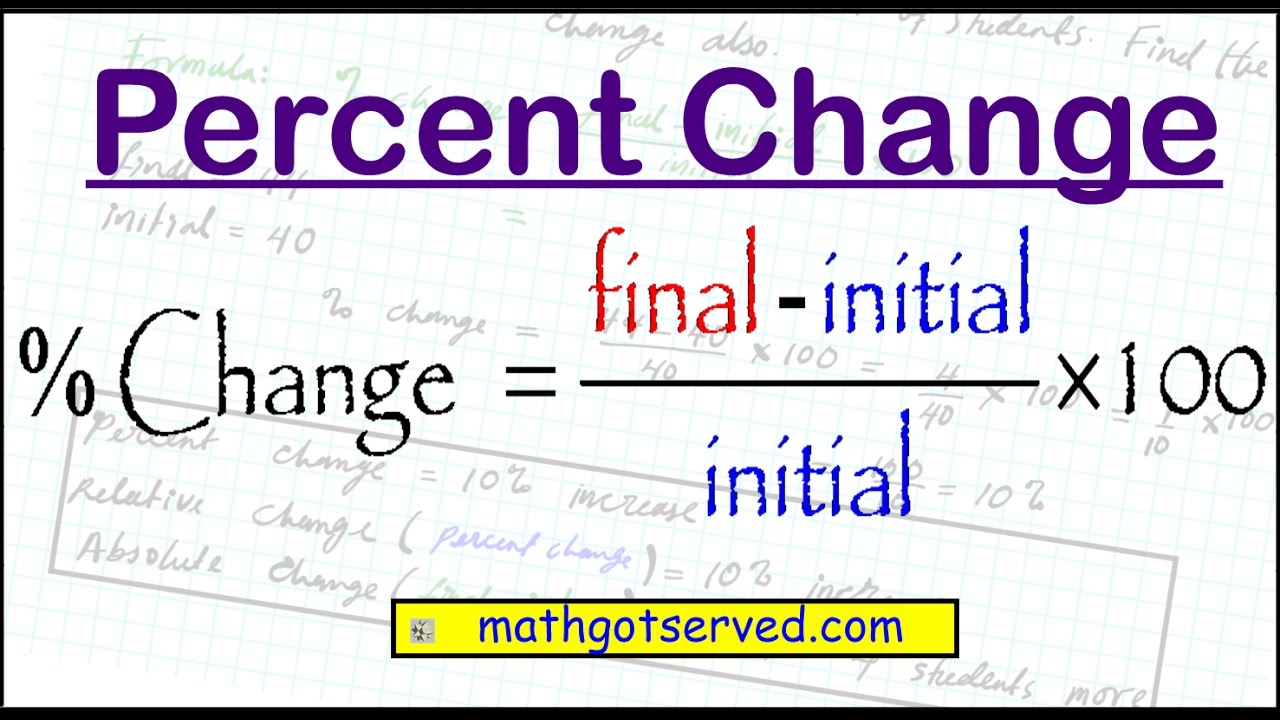
To calculate relative change, subtract the initial value from the final value and divide the result by the initial value. The result is expressed as a percentage or a decimal.
Significance of Relative Change
Relative change is crucial in various fields:
- Economics:Tracking inflation, GDP growth, and stock market performance.
- Science:Analyzing experimental results, comparing measurements, and monitoring environmental changes.
- Business:Evaluating sales growth, profit margins, and customer satisfaction.
li> Healthcare:Monitoring patient progress, tracking disease prevalence, and assessing treatment effectiveness.
Methods for Calculating Relative Change
Calculating relative change is essential for understanding the magnitude and direction of change over time or between different entities. Several methods are available to calculate relative change, each with its advantages and disadvantages.
Percentage Change Method
The percentage change method expresses the relative change as a percentage of the original value. It is calculated as follows:
Percentage Change = [(New Value
Original Value) / Original Value] x 100
This method is simple to calculate and easy to interpret, making it a popular choice for comparing changes in financial data, population growth, and other quantitative data.
Ratio Method
The ratio method expresses the relative change as the ratio of the new value to the original value. It is calculated as follows:
Ratio = New Value / Original Value
This method is useful when comparing changes in qualitative data, such as the proportion of people in different age groups or the distribution of market share among different companies.
Index Method
The index method expresses the relative change as a percentage of a chosen base value. It is calculated as follows:
Index = (New Value / Base Value) x 100
This method is useful when comparing changes over time or between different entities using a common reference point. The base value can be any value that is relevant to the comparison.
Comparison of Methods
Each method for calculating relative change has its advantages and disadvantages. The percentage change method is simple to calculate and interpret, but it can be misleading when the original value is close to zero. The ratio method is more versatile and can be used to compare qualitative data, but it can be difficult to interpret the magnitude of change directly from the ratio.
The index method provides a consistent reference point for comparison, but it can be sensitive to the choice of base value. Ultimately, the choice of method depends on the specific data being analyzed and the desired interpretation.
Applications of Relative Change
Relative change finds widespread applications in various industries and disciplines, particularly in business, economics, and finance. Understanding the relative change helps in assessing the magnitude and direction of change over time, enabling informed decision-making and strategic planning.
Industries Using Relative Change
- Business:Relative change is crucial in evaluating sales growth, market share, customer churn, and employee turnover.
- Economics:It is used to measure inflation, unemployment rates, and economic growth.
- Finance:Relative change is employed to analyze stock market performance, bond yields, and currency exchange rates.
Importance in Decision-Making
Relative change plays a pivotal role in decision-making by providing a comparative perspective. It helps decision-makers:
- Identify trends and patterns
- Compare performance against benchmarks
- Assess the impact of changes
- Forecast future outcomes
- Make informed decisions
By understanding the relative change, decision-makers can gain valuable insights into the performance and trajectory of their businesses, economies, or financial markets, enabling them to make data-driven decisions and adapt to changing circumstances.
Visualizing Relative Change

Visualizing relative change can enhance understanding and facilitate communication of the information. Tables and graphs are powerful tools for presenting relative change over time, providing a clear and concise representation of the data.
Designing a Table to Display Relative Change Over Time, Calculating relative change
A well-designed table can effectively display relative change over time. The table should include the following elements:
- Time periods: List the specific time periods for which the relative change is being calculated.
- Initial value: Include the initial value or starting point for each time period.
- Final value: List the final value or ending point for each time period.
- Relative change: Calculate and display the relative change for each time period, expressed as a percentage or decimal.
Creating a Graph to Illustrate the Trend of Relative Change
A graph can provide a visual representation of the trend of relative change over time. The following types of graphs are commonly used:
- Line graph: A line graph connects the relative change values for each time period, creating a line that shows the trend over time.
- Bar graph: A bar graph displays the relative change for each time period as a series of bars, allowing for easy comparison of the values.
Elaborating on the Use of Visualization Techniques to Communicate Relative Change Effectively
Visualization techniques can greatly enhance the communication of relative change. By presenting the data in a visual format, it becomes easier for audiences to grasp the magnitude and direction of the change over time. Tables and graphs provide a clear and concise representation of the data, making it more accessible and understandable.
Final Thoughts: Calculating Relative Change
In conclusion, calculating relative change is a versatile tool that enables us to make informed decisions and draw meaningful conclusions from data. By understanding the different methods and applications of relative change, we can effectively analyze trends, identify patterns, and make predictions, ultimately contributing to better decision-making and strategic planning.
