Introducing the Arrhenius equation calculator, an indispensable tool that empowers chemists and researchers to unravel the intricacies of chemical reactions. This calculator harnesses the power of the Arrhenius equation to provide deep insights into reaction rates, activation energies, and temperature dependence, making it an invaluable asset for understanding and predicting chemical behavior.
Delving into the inner workings of the Arrhenius equation calculator, we’ll explore its functionality, advantages, and limitations, ensuring you can leverage its capabilities to the fullest. We’ll also uncover real-world applications and practical scenarios where this calculator shines, demonstrating its utility in various scientific disciplines.
Arrhenius Equation Overview

The Arrhenius equation is a fundamental equation in chemical kinetics that describes the relationship between the rate of a chemical reaction and the temperature at which it occurs.
It was developed by the Swedish chemist Svante Arrhenius in the late 19th century and has since become one of the most important equations in chemistry.
Significance of Arrhenius Equation
The Arrhenius equation is significant because it allows us to predict the rate of a chemical reaction at a given temperature. This information is essential for understanding the kinetics of chemical reactions and for designing chemical processes.
The equation can also be used to determine the activation energy of a reaction, which is the minimum amount of energy that must be supplied to the reactants in order for the reaction to occur.
Calculator Functionality: Arrhenius Equation Calculator
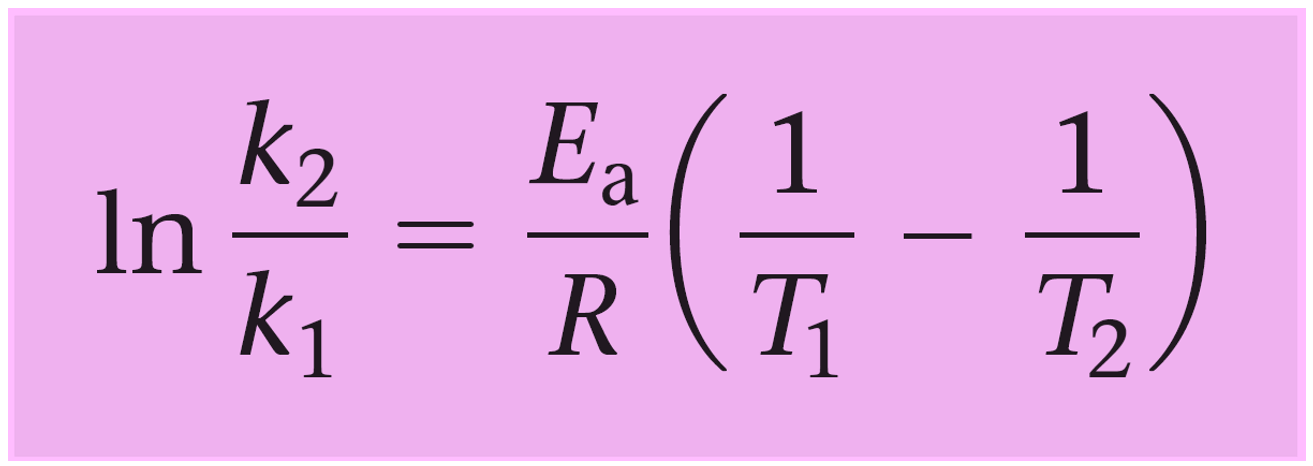
Arrhenius equation calculators provide a convenient way to estimate the rate constant of a chemical reaction at a specific temperature. They simplify the manual calculation process by performing the necessary calculations based on the input parameters.
To use an Arrhenius equation calculator, you need to provide the following input parameters:
- Activation energy (Ea)
- Pre-exponential factor (A)
- Temperature (T) in Kelvin
Once these parameters are entered, the calculator performs the following calculations:
- Converts the temperature from Kelvin to inverse Kelvin (1/K)
- Calculates the exponential term e^(-Ea/RT)
- Multiplies the pre-exponential factor (A) by the exponential term to obtain the rate constant (k)
Advantages of Using an Arrhenius Equation Calculator
- Simplifies complex calculations
- Provides quick and accurate results
- Allows for easy exploration of different input parameters
- Can be used as a teaching tool to illustrate the Arrhenius equation
Limitations of Using an Arrhenius Equation Calculator
- Relies on the accuracy of the input parameters
- Assumes that the Arrhenius equation accurately describes the reaction
- May not account for complex reaction mechanisms
Applications and Examples

The Arrhenius equation finds wide application in various fields of science and engineering.
It enables scientists and researchers to predict reaction rates, determine activation energies, and analyze the temperature dependence of chemical reactions.
Predicting Reaction Rates
The Arrhenius equation can predict the rate constant (k) of a reaction at a given temperature (T) using the pre-exponential factor (A) and the activation energy (Ea).
By knowing the rate constant, scientists can estimate the rate of the reaction and predict how fast or slow it will occur.
Determining Activation Energies
The Arrhenius equation can be used to determine the activation energy of a reaction by plotting the natural logarithm of the rate constant against the inverse of temperature (1/T).
The slope of the resulting line is equal to -Ea/R, where R is the gas constant.
Analyzing Temperature Dependence, Arrhenius equation calculator
The Arrhenius equation helps analyze the temperature dependence of reaction rates.
By studying how the rate constant changes with temperature, scientists can understand the reaction mechanism and identify factors influencing the reaction’s rate.
Outcome Summary

In conclusion, the Arrhenius equation calculator stands as a formidable tool, arming scientists with the knowledge to decipher the complexities of chemical reactions. Its versatility and accuracy make it an essential companion for researchers seeking to unravel the mysteries of chemical kinetics and reaction rates.