The air changes per hour calculator is a valuable tool for professionals and homeowners alike, providing insights into the efficiency of ventilation systems and the quality of indoor air. By calculating the number of times the air in a space is replaced with fresh air each hour, this calculator empowers users to make informed decisions about their indoor environments.
Understanding air changes per hour (ACH) is crucial for maintaining healthy indoor air quality. ACH is influenced by factors such as building size, ventilation system design, and occupancy levels. The calculator simplifies the process of determining ACH, allowing users to assess the effectiveness of their ventilation systems and identify areas for improvement.
Understanding Air Changes Per Hour (ACH)
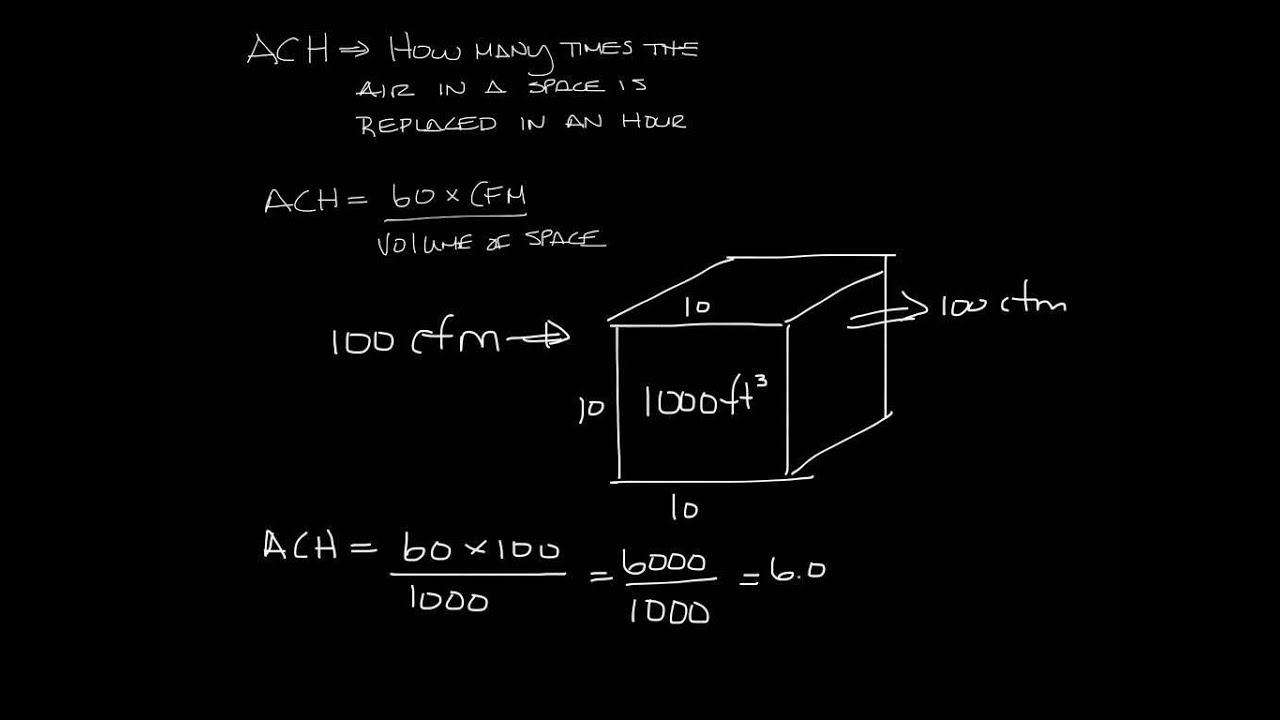
Air Changes Per Hour (ACH) is a measure of how often the air in a space is replaced with fresh outdoor air. It’s a crucial factor in maintaining good indoor air quality, as it helps to remove pollutants, odors, and moisture from the air.
ACH is expressed as the number of times the volume of air in a space is replaced in one hour.The required ACH varies depending on the intended use of the space. For example, hospitals and other healthcare facilities typically require higher ACH rates to prevent the spread of airborne infections.
Industrial facilities, on the other hand, may require lower ACH rates to control energy consumption and maintain specific environmental conditions.Several factors influence ACH, including the size of the space, the ventilation system’s design, and the number of people occupying the space.
Larger spaces require higher ACH rates to achieve the same level of air quality as smaller spaces. Ventilation systems that provide more fresh air will result in higher ACH rates. And spaces with more occupants will generate more pollutants, requiring higher ACH rates to maintain good air quality.Understanding
ACH is essential for designing and operating ventilation systems that provide adequate indoor air quality. By considering the factors that influence ACH, engineers and building managers can ensure that spaces are properly ventilated to meet the needs of the occupants and the intended use of the space.
Calculating ACH using the Calculator

Using an ACH calculator is a straightforward process that involves a few simple steps. Firstly, you need to gather the necessary inputs, which include the room volume, ventilation rate, and time period.
Once you have these inputs, you can enter them into the calculator and it will automatically calculate the ACH. The calculator will typically provide you with the result in units of ACH, which represents the number of times the air in the room is replaced per hour.
Example Calculations
Let’s consider a few examples to illustrate the process of calculating ACH using a calculator:
- Scenario 1:A room with a volume of 100 cubic meters has a ventilation rate of 10 cubic meters per minute. Calculate the ACH.
- Scenario 2:A room with a volume of 200 cubic meters has a ventilation rate of 15 cubic meters per minute. Calculate the ACH.
Using the calculator, we get: ACH = (10 m³/min – 60 min/hr) / 100 m³ = 6 ACH
Using the calculator, we get: ACH = (15 m³/min – 60 min/hr) / 200 m³ = 4.5 ACH
Interpreting ACH Results

Understanding the implications of Air Changes per Hour (ACH) is crucial for optimizing indoor air quality. ACH values indicate the frequency at which the air within a space is replaced with fresh outdoor air. Different ACH values have varying effects on air quality and energy consumption.
Determining Adequate ACH, Air changes per hour calculator
Determining if the ACH is adequate for a specific application requires considering factors such as the type of space, occupancy, and activities performed. For example, spaces with high occupant density, such as classrooms or offices, require higher ACH to maintain acceptable indoor air quality.
Adjusting ACH for Specific Goals
To meet specific indoor air quality goals, it may be necessary to adjust the ACH. Increasing ACH can improve air quality by diluting pollutants, while decreasing ACH can conserve energy. However, it’s important to strike a balance between air quality and energy efficiency.
- Improving Air Quality:To improve air quality, increase ACH by opening windows, using fans, or installing mechanical ventilation systems.
- Conserving Energy:To conserve energy, reduce ACH by closing windows, using energy-efficient appliances, and implementing energy-saving measures.
Applications of ACH Calculations: Air Changes Per Hour Calculator
Air changes per hour (ACH) calculations play a crucial role in designing and operating ventilation systems to ensure optimal indoor air quality and energy efficiency.
ACH calculations provide valuable insights into the effectiveness of ventilation systems in removing contaminants and maintaining acceptable air quality levels.
Designing Ventilation Systems
During the design phase of ventilation systems, ACH calculations help engineers determine the appropriate airflow rates required to achieve the desired air quality standards.
By considering factors such as the size of the space, occupancy levels, and sources of contaminants, engineers can optimize the design to ensure adequate ventilation and minimize energy consumption.
Improving Energy Efficiency
ACH calculations can be used to identify opportunities for improving energy efficiency in ventilation systems.
By reducing ACH rates when possible, while still maintaining acceptable air quality, engineers can reduce the energy consumption associated with heating, cooling, and air handling.
Case Study: Hospital Ventilation
In a hospital setting, ACH calculations were used to design a ventilation system that effectively removed airborne contaminants and maintained a safe and healthy environment for patients and staff.
By optimizing ACH rates based on the specific requirements of different hospital areas, the ventilation system was able to achieve the desired air quality while minimizing energy consumption.
Conclusive Thoughts
In conclusion, the air changes per hour calculator is an indispensable tool for optimizing indoor air quality. By providing accurate and reliable calculations, it empowers users to design and operate ventilation systems that meet specific air quality goals. Whether it’s improving energy efficiency, reducing operating costs, or enhancing the health and well-being of occupants, this calculator is a valuable resource for creating healthier and more comfortable indoor environments.