
Unveiling the Coefficient Variation Calculator: Embark on a journey through the realm of data analysis, where this indispensable tool unravels the intricacies of data variability, empowering you with insights that drive informed decision-making.
Coefficient of Variation (CV) emerges as a cornerstone in the statistical landscape, quantifying the extent of data dispersion, and the Coefficient Variation Calculator stands as your steadfast companion, facilitating effortless CV calculations with unparalleled accuracy.
Coefficient of Variation: Coefficient Variation Calculator

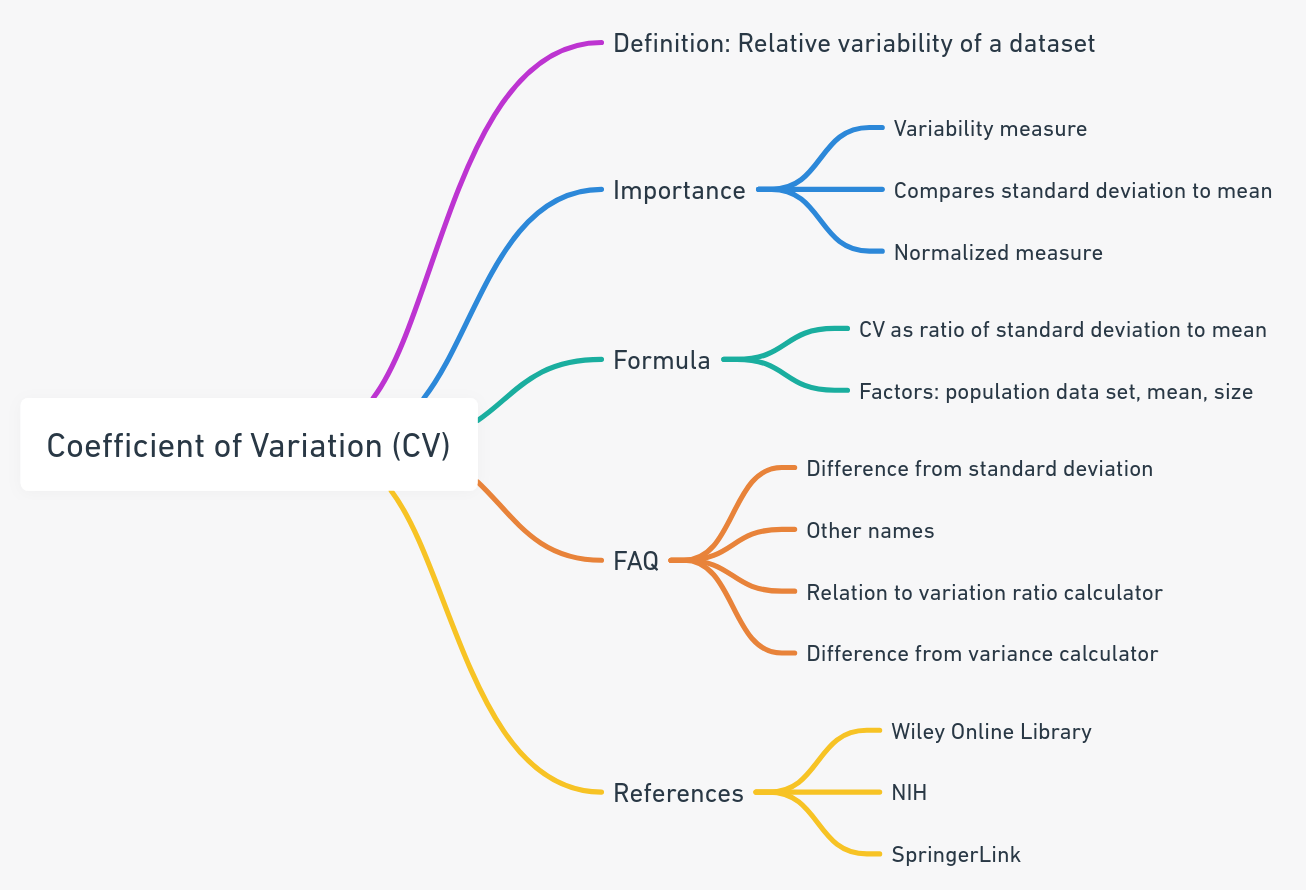
The coefficient of variation (CV) is a statistical measure that quantifies the relative variability or dispersion of a dataset. It is calculated by dividing the standard deviation by the mean, expressed as a percentage. CV helps analysts understand the spread of data relative to its central tendency, providing insights into the consistency and homogeneity of a dataset.
Understanding CV, Coefficient variation calculator
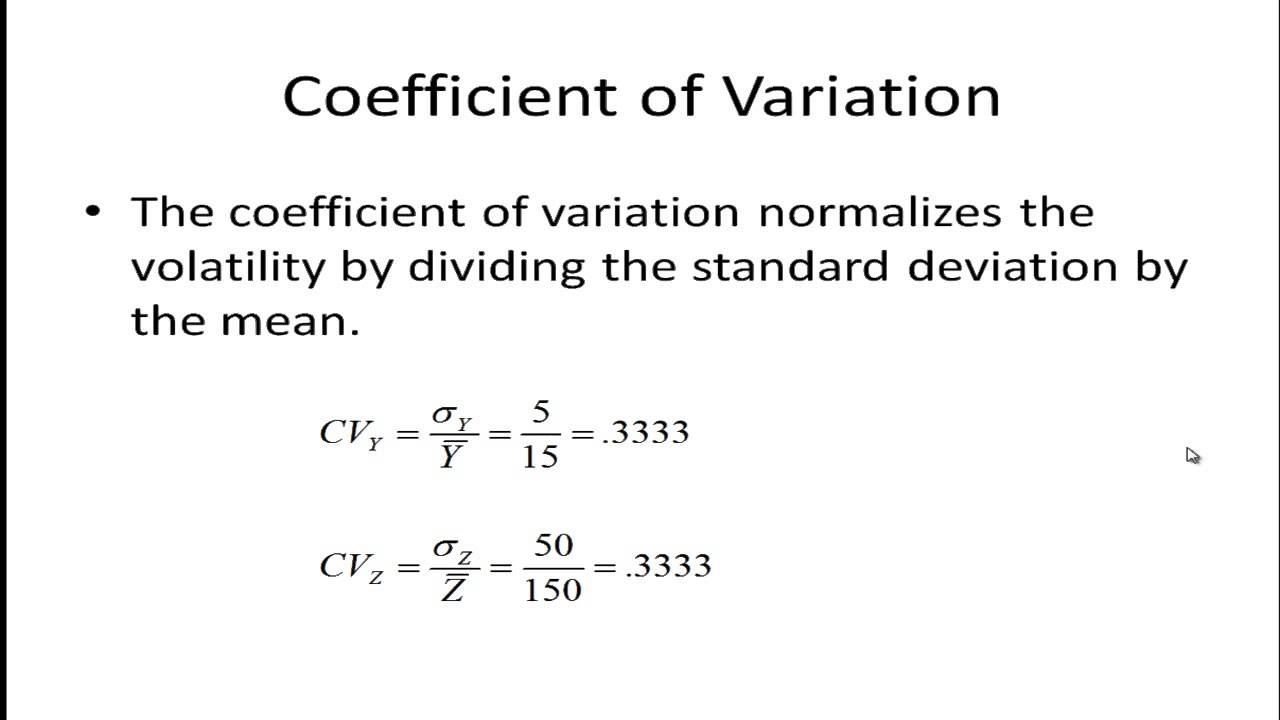
CV is a unitless measure, making it useful for comparing the variability of different datasets with varying units of measurement. It allows analysts to assess the relative spread of data, regardless of the scale of the original values. A higher CV indicates greater variability, while a lower CV suggests a more consistent dataset.
Applications of CV
CV is widely used in various industries and fields, including:
-
-*Finance
CV is used to assess the risk associated with investments by measuring the volatility of returns.
-*Manufacturing
CV is employed in quality control to monitor the consistency of production processes.
-*Healthcare
CV is used in clinical research to evaluate the variability of patient outcomes or treatment responses.
-*Environmental science
CV is used to study the variability of environmental parameters, such as temperature or pollution levels.
Advantages and Limitations of CV
-*Advantages
- CV is a simple and intuitive measure of variability.
- It is unitless, allowing for comparisons across different datasets.
- CV provides a standardized metric for quantifying data dispersion.
Limitations:
- CV is sensitive to outliers, which can distort the measure.
- CV is not always informative when the data distribution is skewed.
- CV does not provide information about the shape of the data distribution.
Calculating Coefficient of Variation
Methods for Calculating CV
Calculating the coefficient of variation (CV) involves several methods, ranging from manual calculations to utilizing statistical software. Each method has its advantages and is applicable in different scenarios.
- Manual Calculations:This method involves using formulas to compute CV directly from raw data. It is suitable for small datasets or when statistical software is not readily available.
- Statistical Software:Using statistical software, such as Microsoft Excel, SPSS, or R, simplifies CV calculations. These programs provide built-in functions that automate the process, making it efficient for large datasets or complex analyses.
Calculating CV Using Formulas
For manual calculations, CV is computed using the following formula:
CV = (Standard Deviation / Mean)
100
Where:
- CV is the coefficient of variation expressed as a percentage.
- Standard Deviation measures the dispersion of data points around the mean.
- Mean is the average value of the dataset.
To calculate CV manually, follow these steps:
- Calculate the mean of the dataset.
- Calculate the standard deviation of the dataset.
- Divide the standard deviation by the mean.
- Multiply the result by 100 to express CV as a percentage.
Comparison of Methods
The following table compares the steps involved in each method for calculating CV:
| Method | Steps |
|---|---|
| Manual Calculations |
|
| Statistical Software |
|
Interpreting Coefficient of Variation
Interpreting the Coefficient of Variation (CV) is crucial to assess the significance of variation in a dataset. CV values provide insights into the spread or dispersion of data relative to its mean, indicating the level of consistency or variability within the data.
Guidelines and Benchmarks
To determine if a CV value indicates significant variation, industry-specific benchmarks or guidelines can be used as references. These benchmarks vary across industries and applications, but general guidelines suggest the following interpretations:
- CV < 10%:Low variation, indicating a relatively consistent dataset.
- CV 10-20%:Moderate variation, suggesting some degree of variability within the data.
- CV > 20%:High variation, indicating significant dispersion or inconsistency in the data.
Factors Influencing Interpretation
The interpretation of CV can be influenced by several factors, including:
- Sample size:Smaller sample sizes tend to result in higher CV values due to increased sampling error.
- Data distribution:Non-normal distributions, such as skewed or bimodal distributions, can affect CV values.
- Outliers:Extreme values or outliers can significantly impact CV, potentially overestimating or underestimating variation.
- Measurement accuracy:Errors in data collection or measurement can introduce bias, affecting CV interpretation.
Advanced Applications of Coefficient of Variation
Beyond its fundamental role in descriptive statistics, the coefficient of variation (CV) finds advanced applications in various fields, particularly in risk assessment, process control, and quality management. Its versatility stems from its ability to quantify the relative variability of data, making it a valuable tool for evaluating and improving processes.
Risk Assessment
CV plays a crucial role in risk assessment by providing a measure of the potential variability of outcomes. In financial risk assessment, for example, CV is used to quantify the volatility of asset returns, helping investors make informed decisions about their portfolios.
Similarly, in insurance, CV is employed to assess the variability of claims, aiding in the calculation of premiums and risk management strategies.
Conclusion
As we bid farewell to this exploration of the Coefficient Variation Calculator, let its significance linger in your analytical toolkit. Embrace its versatility, harness its power to decipher data variability, and elevate your decision-making to new heights.
May this guide serve as a beacon of knowledge, illuminating your path through the labyrinth of data analysis. Farewell, fellow data explorers, and may your statistical endeavors bear fruit!
