
Calculate acres per hour: an essential skill for professionals in agriculture, construction, and other industries that involve land measurement. This comprehensive guide will provide you with the formula, practical examples, and tools you need to accurately determine the number of acres you can cover within an hour, optimizing your operations and maximizing productivity.
Whether you’re a farmer planning your crop yield or a construction manager estimating project timelines, understanding how to calculate acres per hour is crucial for efficient land management and successful project execution.
Calculating Acres per Hour
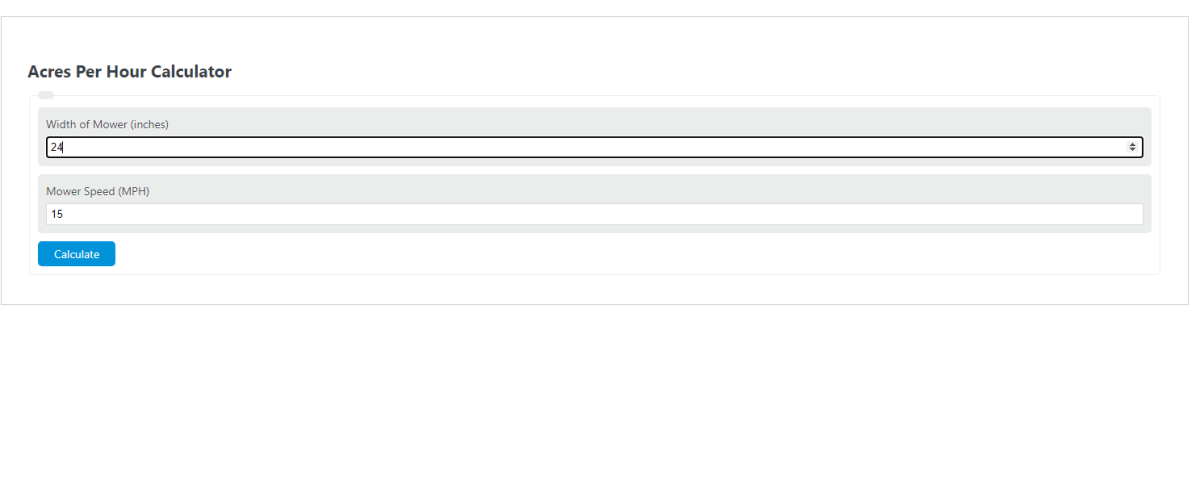
Calculating acres per hour is a crucial aspect of estimating productivity in agricultural operations, land management, and construction projects. Understanding this calculation empowers individuals to determine the efficiency and progress of their work.
Formula for Calculating Acres per Hour
The formula for calculating acres per hour is as follows:
Acres per Hour = Total Acres Covered / Time Taken (in Hours)
This formula provides a straightforward method for determining the rate at which acres are being covered or worked on over a specific time period.
Examples of Using the Formula
Let’s consider some examples to illustrate the application of this formula:
- If a farmer covers 20 acres in 5 hours, the acres per hour would be 20 acres / 5 hours = 4 acres per hour.
- In a construction project, if a team levels 12 acres in 3 hours, the acres per hour would be 12 acres / 3 hours = 4 acres per hour.
Factors Affecting Acres per Hour
The number of acres per hour that can be calculated can be influenced by various factors, including:
- Equipment and Machinery:The type and efficiency of equipment used can significantly impact the rate of coverage.
- Terrain and Soil Conditions:The terrain’s slope, soil type, and obstacles can affect the speed of progress.
- Operator Skill and Experience:The operator’s proficiency and familiarity with the equipment can influence productivity.
- Weather Conditions:Adverse weather conditions, such as rain or strong winds, can slow down operations.
Applications of Acres per Hour Calculations

Calculating acres per hour is a crucial metric in various industries, particularly agriculture and construction. Understanding the applications of this calculation can provide valuable insights into its importance and utility.
Agriculture
In agriculture, acres per hour calculations play a significant role in determining the efficiency of farming operations. It helps farmers assess the productivity of their machinery, plan crop rotations, and optimize land utilization. By calculating the number of acres covered per hour, farmers can determine the most efficient equipment and techniques to maximize their yields.
Construction
Acres per hour calculations are equally important in construction projects. Contractors use this metric to estimate the time and resources required to complete earthmoving tasks, such as excavation, grading, and land clearing. Accurate calculations ensure efficient project planning, cost estimation, and equipment allocation, leading to timely completion and reduced project expenses.
Other Industries
Beyond agriculture and construction, acres per hour calculations find applications in other industries as well:
- Environmental Restoration:Calculating acres per hour helps determine the rate of land restoration projects, such as reforestation and wetland restoration.
- Land Development:Developers use this metric to estimate the pace of land clearing and development for residential, commercial, and industrial projects.
- Mining:Acres per hour calculations are used to determine the efficiency of mining operations, such as the rate of land excavation and resource extraction.
Tools for Calculating Acres per Hour: Calculate Acres Per Hour
Calculating acres per hour requires accurate and efficient tools to ensure reliable results. Various tools are available, ranging from manual methods to advanced technologies.
Manual Calculations
Manual calculations involve using a measuring wheel or tape and a calculator. Measure the distance covered in feet or meters and convert it to acres using the following formula:
Acres = Distance (feet) / 43,560
While manual calculations are simple and cost-effective, they can be time-consuming and prone to human error.
GPS Tracking Devices
GPS tracking devices, such as smartphones or dedicated GPS receivers, provide accurate and real-time data on distance traveled. They can be paired with software that automatically calculates acres per hour based on the GPS data.
GPS tracking devices offer high accuracy and efficiency, but they require a clear line of sight to satellites and can be affected by factors like weather conditions.
Software Applications
Software applications specifically designed for calculating acres per hour are available online or as mobile apps. These applications typically use GPS data or allow manual input of distance measurements.
Software applications offer convenience and automation, but their accuracy and efficiency can vary depending on the specific software used.
Comparison of Tools
The accuracy and efficiency of different tools for calculating acres per hour depend on factors such as the size of the area being measured, the terrain, and the availability of clear GPS signals.
For small areas with relatively flat terrain, manual calculations or simple GPS tracking devices may suffice. For larger areas or complex terrain, more advanced software applications or professional surveying equipment may be necessary to ensure high accuracy and efficiency.
Tips for Optimizing Acres per Hour
Planning and preparation are crucial for optimizing acres per hour calculations. A well-defined plan helps streamline the process, minimizing errors and maximizing efficiency. Technology can also play a significant role in optimizing calculations, such as using software or apps designed for this purpose.
Planning and Preparation, Calculate acres per hour
- Define clear objectives and goals for the calculation.
- Gather accurate and up-to-date data on the area to be calculated.
- Choose the most appropriate calculation method based on the available data and desired accuracy.
- Identify and eliminate potential sources of error, such as incorrect measurements or outdated information.
Technology
- Use specialized software or apps designed for acres per hour calculations.
- Employ GPS or GIS technology to accurately measure and map the area of interest.
- Leverage cloud-based platforms to store and share data, facilitating collaboration and access.
- Automate calculations using formulas or scripts to reduce manual errors and save time.
Final Thoughts
In conclusion, calculating acres per hour is a valuable skill that empowers you to make informed decisions, optimize your operations, and achieve greater efficiency in land-related tasks. By leveraging the formula, understanding the factors that affect acreage, and utilizing the appropriate tools, you can accurately determine the number of acres you can cover within an hour, ensuring optimal resource allocation and project success.
