
Welcome to the realm of friction loss calculation, where the intricate dance between fluid flow and energy dissipation unfolds. Friction loss calculators empower engineers and designers with the tools to navigate this complex landscape, ensuring optimal system performance and energy efficiency.
Delving into the fundamentals of friction loss, we’ll explore the Darcy-Weisbach equation, unravel the mysteries of the Moody diagram, and delve into the factors that shape friction loss in pipes. Along the way, we’ll uncover practical applications of friction loss calculators, from optimizing pipe sizing to enhancing system performance.
Fundamentals of Friction Loss Calculation
Friction loss is a fundamental aspect of fluid flow systems, representing the energy dissipated due to frictional forces between the fluid and the pipe walls. Understanding friction loss is crucial for designing and optimizing fluid flow systems, ensuring efficient and accurate performance.
The Darcy-Weisbach equation provides a comprehensive framework for calculating friction loss in pipe flow. This equation incorporates various factors that influence friction loss, including fluid properties, pipe geometry, and flow conditions.
Variables Involved in Friction Loss Calculations
The Darcy-Weisbach equation involves several key variables that collectively determine the friction loss in a fluid flow system. These variables include:
- Fluid Density (ρ):The density of the fluid flowing through the pipe, measured in kilograms per cubic meter (kg/m³).
- Fluid Velocity (V):The average velocity of the fluid flowing through the pipe, measured in meters per second (m/s).
- Pipe Diameter (D):The internal diameter of the pipe, measured in meters (m).
- Pipe Length (L):The length of the pipe section over which the friction loss is being calculated, measured in meters (m).
- Friction Factor (f):A dimensionless factor that represents the frictional resistance between the fluid and the pipe walls. The friction factor depends on the Reynolds number and the pipe roughness.
Methods for Estimating Friction Loss

Estimating friction loss in fluid flow systems is crucial for designing efficient and reliable piping systems. Various methods are available for this purpose, each with its advantages and limitations.
Moody Diagram
The Moody diagram is a graphical representation that relates friction factor (f) to Reynolds number (Re) and relative roughness (ε/D). It is widely used for estimating friction loss in turbulent flow regimes.
To use the Moody diagram:
- Determine the Reynolds number (Re) using the flow rate, pipe diameter, and fluid properties.
- Estimate the relative roughness (ε/D) based on the pipe material and condition.
- Locate the intersection point of Re and ε/D on the Moody diagram.
- Read the corresponding friction factor (f).
Colebrook-White Equation
The Colebrook-White equation is an empirical formula that provides a more accurate estimate of friction factor compared to the Moody diagram, especially for laminar and transitional flow regimes.
The equation is:
f = (1.82
log10(Re*√f)) -2
It can be solved iteratively to obtain the friction factor.
Alternative Methods
In addition to the Moody diagram and Colebrook-White equation, other methods for estimating friction loss include:
- Hazen-Williams Equation:An empirical equation that is simpler to use than the Moody diagram but less accurate, particularly for high Reynolds numbers.
- Swamee-Jain Equation:A more accurate equation that is similar to the Colebrook-White equation but requires additional parameters.
Factors Affecting Friction Loss: Friction Loss Calculator
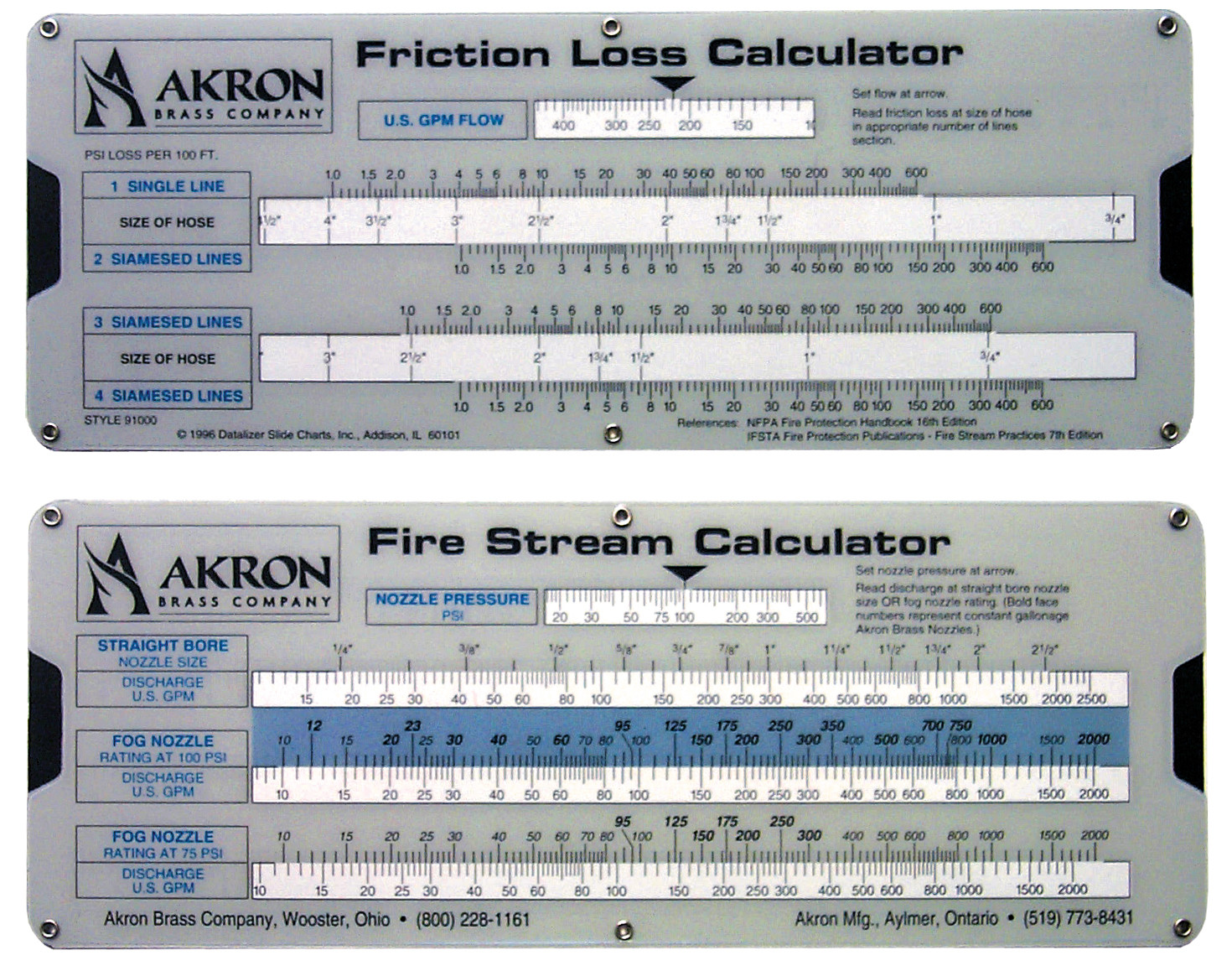
Friction loss in pipes is a complex phenomenon influenced by various factors. Understanding these factors is crucial for accurate estimation and mitigation of friction losses in piping systems.
Pipe Material
The material used for pipe construction significantly affects friction loss. Different materials exhibit varying degrees of surface roughness, which directly influences the resistance to fluid flow. For instance, smooth materials like copper or stainless steel result in lower friction losses compared to rougher materials such as cast iron or concrete.
Pipe Diameter
The diameter of the pipe plays a significant role in friction loss. Larger diameter pipes have a smaller wetted perimeter (the surface area in contact with the fluid) relative to their cross-sectional area. This reduces the frictional resistance experienced by the fluid, leading to lower friction losses.
Pipe Surface Roughness, Friction loss calculator
The surface roughness of the pipe’s interior significantly impacts friction loss. Rougher surfaces create more resistance to fluid flow due to increased turbulence and eddies. Consequently, pipes with smoother surfaces result in lower friction losses. Factors such as corrosion, aging, and deposition of particles can contribute to increased surface roughness over time.
Fluid Properties
The properties of the fluid flowing through the pipe also influence friction loss. Fluids with higher viscosities, such as heavy oils or slurries, experience greater resistance to flow compared to low-viscosity fluids like water. Similarly, fluids with higher densities exhibit increased friction losses due to their higher inertia.
Applications of Friction Loss Calculators
Friction loss calculators are indispensable tools in engineering design, empowering engineers to accurately predict and optimize the performance of fluid systems. These calculators provide critical insights into the frictional resistance encountered by fluids flowing through pipes, enabling engineers to make informed decisions about pipe sizing, pumping systems, and overall system efficiency.
Optimization of Pipe Sizing and Pumping Systems
Friction loss calculations are essential for determining the appropriate pipe size for a given flow rate and pressure drop. By understanding the friction losses associated with different pipe diameters, engineers can select pipes that minimize energy consumption and ensure optimal system performance.
Additionally, friction loss calculators help engineers design pumping systems that meet the required flow rates and pressures while minimizing energy consumption.
Energy Efficiency and System Performance
Friction loss considerations are crucial for achieving energy efficiency in fluid systems. Excessive friction losses can lead to increased pumping costs and reduced system performance. Friction loss calculators allow engineers to evaluate the impact of friction losses on energy consumption and identify opportunities for optimization.
By reducing friction losses, engineers can improve system efficiency, lower operating costs, and enhance overall system performance.
Closing Notes
As we conclude our exploration of friction loss calculators, we recognize their indispensable role in engineering design. By harnessing the power of these tools, we can minimize energy loss, maximize system efficiency, and ensure the smooth flow of fluids in countless applications.
