The diagonal measurement calculator is an indispensable tool for anyone who needs to make precise and accurate diagonal measurements. Whether you’re a construction worker, a carpenter, or a homeowner tackling a DIY project, this calculator can save you time and ensure that your measurements are spot-on.
In this comprehensive guide, we’ll delve into the world of diagonal measurement calculators, exploring their benefits, applications, and how they can help you achieve accurate results in your projects.
Measurement Fundamentals
In geometry, a diagonal is a straight line that connects two non-adjacent vertices of a polygon. Diagonal measurement is the process of determining the length of a diagonal.
Accurate diagonal measurements are important in various fields, including construction, carpentry, engineering, and manufacturing. For example, in construction, diagonal measurements are used to ensure that walls are square and that roofs are properly pitched. In carpentry, diagonal measurements are used to ensure that furniture frames are square and that joints are properly aligned.
In engineering, diagonal measurements are used to calculate the strength and stability of structures. In manufacturing, diagonal measurements are used to ensure that parts are properly aligned and assembled.
Applications of Diagonal Measurement
- Construction: Diagonal measurements are used to ensure that walls are square and that roofs are properly pitched.
- Carpentry: Diagonal measurements are used to ensure that furniture frames are square and that joints are properly aligned.
- Engineering: Diagonal measurements are used to calculate the strength and stability of structures.
- Manufacturing: Diagonal measurements are used to ensure that parts are properly aligned and assembled.
Diagonal Measurement Methods
Measuring diagonals is crucial in various fields, including construction, carpentry, and engineering. Several methods can be employed to accurately determine the diagonal measurements of rectangular or square shapes. This section will explore the Pythagorean theorem, the use of measuring tapes or rulers, and the application of laser levels for diagonal measurement.
Pythagorean Theorem
The Pythagorean theorem is a fundamental concept in geometry that establishes a relationship between the lengths of the sides of a right-angled triangle. According to the theorem, the square of the hypotenuse (the side opposite the right angle) is equal to the sum of the squares of the other two sides.
In the context of diagonal measurement, this theorem can be applied to calculate the diagonal length of a rectangle or square.
For a rectangle with sides of length ‘a’ and ‘b’, the diagonal length ‘d’ can be calculated using the formula:
d2= a 2+ b 2
By taking the square root of both sides of the equation, we get:
d = √(a2+ b 2)
Measuring Tape or Ruler
Using a measuring tape or ruler is a straightforward method for measuring diagonals. To do this, align the zero mark of the measuring device with one corner of the rectangle or square. Extend the tape or ruler to the opposite corner, ensuring it remains straight and taut.
The measurement obtained represents the diagonal length.
Laser Level
Laser levels provide a precise and efficient way to measure diagonals. These devices project a laser beam that can be aligned along the edges of the shape. By measuring the distance between the laser points on the opposite sides, the diagonal length can be accurately determined.
Diagonal Measurement Calculator
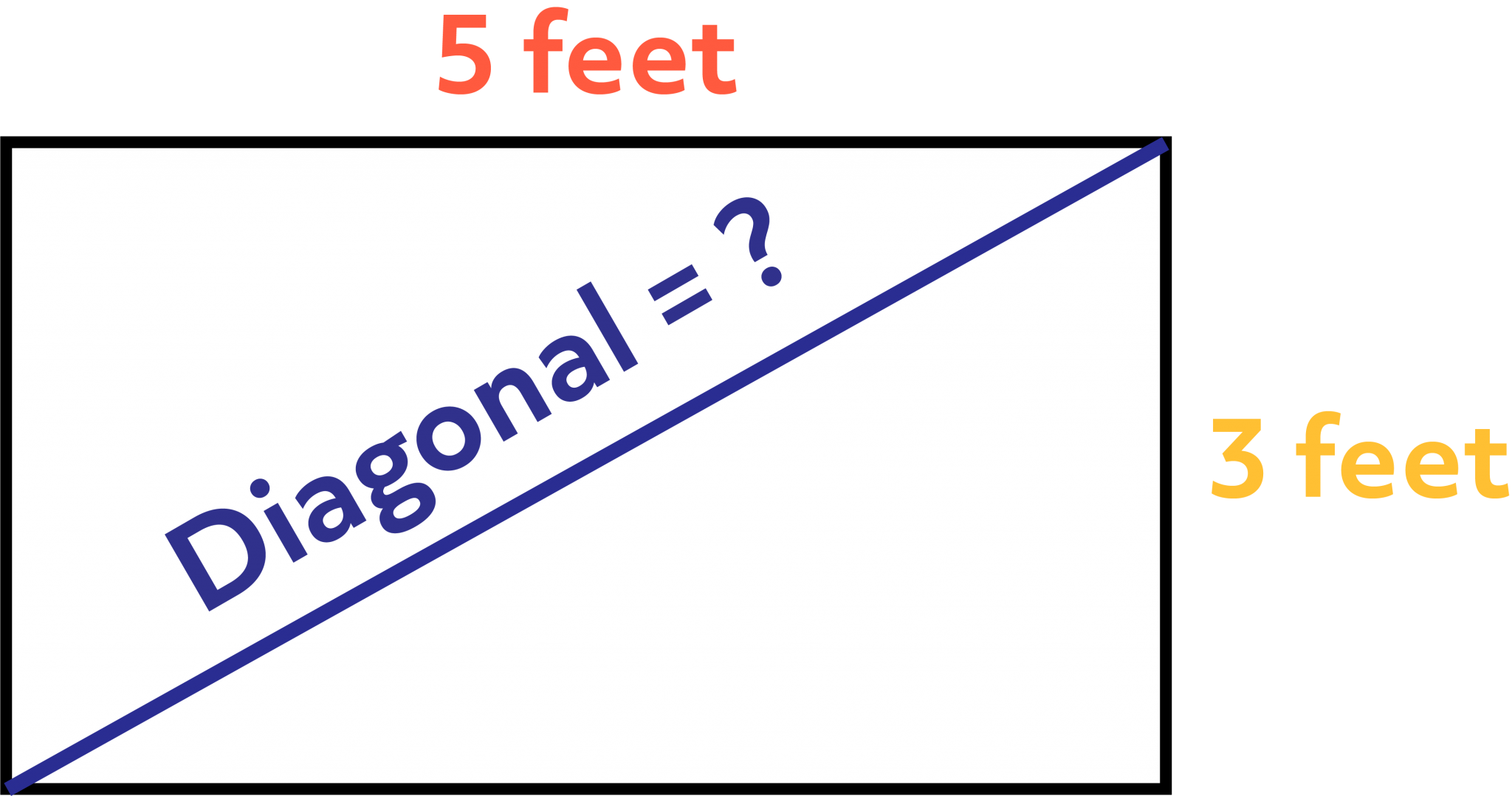
A diagonal measurement calculator is an online tool that calculates the length of a diagonal line segment given the dimensions of the shape it’s in.
Using a calculator for diagonal measurements offers several benefits. First, it saves time and effort compared to manual calculations. Second, it eliminates the risk of errors that may occur during manual calculations.
Types of Diagonal Measurement Calculators
There are various types of diagonal measurement calculators available, each designed for specific shapes. Some common types include:
- Rectangle Diagonal Calculator
- Square Diagonal Calculator
- Parallelogram Diagonal Calculator
- Rhombus Diagonal Calculator
Applications and Examples
Diagonal measurements play a crucial role in various industries, particularly in construction, carpentry, and manufacturing. Understanding the applications and examples of diagonal measurement can enhance precision and accuracy in various projects.
Construction and Carpentry
In construction and carpentry, diagonal measurements ensure structural integrity and alignment. Measuring diagonals of walls, roofs, and frames helps identify any deviations from squareness. This accuracy is essential for proper fitting of windows, doors, and other components, preventing structural issues or misalignment.
Home Improvement Projects
Diagonal measurements are equally important in home improvement projects. Measuring diagonals when installing tiles, flooring, or countertops ensures a level and balanced appearance. It prevents uneven gaps or misaligned edges, resulting in a visually appealing and structurally sound finish.
Manufacturing Processes
In manufacturing, diagonal measurements ensure precision in component assembly and alignment. By measuring diagonals of machined parts, engineers can verify the accuracy of dimensions and tolerances. This ensures proper fit and functionality of components, reducing the risk of errors or defects.
Closure

From construction and carpentry to home improvement and manufacturing, the diagonal measurement calculator has proven to be an invaluable tool for professionals and DIY enthusiasts alike. Its ease of use, accuracy, and versatility make it an essential tool for anyone who needs to make precise diagonal measurements.