Embark on an enlightening journey with our centripetal force calculator, a powerful tool that empowers you to decipher the intricacies of circular motion. Prepare to delve into the fascinating world of physics, where forces, velocities, and trajectories intertwine to create a symphony of motion.
Centripetal force, the invisible yet indispensable force that keeps objects moving in circular paths, will be laid bare before your eyes. Discover the formula that governs its magnitude, explore the factors that influence its strength, and witness its captivating applications in various realms.
Centripetal Force Calculation
Centripetal force is a force that acts on an object moving in a circular path, causing it to accelerate towards the center of the circle. It is given by the formula:
Fc= m
v2/ r
Where:
- F cis the centripetal force in Newtons (N)
- m is the mass of the object in kilograms (kg)
- v is the speed of the object in meters per second (m/s)
- r is the radius of the circular path in meters (m)
Examples of Centripetal Force
Examples of centripetal force include:
- The force that keeps a car moving in a circular path around a curve
- The force that keeps a ball on a string moving in a circular path
- The force that keeps the Earth in orbit around the Sun
Units of Measurement
The SI unit of centripetal force is the Newton (N). Other units that can be used include the dyne (dyn) and the pound-force (lbf).
Factors Affecting Centripetal Force: Centripetal Force Calculator

Centripetal force is influenced by several factors, primarily mass, velocity, and radius. Understanding the relationships between these factors is crucial for comprehending centripetal force’s behavior.
Mass and Centripetal Force
Mass is directly proportional to centripetal force. This means that as the mass of an object increases, the centripetal force required to keep it moving in a circular path also increases. For instance, a car requires more centripetal force to maintain its circular motion on a curved road than a bicycle.
Velocity and Centripetal Force
Velocity is another factor that affects centripetal force. The relationship between velocity and centripetal force is quadratic, meaning that centripetal force increases as the square of velocity. Consequently, doubling an object’s velocity requires quadrupling the centripetal force to maintain the same circular path.
This is evident in the increased centripetal force required to keep a car on a circular track as its speed increases.
Radius and Centripetal Force
Radius is inversely proportional to centripetal force. This implies that as the radius of a circular path increases, the centripetal force required to keep an object moving along that path decreases. For example, a car requires less centripetal force to maintain its circular motion on a wider curve than on a tighter curve.
Applications of Centripetal Force
Centripetal force plays a crucial role in various fields, including engineering, amusement parks, and astronomy.
In engineering, centripetal force is utilized in the design of structures such as bridges and buildings to ensure stability and prevent collapse under lateral loads.
Amusement Park Rides, Centripetal force calculator
Centripetal force is a fundamental principle behind the operation of amusement park rides. It keeps objects moving in a circular path, such as:
- Roller coasters: The tracks are designed to provide the necessary centripetal force to keep the cars on the track, even when they are upside down or going through loops.
- Ferris wheels: The supporting structure provides the centripetal force to keep the gondolas moving in a circular path.
- Centrifuge rides: These rides spin riders rapidly, creating a strong centripetal force that pins them against the walls.
Celestial Bodies
Centripetal force is responsible for the motion of celestial bodies in space:
- Planets: The gravitational force between the sun and planets provides the centripetal force that keeps them in orbit.
- Moons: The gravitational force between planets and their moons provides the centripetal force that keeps them in orbit.
li>Stars: Within galaxies, stars orbit around a central black hole or supermassive star due to the gravitational centripetal force.
Centripetal Force and Circular Motion

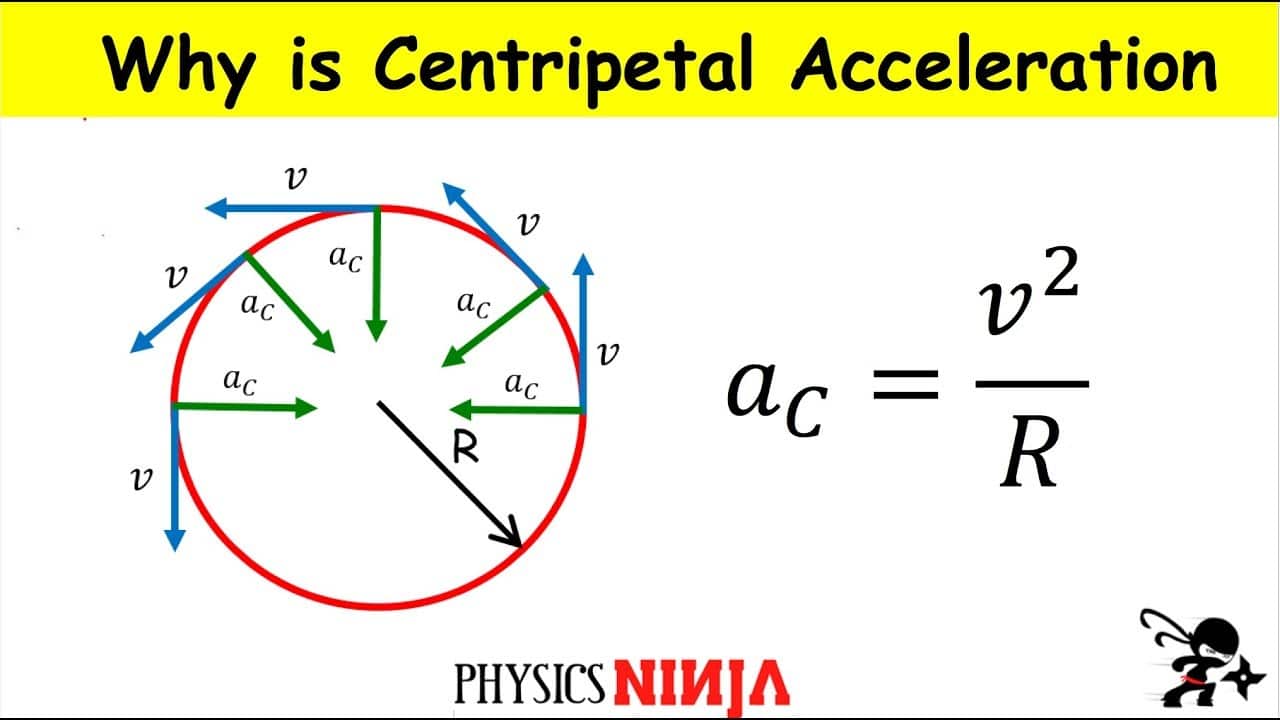
Centripetal force is a force that acts on an object moving in a circular path, directed towards the center of the circle. It is responsible for keeping the object moving in a circular path, preventing it from moving in a straight line.
Diagram of Centripetal Force and Circular Motion
- Consider an object moving in a circular path with radius r and speed v.
- The centripetal force (Fc) acts towards the center of the circle, perpendicular to the object’s velocity (v).
- The direction of Fc is always changing as the object moves around the circle.
Calculating Centripetal Force
The magnitude of the centripetal force required for an object moving in a circular path can be calculated using the formula:
Fc = mv²/r
where:* Fc is the centripetal force
- m is the mass of the object
- v is the tangential velocity of the object (speed at which it is moving in the circle)
- r is the radius of the circular path
Tangential Velocity and Centripetal Force
Tangential velocity is the velocity of the object at any point on the circular path, tangent to the circle. It is important to note that the centripetal force is independent of the tangential velocity. However, a change in tangential velocity will require a change in centripetal force to keep the object moving in a circular path.
End of Discussion
As we bid farewell to our exploration of centripetal force, let us marvel at the intricate dance it orchestrates in our universe. From the celestial ballet of orbiting planets to the exhilarating spins of amusement park rides, this force weaves its invisible threads throughout the fabric of our existence.
May this newfound understanding ignite a passion for physics within you, inspiring you to unravel the mysteries that lie ahead.