Unveiling the row echelon calculator, an indispensable tool in the realm of linear algebra, this guide embarks on an enlightening journey to unravel its intricacies, applications, and usage.
Row echelon form, a cornerstone of matrix theory, emerges as a structured arrangement of matrices, possessing unique properties that empower us to solve systems of linear equations with ease. This guide delves into the methods for reducing matrices to row echelon form, unveiling the Gaussian elimination technique and its elementary row operations.
Row Echelon Form: Understanding the Concept
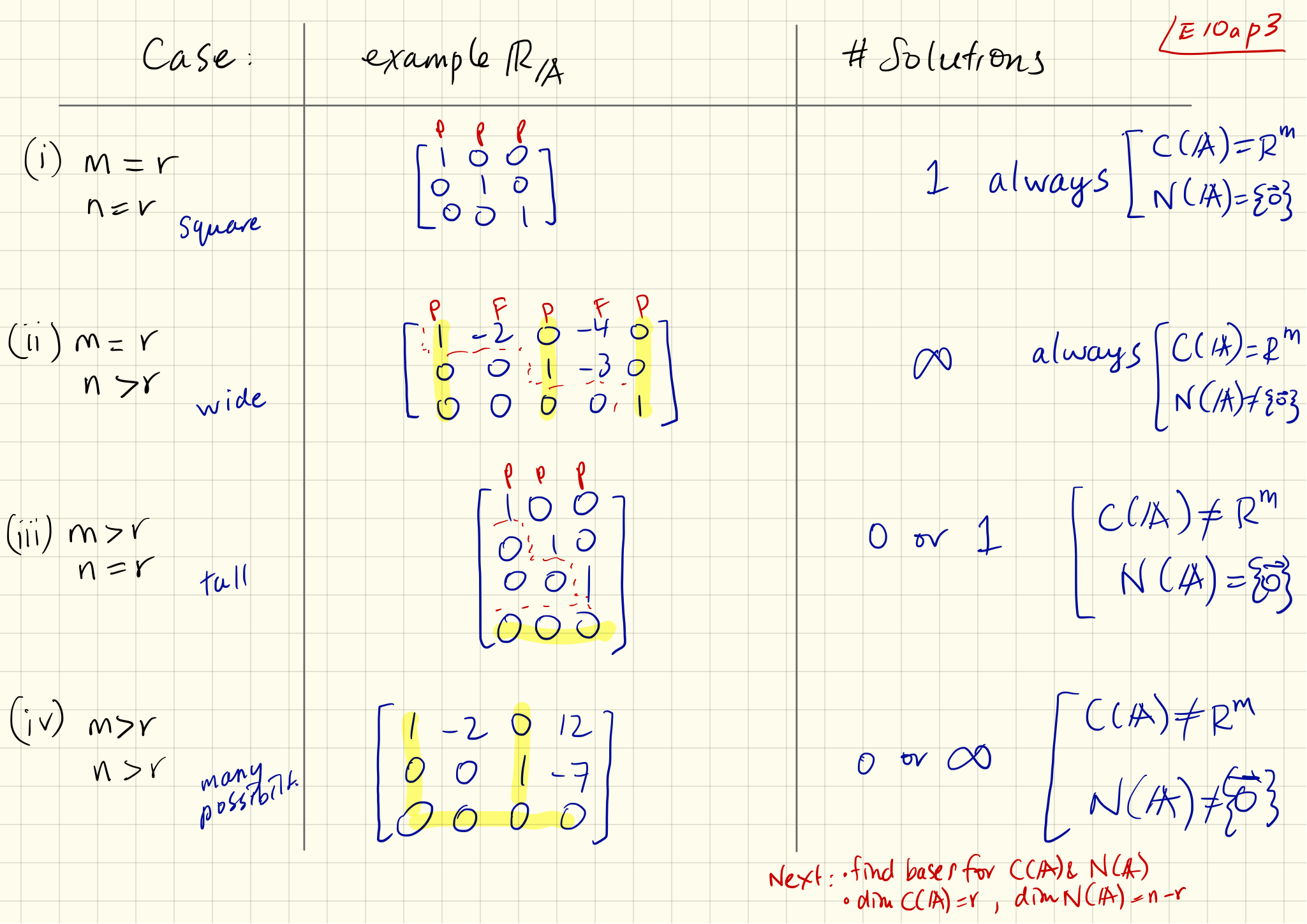
In linear algebra, row echelon form is a specific arrangement of a matrix that makes it easier to solve systems of linear equations and perform other operations.
Key Properties and Characteristics
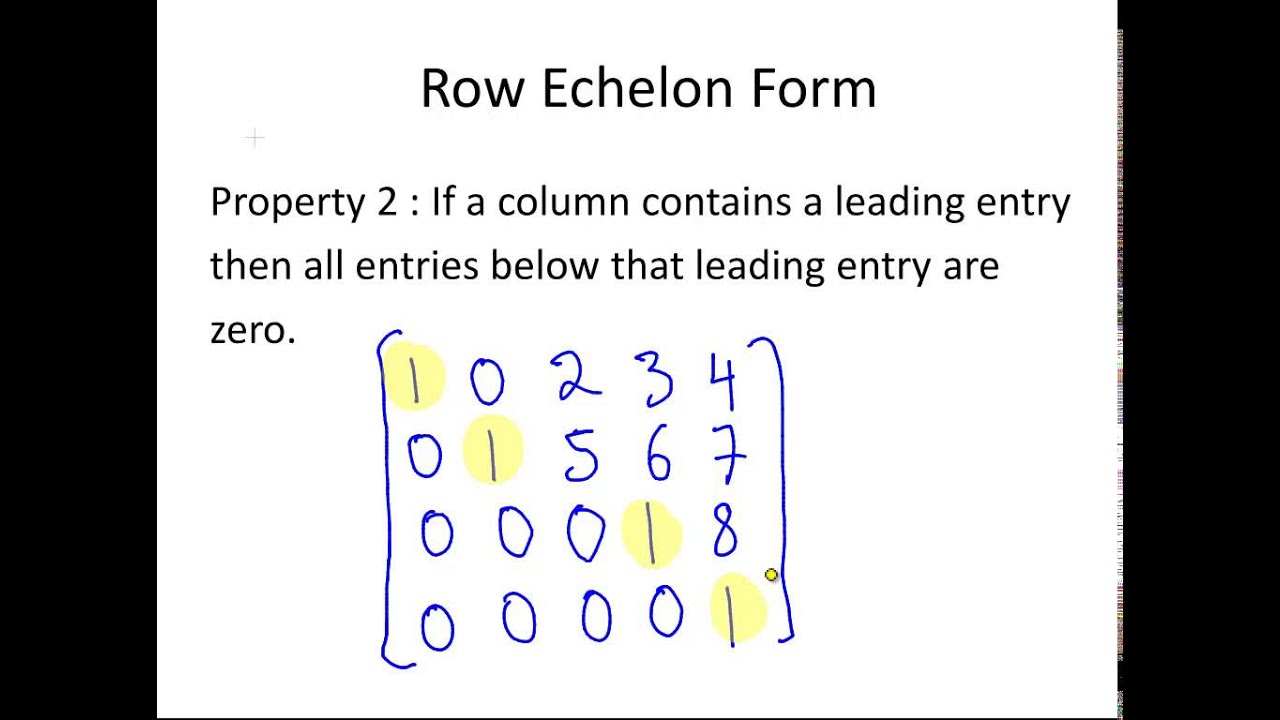
- Leading coefficients:Each row has a leading coefficient, which is the first non-zero entry from left to right.
- Zero rows:Rows consisting entirely of zeros are allowed at the bottom of the matrix.
- Pivot columns:The columns containing the leading coefficients are called pivot columns.
- Zero entries below leading coefficients:All entries below a leading coefficient in the same column are zero.
Examples of Matrices in Row Echelon Form
- $$\beginbmatrix 1 & 0 & 0 \\ 0 & 1 & 0 \\ 0 & 0 & 1 \endbmatrix$$
- $$\beginbmatrix 1 & 2 & 3 \\ 0 & 0 & 1 \\ 0 & 0 & 0 \endbmatrix$$
- $$\beginbmatrix 0 & 1 & 0 \\ 0 & 0 & 1 \\ 0 & 0 & 0 \endbmatrix$$
Methods for Reducing Matrices to Row Echelon Form: Row Echelon Calculator
Gaussian Elimination Method
The Gaussian elimination method is a step-by-step procedure for reducing a matrix to row echelon form. It involves using elementary row operations to transform the matrix into an upper triangular matrix, and then into row echelon form.
The elementary row operations are:
- Row swap:Interchanging two rows of the matrix.
- Row multiplication:Multiplying a row of the matrix by a non-zero constant.
- Row addition:Adding a multiple of one row to another row.
Pivot Columns and Pivot Rows
In row echelon form, each row has a leading coefficient that is 1, and all other entries in that column are 0. The column containing the leading coefficient is called the pivot column, and the row containing the leading coefficient is called the pivot row.
The number of pivot columns in a matrix is equal to the rank of the matrix.
Applications of Row Echelon Form
Row echelon form is a powerful tool in linear algebra with a wide range of applications, from solving systems of linear equations to finding eigenvalues and eigenvectors.
Solving Systems of Linear Equations
One of the most common applications of row echelon form is solving systems of linear equations. By transforming a system of equations into row echelon form, we can quickly determine if the system has a solution, and if so, find all the solutions.
For example, consider the system of equations:
- x + 2y = 5
- 2x + 4y = 10
Transforming this system into row echelon form gives:
- 1x + 0y = 0
- 0x + 1y = 5
From this, we can see that the system has a unique solution: x = 0 and y = 5.
Linear Algebra Applications
Row echelon form is also used extensively in linear algebra, for tasks such as:
- Finding eigenvalues and eigenvectors: Row echelon form can be used to find the eigenvalues and eigenvectors of a matrix, which are important for understanding the behavior of linear transformations.
- Determining linear independence: Row echelon form can be used to determine whether a set of vectors is linearly independent or not.
- Computing determinants: Row echelon form can be used to compute the determinant of a matrix, which is an important invariant for linear transformations.
Real-World Applications
Row echelon form has numerous real-world applications, including:
- Solving systems of equations in engineering, physics, and economics
- Finding eigenvalues and eigenvectors in quantum mechanics and structural analysis
- Determining linear independence in statistics and data analysis
- Computing determinants in computer graphics and image processing
Row Echelon Calculators
Row echelon calculators are online tools that assist in reducing matrices to row echelon form, a specific matrix format that simplifies solving systems of linear equations and other matrix operations.
These calculators offer various features and functionality to cater to different needs. Some common types include:
Matrix Input
- Text-based input: Enter the matrix elements manually, separated by spaces or commas.
- File upload: Upload a text file containing the matrix data.
Calculation Methods
- Gauss-Jordan elimination: A step-by-step algorithm that reduces the matrix to row echelon form.
- LU decomposition: A method that factorizes the matrix into lower and upper triangular matrices.
Output Options, Row echelon calculator
- Row echelon form: Display the matrix in row echelon form.
- Elementary matrices: Show the elementary matrices used in the reduction process.
- Steps involved: Provide a detailed explanation of each step in the reduction.
Benefits of Using Row Echelon Calculators
- Accuracy: Calculators eliminate human error and ensure precise results.
- Time-saving: They automate the reduction process, saving time and effort.
- Educational aid: They help students visualize the reduction process and reinforce their understanding.
Limitations of Row Echelon Calculators
- Limited matrix size: Some calculators have limitations on the size of matrices they can handle.
- Lack of explanation: Calculators may not provide detailed explanations for each step, which can hinder understanding.
- Dependence on input: The accuracy of the results relies on the correct input of the matrix.
Conclusive Thoughts

As we conclude our exploration of row echelon calculators, it becomes evident that these tools serve as invaluable assets for students, researchers, and practitioners alike. Their ability to simplify complex matrix operations and provide accurate solutions makes them indispensable in various fields, including mathematics, engineering, and computer science.
