
Introducing the Fourier Transform Calculator: an indispensable tool for delving into the fascinating world of signal analysis. With its ability to decompose signals into their constituent frequencies, this calculator empowers us to unravel hidden patterns and gain invaluable insights into complex data.
From its mathematical foundations to its practical applications, this guide will delve into the intricacies of the Fourier Transform Calculator, empowering you to harness its full potential for signal analysis and beyond.
Fourier Transform Basics: Fourier Transform Calculator
The Fourier transform is a mathematical tool that decomposes a signal into its constituent frequencies. It is widely used in signal processing, image processing, and other fields.
The Fourier transform of a function \(f(t)\) is given by:
$$F(\omega) = \int_-\infty^\infty f(t)e^-i\omega t dt$$where \(\omega\) is the angular frequency.
Properties of Fourier Transform
- Linearity:The Fourier transform is a linear operator, meaning that the Fourier transform of a sum of functions is equal to the sum of the Fourier transforms of each function.
- Time-shifting:If \(f(t)\) is shifted in time by \(t_0\), then its Fourier transform is multiplied by \(e^-i\omega t_0\).
- Frequency-shifting:If \(f(t)\) is multiplied by \(e^i\omega_0 t\), then its Fourier transform is shifted in frequency by \(\omega_0\).
- Convolution:The Fourier transform of the convolution of two functions is equal to the product of their Fourier transforms.
Applications of Fourier Transform
- Signal processing:Fourier transform is used to analyze and process signals, such as audio and speech signals.
- Image processing:Fourier transform is used to enhance images, remove noise, and detect edges.
- Quantum mechanics:Fourier transform is used to solve the Schrödinger equation and calculate the wave function of a particle.
Fourier Transform Calculator
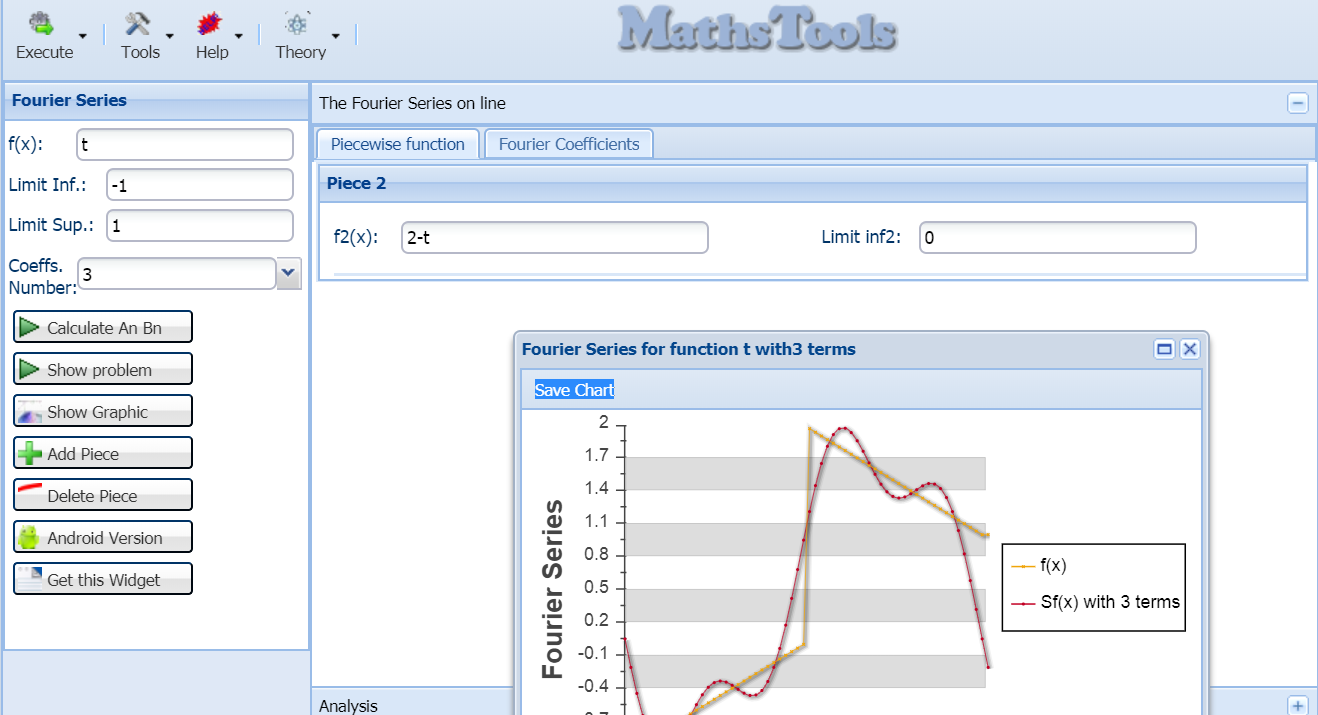
A Fourier transform calculator is an online tool that allows you to compute the Fourier transform of a given function. The Fourier transform is a mathematical operation that decomposes a function into its constituent frequencies. This decomposition is useful for analyzing the frequency content of a signal, image, or other data set.
To use a Fourier transform calculator, simply enter the function you want to transform into the input field. The calculator will then compute the Fourier transform of the function and display the result in the output field. Most calculators will also provide a graphical representation of the Fourier transform, which can be helpful for visualizing the frequency content of the function.
Types of Fourier Transform Calculators
There are many different types of Fourier transform calculators available online. Some calculators are designed for specific types of functions, such as periodic functions or functions with a finite domain. Other calculators are more general-purpose and can be used to transform any type of function.
- Periodic Fourier transform calculator:This type of calculator is designed for functions that are periodic, meaning that they repeat themselves at regular intervals. Periodic Fourier transform calculators can be used to analyze the frequency content of signals that are periodic, such as audio signals or images.
- Finite Fourier transform calculator:This type of calculator is designed for functions that have a finite domain, meaning that they are defined over a specific range of values. Finite Fourier transform calculators can be used to analyze the frequency content of data sets that are finite, such as data sets collected from a sensor or a measurement device.
- General-purpose Fourier transform calculator:This type of calculator can be used to transform any type of function. General-purpose Fourier transform calculators are more versatile than periodic or finite Fourier transform calculators, but they may not be as efficient for specific types of functions.
Using Fourier Transform Calculator for Signal Analysis
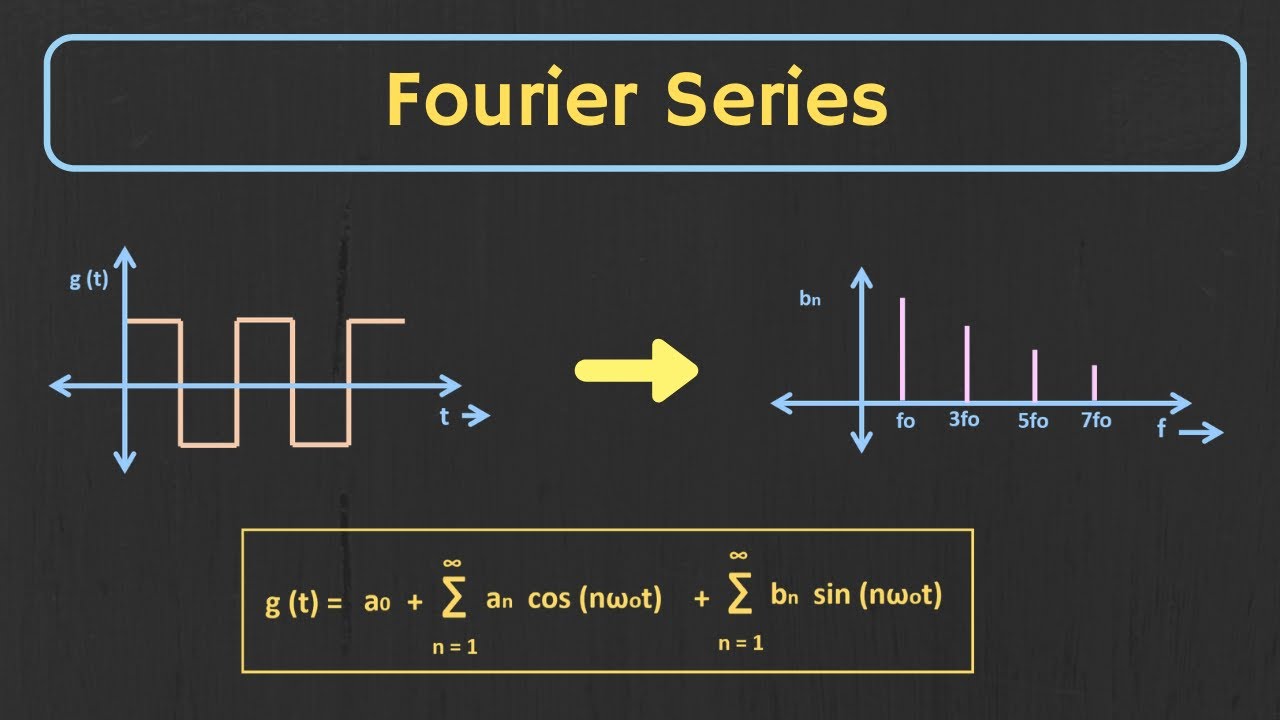
Fourier transform calculators are powerful tools that can be used to analyze signals in a variety of ways. By understanding the basics of Fourier transform and how to use a calculator, you can gain valuable insights into the frequency content of your signals.
Benefits of Using a Fourier Transform Calculator for Signal Analysis
- Speed and efficiency:Fourier transform calculators can perform complex calculations quickly and efficiently, saving you time and effort.
- Accuracy:Calculators use precise algorithms to ensure accurate results, eliminating the risk of human error.
- Visualization:Calculators often provide graphical representations of the Fourier transform, making it easy to visualize the frequency content of your signal.
Limitations of Using a Fourier Transform Calculator for Signal Analysis
- Limited signal length:Calculators can only analyze signals of a finite length, which may not be suitable for certain applications.
- Computational cost:Calculating the Fourier transform of a large signal can be computationally expensive, especially for real-time applications.
- Noise sensitivity:Fourier transform calculators can be sensitive to noise in the signal, which can affect the accuracy of the results.
Real-World Applications of Fourier Transform Calculators in Signal Analysis
Fourier transform calculators are used in a wide range of real-world applications, including:
- Audio signal processing:Analyzing the frequency content of audio signals for noise reduction, equalization, and compression.
- Image processing:Enhancing images by removing noise and sharpening edges using Fourier transform-based techniques.
- Medical imaging:Analyzing medical images, such as MRI and CT scans, to identify patterns and abnormalities.
Advanced Applications of Fourier Transform Calculator
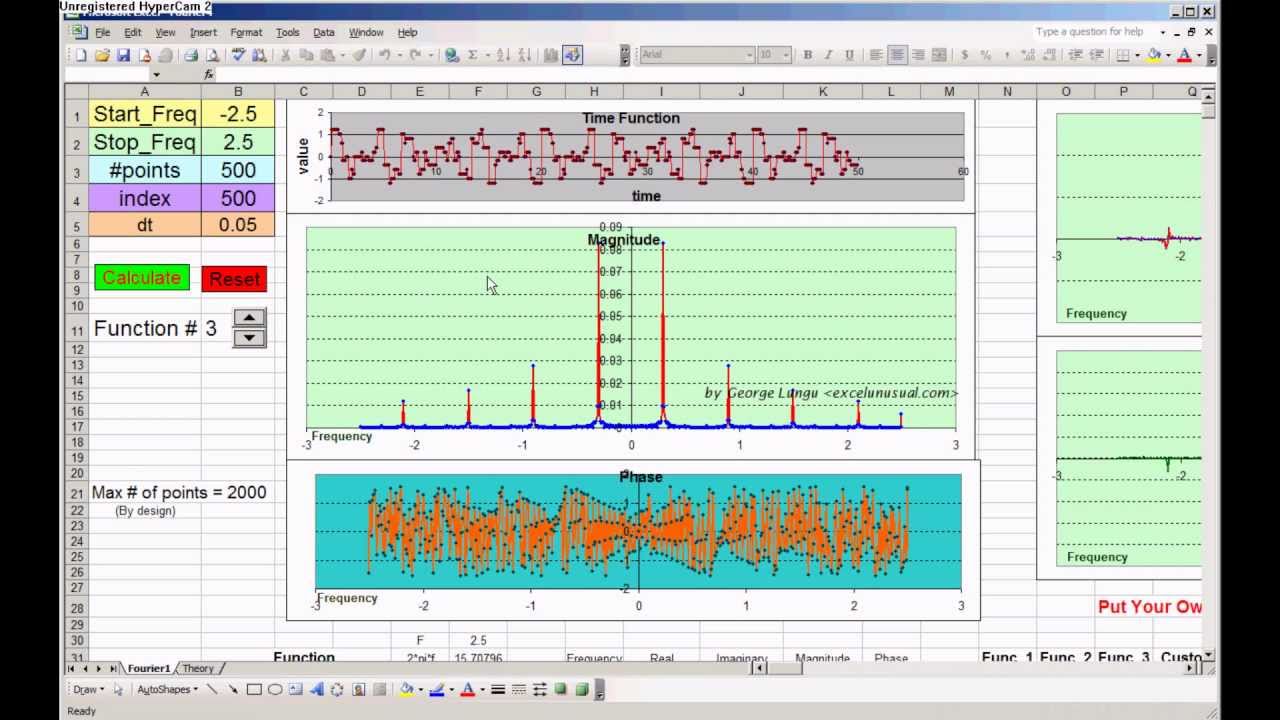
Fourier transform calculators find extensive applications in various advanced fields, including image processing, spectroscopy, and medical imaging. These calculators provide powerful tools for analyzing complex signals and extracting valuable information from them.
Image Processing
In image processing, Fourier transform calculators are used for image enhancement, noise reduction, and feature extraction. By converting an image into the frequency domain, these calculators allow for the manipulation of specific frequency components. This enables tasks such as sharpening edges, removing blur, and enhancing contrast.
Spectroscopy
Fourier transform calculators play a crucial role in spectroscopy, a technique used to analyze the composition of materials based on their absorption or emission of electromagnetic radiation. By applying Fourier transform to the measured spectra, these calculators help identify and quantify different chemical compounds present in a sample.
This technique is widely used in fields such as chemistry, biology, and environmental science.
Medical Imaging
Fourier transform calculators are also extensively used in medical imaging techniques such as magnetic resonance imaging (MRI) and computed tomography (CT). In MRI, Fourier transform is applied to the raw data acquired from the scanner to reconstruct detailed images of the body’s internal structures.
Similarly, in CT, Fourier transform is used to process the X-ray data and generate cross-sectional images of the body.
Epilogue
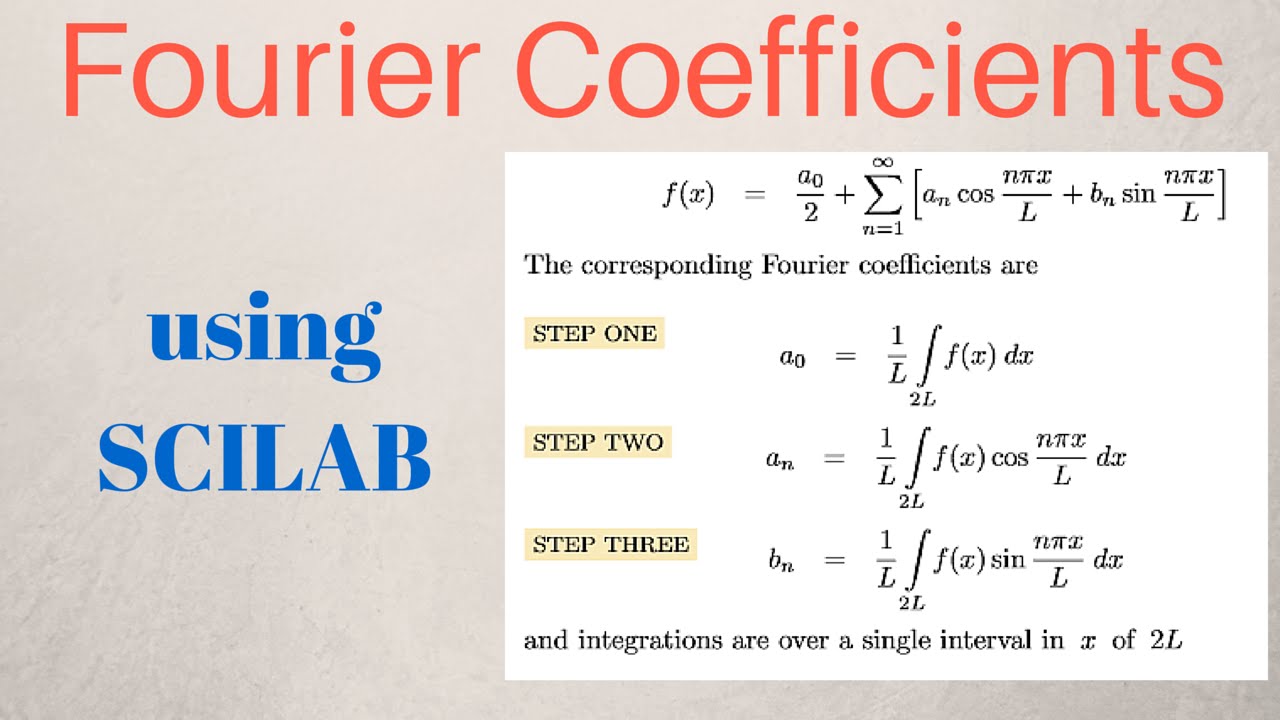
In conclusion, the Fourier Transform Calculator has revolutionized signal analysis, providing scientists, engineers, and researchers with an indispensable tool for understanding and manipulating complex data. Its versatility extends across diverse fields, from image processing to medical imaging, making it a cornerstone of modern signal analysis.
